

.svg)


.avif)



5 min read
Does My Heat Pump Need Freon If It Is Blowing Warm Air in July?
Why Is My Heat Pump Blowing Warm Air Instead of Cooling?
Are you staring at your thermostat, sweating in your own living room, and asking yourself: Does my heat pump need Freon if it is blowing warm air in July? It is incredibly frustrating when the temperature outside is soaring, and the very system designed to keep your family comfortable is actively pumping warm air into your house. When the house is already sweltering, our technicians often hear from Taylorsville homeowners whose first instinct is to ask for a quick refrigerant top-off so they can get back to their day.
The short answer is no, heat pumps do not consume Freon. If your system is low on refrigerant, it means there is a physical leak somewhere in the equipment. This brings up an important decision point: realizing that asking for a quick recharge will not solve the underlying mechanical failure. Adding more refrigerant to a leaking system is like putting air into a tire with a nail in it—it will inevitably go flat again.
Setting the right expectations is the first step toward a permanent solution. A proper, professional diagnosis is required to locate the issue, seal the leak, and restore your cooling safely. If you are researching how heat pump systems operate, or if you are ready to schedule professional heat pump repair, understanding why your system is blowing warm air will help you make the best decision for your home.
The Reality of Refrigerant: Do Heat Pumps Consume Freon?
One of the most common myths in the HVAC industry is that heating and cooling systems burn off refrigerant over time, much like a car consumes gasoline or an engine burns through oil. This misconception leads many homeowners to search for answers about whether their heat pump simply needs more Freon. The reality of how these systems operate is entirely different.
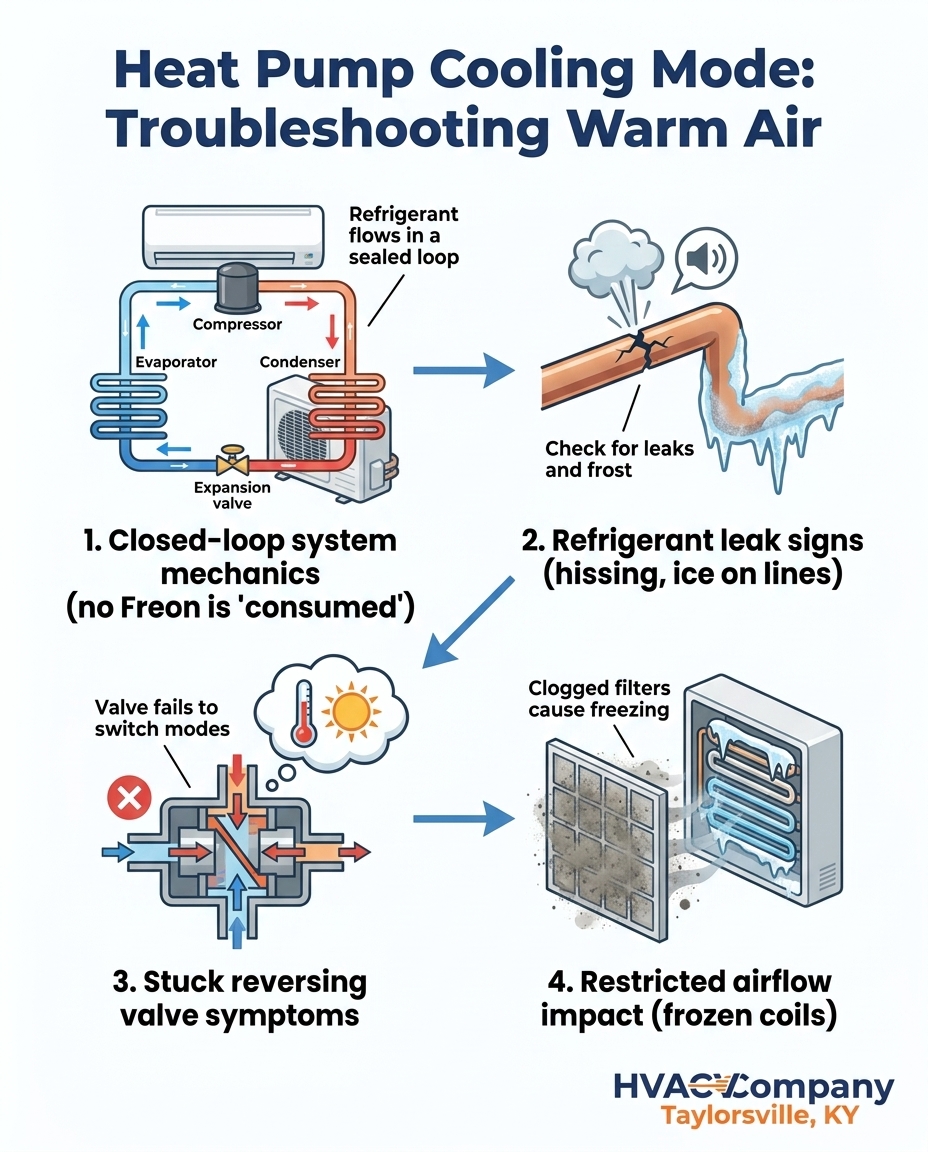
Heat pumps are closed-loop systems. The refrigerant inside the copper lines continuously cycles between a liquid and a gas state, absorbing heat from inside your home and releasing it outside. Because it is a sealed loop, the chemical is never "used up" during the cooling process. In our years of servicing local HVAC systems, we always emphasize to our customers that the exact amount of refrigerant weighed into the system at the factory should theoretically last for the entire lifespan of the unit.
• Heat pumps use up refrigerant over time as they cool the house. — The Reality: Heat pumps are sealed, closed-loop systems. Refrigerant continuously cycles and never burns off.
• A quick "Freon top-off" is a normal part of annual summer maintenance. — The Reality: Adding refrigerant without finding a leak is wasteful and indicates an unresolved mechanical failure.
• All HVAC refrigerant is called "Freon." — The Reality: Freon is a legacy brand name for R-22, which is phased out. Modern systems use R-410A or R-32.
• Low refrigerant just makes the air a little less cold. — The Reality: Low refrigerant alters system pressure, severely damaging the compressor and driving up energy bills.
It is also helpful to clarify the terminology. "Freon" is often used as a generic catch-all term by homeowners, but it actually refers to a specific, older class of refrigerants (R-22) that have been phased out due to environmental regulations. Modern heat pumps utilize newer, more efficient formulas like R-410A or R-32. Regardless of the exact chemical your specific model uses, the fundamental rule remains the same: low refrigerant levels always indicate a physical leak in the copper lines, the evaporator coil, or the condenser coil.
Because the system is under pressure, even a microscopic pinhole can allow the gas to escape over time. Emphasizing a quick recharge without sealing that leak is merely a temporary band-aid. The cooling might return for a few weeks or months, but the core problem remains, and the new refrigerant will eventually leak out again.
Common Culprits Behind Warm Air in Cooling Mode
When our customers ask us, "Does my heat pump need Freon?", they are actually noticing a symptom of a larger mechanical issue we see frequently during peak-summer service calls. Assuming you understand the baseline dual nature of a heat pump—that it can both heat and cool—it is helpful to look at the specific components that fail and cause warm air to blow through your vents during the summer.
1. Refrigerant Leaks: As discussed, a leak reduces the system's ability to absorb heat from your indoor air. The heat pump relies on a precise volume of refrigerant to maintain the correct pressure and temperature. When that volume drops, the evaporator coil cannot absorb enough thermal energy, resulting in room-temperature or warm air circulating back into your living spaces.
2. Stuck Reversing Valve: The reversing valve is the brass component that makes a heat pump unique. It uses an electrical solenoid to physically reverse the flow of refrigerant, switching the system from heating mode to cooling mode. If this valve becomes jammed due to mechanical failure or a bad solenoid coil, the heat pump may remain trapped in heating mode, actively pumping hot air into your home even when the thermostat is set to cool.
3. Frozen Evaporator Coils: It sounds contradictory, but a block of ice on your indoor coil will actually cause warm air to blow from your vents. This is often caused by severely restricted airflow, usually from a dirty or clogged air filter. Without enough warm indoor air blowing over the coil, the refrigerant drops below freezing, turning normal condensation into solid ice. This ice forms an insulating barrier, preventing any further heat exchange.
4. Electrical or Thermostat Communication Errors: Sometimes the issue is not in the plumbing, but in the wiring. If the thermostat fails to send the correct low-voltage signal to the outdoor unit, the fan might turn on, but the compressor will not engage. Without the compressor running, the system is just acting as a very expensive fan, moving unconditioned air around the house.
Identifying which of these culprits is responsible requires a thorough inspection. If you notice any of these symptoms, reaching out for professional air conditioning services is the safest way to accurately diagnose the root cause.
The Danger of a 'Quick Recharge' Without Fixing the Leak
The Problem: When a heat pump blows warm air, the temptation is strong to find the cheapest, fastest fix available. We frequently meet homeowners hoping our technicians can just hook up a gauge, add some refrigerant, and leave. However, ignoring the root cause of low refrigerant introduces severe risks to the equipment.
The Cause: Running a heat pump with a low refrigerant charge forces the compressor to overwork. The compressor is the heart of the entire HVAC system, responsible for pressurizing the gas and moving it through the lines. What many people do not realize is that the cool refrigerant returning from the indoor coil is actually what cools the compressor motor itself. When the system is low on refrigerant, the compressor runs hotter and runs longer. Over time, this extreme heat degrades the internal motor windings and the lubricating oil.
The Solution: Compressor failure is one of the most catastrophic and expensive HVAC breakdowns a homeowner can face. Furthermore, there are strict environmental regulations regarding knowingly recharging leaking systems, especially with older, ozone-depleting chemicals. A certified professional must follow a specific process: they must use electronic sniffers or nitrogen pressure tests to locate the exact source of the leak, repair the copper or replace the compromised coil, pull a deep vacuum to remove moisture, and then weigh in the exact factory charge. Skipping these steps to save a little time upfront almost always results in massive repair bills later.
How Peak Summer Humidity Impacts a Struggling Heat Pump
To fully understand why a failing heat pump feels so miserable, you have to look at the regional climate. During July peak heat and humidity here in Taylorsville, Kentucky, our team knows firsthand that your cooling system is fighting a two-front war. A heat pump has a dual role in the summer: it must lower the actual temperature of the air (sensible heat) while simultaneously extracting moisture from the indoor environment (latent heat).
With summer temperatures regularly soaring and the air thick with moisture, high ambient humidity drastically increases the overall cooling load on the system. The evaporator coil has to work incredibly hard just to wring the water out of the air before you even begin to feel a drop in the room's temperature. When your heat pump is operating perfectly, it handles this heavy lifting quietly in the background.
However, if your system has a minor refrigerant leak, it will fail much faster under this extreme mid-summer strain. A heat pump that might limp along during a mild spring day will completely collapse when forced to battle heavy subtropical moisture. As the system loses its ability to cool the coil adequately, compromised dehumidification leads to a rapid loss of indoor comfort. The air inside your home will quickly feel muggy, sticky, and stagnant. If left unchecked, this lack of humidity control can even lead to potential indoor air quality issues, creating an environment where mold and mildew can thrive.
Frequently Asked Questions About Summer Heat Pump Troubleshooting
When the temperature rises, homeowners naturally have a lot of concerns regarding their HVAC equipment. If you are looking into troubleshooting heat pump issues, you need clear, factual guidance. Here are detailed answers to the most common questions about heat pumps blowing warm air during the summer.
Why is my heat pump blowing warm air in cool mode?
Warm air in cooling mode usually indicates a refrigerant leak, a stuck reversing valve, or a severely clogged air filter causing the coils to freeze. The reversing valve is responsible for switching the system between heating and cooling; if it fails, the unit may actively heat your home even in the summer. Alternatively, if your system has lost refrigerant through a leak, it simply cannot absorb enough heat from your indoor air to cool the house. Before calling our team, always check your thermostat settings to ensure it is set to "cool" and verify that your air filter is completely clean.
How do I know if my heat pump needs Freon?
Signs that your system is low on refrigerant include ice forming on the outdoor refrigerant lines, faint hissing or bubbling sounds near the outdoor unit, unexpectedly high energy bills, and a failure to drop indoor temperatures. Because heat pumps are closed-loop systems, they never "need" Freon unless a physical leak has developed. If you notice your unit running constantly without actually cooling the space, or if the air coming from the vents feels lukewarm at best, you likely have a pressure issue related to a refrigerant leak that requires professional diagnosis.
Can a technician just add Freon to my heat pump?
Technically yes, but doing so without fixing the leak is a waste of money and can lead to severe compressor damage. Adding refrigerant to a leaking system only masks the symptom temporarily; the new chemical will eventually escape through the same hole. Professional HVAC technicians, like our experienced crew, are trained to locate the source of the leak, repair the damaged copper lines or coils, and then restore the system to its precise factory charge. Knowingly topping off a leaking system is an expensive band-aid that leaves your expensive compressor vulnerable to overheating and total failure.
What happens when a heat pump is low on refrigerant?
When a heat pump is low on refrigerant, it loses its fundamental ability to absorb and transfer heat efficiently. The system will attempt to compensate by running continuously, which drives up your monthly utility bills while still blowing warm air into the home. More dangerously, the compressor relies on the returning refrigerant to keep its internal motor cool. Without enough refrigerant, the compressor will overheat, leading to internal mechanical damage, electrical shorts, and eventually a complete, catastrophic system breakdown.
Is it safe to run my heat pump if it is blowing warm air?
No, it is not safe for the equipment. You should turn the system off at the thermostat immediately to prevent the compressor from overheating while you wait for a technician to arrive. Continuing to run a heat pump that is blowing warm air forces the most expensive component in the system to operate under extreme stress without proper cooling. Shutting the unit down protects the compressor from permanent damage and prevents your evaporator coil from freezing into a solid block of ice, which would further delay the repair process.
Restore Your Home's Comfort Before the Next Heat Wave
Dealing with a heat pump that fails during the July peak heat and humidity in Taylorsville is a stressful experience. As our team has covered, blowing warm air means there is a distinct mechanical issue at play—such as a stuck reversing valve, frozen coils, or a physical leak—not just a simple "empty tank" of Freon. Understanding that heat pumps do not consume refrigerant is the key to making informed decisions about your home's maintenance.
Addressing leaks and stuck valves immediately is critical to protecting your compressor from expensive, permanent damage. When the indoor temperature starts climbing, you need a local team with reliable, rapid-response emergency repair capabilities to properly diagnose and fix the root cause quickly during peak summer heat. Do not settle for temporary top-offs that leave you vulnerable to another breakdown. Take action to schedule a professional inspection and contact our Taylorsville HVAC technicians today to restore safe, efficient, and lasting cooling to your home.
Financing

Now Offering Financing Options with Affordable Monthly Payments
where we operate
Service Areas
Proudly serving Spencer county, Jefferson county, Bullitt county, and the surrounding areas

Short Heading Goes Here
Sed iaculis aenean sit sed risus arcu vitae integer elit.

