



5 min read
HVAC Near Me: The Essential Fall Heating Startup and Safety Guide
That First Chilly Morning: Facing Fall Furnace Startup Quirks
You wake up to the first real drop in temperature this October, flip the thermostat from cooling to heating, and suddenly realize that executing a proper seasonal home maintenance checklist is the only thing standing between you and a freezing, unpredictable house. The vents rattle, a rush of cold air blows through the room, and then a distinct, slightly alarming burning odor fills the hallway. For many homeowners facing an October pre-winter startup, this moment brings a wave of anxiety. You find yourself standing under a vent, wondering if your system is just waking up from a long summer nap or if you are dealing with a serious safety hazard.
If you need immediate help navigating your HVAC services or require professional heating services, our local experts at 3D Heating and Cooling are ready to assist.
That initial transition from cooling to heating is notoriously clunky. Your heating equipment has sat dormant for over half the year. When the burners ignite for the first time, the resulting smells, brief cycles, and unfamiliar noises are often just the system burning off the remnants of summer. However, knowing exactly where to draw the line between a normal startup quirk and a dangerous malfunction is critical for your family's safety.
Relying on professional oversight before those freezing temperatures permanently settle in ensures total peace of mind. A licensed technician can verify that every internal component is operating safely, allowing you to run your heater confidently throughout the coldest months of the year.
The Anatomy of a Dormant Heater: What Happens Over the Summer
To understand why your heating system struggles on its first run, you have to look at what happens inside the cabinet during its six months of inactivity. While your air conditioner was working overtime, your furnace or air handler was quietly collecting debris. Airborne particles, pet dander, and household dust constantly circulate through your ductwork. Even with a good filter, a fine layer of this debris inevitably settles directly onto your heating components, particularly the burners and the heat exchanger.
In our years of serving the Taylorsville KY area, our team at 3D Heating and Cooling has seen how the local climate adds another layer of complexity to this dormant period. Our notoriously hot, humid summers lead to specific dust and moisture accumulation inside heating systems. High indoor humidity acts almost like a mild adhesive. As sticky, moisture-laden air moves through the indoor unit during the cooling season, it causes that settling dust to cling stubbornly to the metal surfaces of your dormant heater.
When October arrives and you finally switch the system over to heating mode, those metal components heat up rapidly. The accumulated layer of bonded dust has nowhere to go but up in smoke. This physical buildup is the root cause of the most common "first run" phenomena. The heat exchanger—the metal shield that separates the combustion process from your breathing air—reaches incredibly high temperatures within minutes. As it heats up, it literally bakes off the summer dust, pushing that scent directly into your living room.
Understanding this anatomy helps demystify the startup process. The system isn't necessarily failing; it is simply undergoing a harsh, rapid transition from a cool, damp environment to a dry, intensely hot one.
Decoding Startup Smells: Harmless Dust Burn-Off vs. Safety Hazards
The Problem: You turn on the heat, and within minutes, the house smells like something is on fire.
The Cause: Depending on the exact scent, you are either experiencing normal dust burn-off or a severe component failure.
The Solution: Time the duration of the smell and monitor your safety alarms to determine if professional intervention is required.
A normal "burning dust" smell is entirely expected during an October pre-winter startup. This odor usually resembles the scent of a hot clothes iron or a dusty radiator. According to indoor air quality guidelines from the Environmental Protection Agency (EPA), brief odors associated with seasonal HVAC transitions are common, provided they dissipate quickly. A standard dust burn-off should naturally clear out within 30 to 60 minutes of continuous operation.
However, when an odor crosses the line into a hazard, you must act immediately. If the smell resembles melting plastic, electrical ozone, or persistent smoke, shut the system down at the thermostat. The most dangerous scenario involves a cracked heat exchanger. When this vital component cracks, it allows deadly, odorless carbon monoxide to mix with your indoor air, often accompanied by exhaust fumes that smell like sulfur or rotten eggs.
Our team at 3D Heating and Cooling received an emergency call during a recent fall season when a local homeowner's carbon monoxide detectors kept sounding due to a cracked heat exchanger. This was an emergency safety issue that could not wait. Our technicians arrived within an hour to safely remove the compromised machine and install a new furnace, resolving the immediate danger and restoring safe heat to the home.
When to Turn It Off and Call a Professional
Never ignore your home's safety systems. If your carbon monoxide detectors sound an alarm, evacuate the home and call emergency services, followed by your HVAC provider. Other immediate red flags include:
• Extended odors: A burning smell that lasts longer than one hour.
• Visible smoke: Any smoke coming from the vents or the unit itself.
• Chemical scents: Smells of burning wire insulation, melting rubber, or sulfur.
Diagnosing heat exchangers and electrical shorts requires licensed expertise and specialized combustion analysis equipment. Never attempt to inspect a potentially cracked heat exchanger yourself.
• Hot dust or lint — Likely Cause: Normal summer dust burn-off — Required Action: Wait 30-60 minutes; open a window if needed
• Electrical or metallic — Likely Cause: Overheating motor or melting wires — Required Action: Turn off system immediately; call a professional
• Rotten eggs or sulfur — Likely Cause: Natural gas leak — Required Action: Evacuate home; call gas company and HVAC pro


Furnace Short-Cycling: Why Your System Keeps Shutting Off
Another incredibly common issue during the fall startup is a phenomenon known as short-cycling. You set the thermostat to 72 degrees, the furnace kicks on, runs for about two minutes, and then abruptly shuts down before the house actually warms up. A few minutes later, it tries again, repeating this frustrating loop. Short-cycling prevents your home from reaching the target temperature and puts enormous mechanical stress on your blower motor and ignition components.
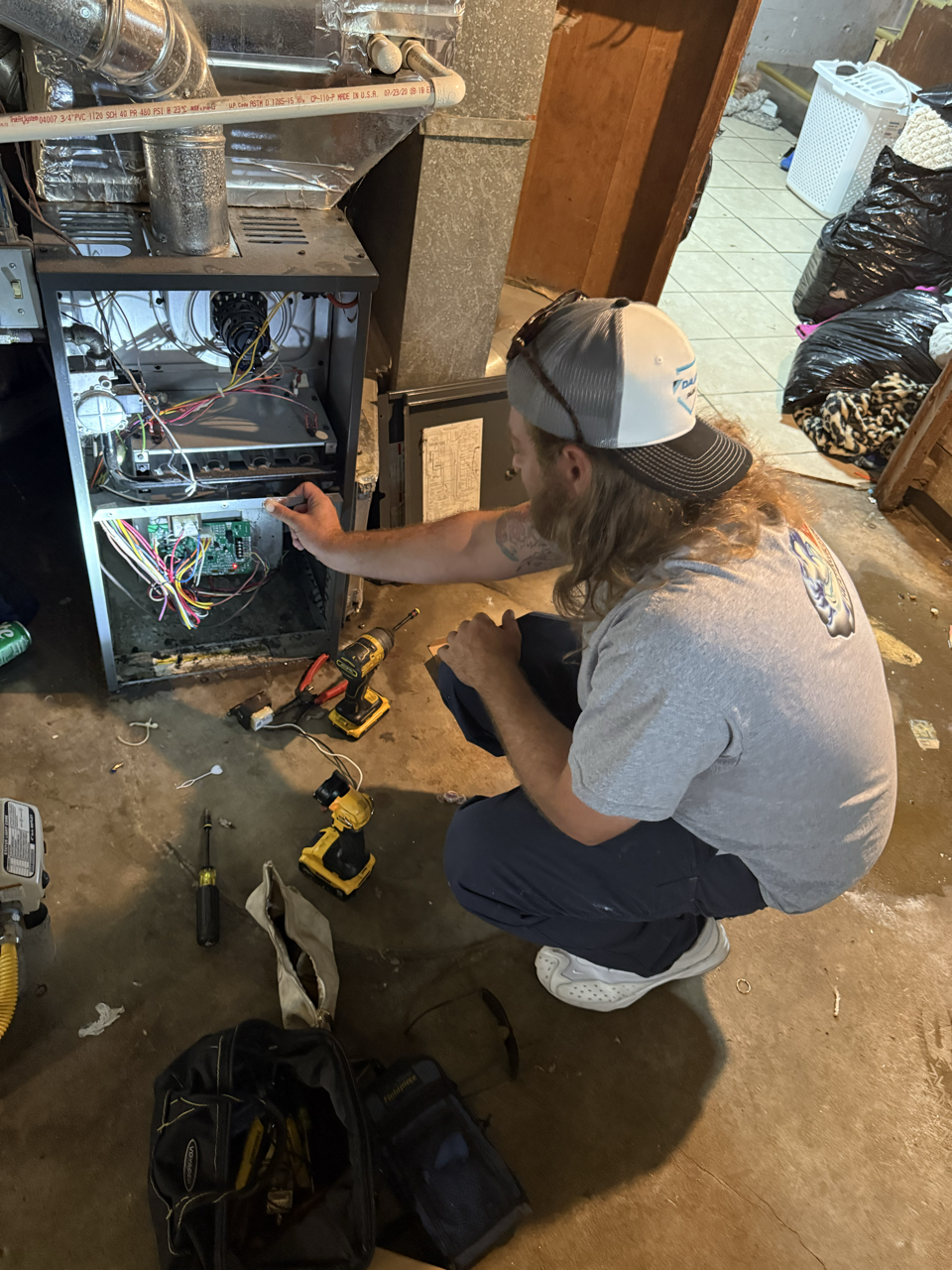
When our technicians respond to fall heating issues, one of the most frequent culprits we find behind this behavior is a dirty flame sensor. The flame sensor is a delicate safety probe that sits directly in the path of the burner flame. Its sole job is to detect whether a fire is actually present when the gas valve opens. Over the summer, this sensor often becomes coated in soot, dust, or light oxidation. When the furnace fires up, the dirty sensor cannot feel the flame. Assuming the flame failed to ignite, the system's control board immediately shuts off the gas to prevent a dangerous buildup of unburned fuel in your home.
Short-cycling is often a built-in safety mechanism designed to prevent your unit from overheating or causing a fire. A clogged air filter can also cause the system to overheat rapidly, triggering the high-limit switch to shut the furnace down.
While it might be tempting to look up a tutorial, we strongly warn against DIY sensor cleaning or bypassing safety switches. Scrubbing a flame sensor with the wrong material can permanently damage its calibration. Opening the combustion chamber and tampering with safety controls violates safety protocols, voids manufacturer warranties, and risks severe property damage. Always leave internal component cleaning to a licensed professional.
Evaluating Your Local Support: Routine Maintenance vs. Emergency Action
When your heating system acts up, you have to decide whether you need a routine pre-winter safety inspection or an emergency breakdown call. A routine inspection is proactive. A technician takes their time cleaning the burners, testing the ignition sequence, measuring electrical draws, and verifying that the heat exchanger is structurally sound before the extreme cold arrives. An emergency call, on the other hand, is reactive—focused on diagnosing an immediate failure and restoring safe heat as quickly as possible.
Knowing the difference helps you make smart decisions when choosing a local HVAC company. You want to hire local, licensed contractors who prioritize safety over quick, temporary fixes. According to data from the U.S. Fire Administration (USFA), heating equipment is a leading cause of home fire deaths. This staggering statistic makes professional oversight non-negotiable. You need a team that understands the gravity of combustion safety and possesses the community reputation to back up their work.
At 3D Heating and Cooling, our trusted community reputation is built on prompt emergency service capabilities, especially when residents face unexpected holiday or late-night breakdowns. A local family experienced this firsthand in the Taylorsville KY area when their 27-year-old heating system failed right in the middle of Thanksgiving evening. One of our technicians came out during the holiday dinner hour to present safe options, ultimately replacing the aging system with quality work that restored their comfort and saved their family gathering.
Evaluate a company's reliability based on their emergency response times, their licensing, and their willingness to explain the "why" behind a repair. A trustworthy technician will show you the exact readings on their multimeter or combustion analyzer, ensuring you understand the safety status of your home.
Comprehensive Fall Preparation for Your Entire Home Climate System
Transitioning into the colder months requires looking at your home as a complete ecosystem. While ensuring your furnace fires safely is the priority, managing the cooling shutdown and optimizing your home's airflow are equally important steps.
Here are the safe, homeowner-approved tasks you should complete before the heavy heating season begins:
• Replace your air filters: Start the season with a clean slate. A fresh filter ensures maximum airflow over the heat exchanger, preventing overheating and short-cycling. Check it monthly throughout the winter.
• Clear outdoor cooling units: Properly shutting down your outdoor AC condenser involves clearing away fallen autumn leaves, branches, and overgrown grass. Ensure the unit has at least two feet of clearance to prevent restricted airflow and pest infestations.
• Check home weatherstripping: Inspect the seals around your doors and windows. Drafts force your heating system to run longer cycles, driving up energy usage and accelerating wear and tear on the equipment.
• Unobstruct return vents: As you rearrange furniture for the holidays or bring winter gear out of storage, make sure large couches, rugs, or boxes are not blocking your return air grilles. Your system needs to pull in as much air as it pushes out.
By completing these simple tasks, you protect your air conditioning solutions from winter damage while giving your heating system the best possible environment to operate efficiently.
Serving Our Neighbors Across the Region
Whether you are in the immediate local area or nearby communities like Bardstown KY, prompt seasonal preparation is just a call away. Local teams service the broader region to ensure comprehensive year-round readiness, moving seamlessly from cooling shutdowns to heating startups alongside you.
Secure Your Comfort Before the Freezing Weather Arrives
Understanding the normal quirks of an October pre-winter startup is empowering, but it should never replace a professional safety check. That brief burning dust smell might be harmless, but the peace of mind that comes from knowing your heat exchanger is completely intact is invaluable.
Don't wait until the first major freeze forces your system to run continuously for days on end. Encourage your family to schedule a comprehensive inspection before the deepest winter chill sets in. Take the proactive step today to talk to a local expert about your specific system, ensuring your home remains a warm, safe sanctuary all season long.
Frequently Asked Questions
Is it normal for my heater to smell like burning when I turn it on?
Yes, a brief burning dust smell is very common during the first startup of the season. Dust settles on the dormant heating components over the summer and burns off when the system heats up. This odor should naturally dissipate within 30 to 60 minutes. If the smell persists longer or smells like melting plastic, turn the unit off immediately.
Why is my furnace turning on and off quickly?
This rapid on-and-off cycle is called short-cycling, and it often indicates a safety mechanism has been triggered. Common causes include a dirty flame sensor failing to register ignition, or a clogged air filter causing the system to overheat. Because short-cycling involves internal safety switches, it requires a professional diagnosis to resolve safely.
When should I call an HVAC professional for a burning smell?
You should call a professional immediately if the burning smell lasts longer than an hour, or if you detect odors of electrical ozone, melting rubber, or sulfur. Additionally, if your carbon monoxide detectors sound at any point, evacuate the home and call for emergency HVAC service. These are strong indicators of a hazardous component failure rather than normal dust burn-off.
What should be on a fall home maintenance checklist?
A comprehensive fall checklist should focus on preparing your heating system and securing your home's thermal envelope. Key tasks include replacing your HVAC air filter, clearing debris away from your outdoor AC unit, and checking the weatherstripping around doors and windows. You should also ensure that no furniture or rugs are blocking your supply and return air vents.
How do I prepare my HVAC for winter?
The most critical step is scheduling a professional pre-winter safety inspection to verify that your heat exchanger, burners, and electrical components are safe for continuous operation. On your end, start with a fresh, high-quality air filter to guarantee proper airflow. Finally, clear the area around your indoor unit so technicians have easy access during maintenance or emergencies.
Can high summer humidity affect my furnace's performance in the fall?
Absolutely. High summer humidity introduces sticky moisture into your ductwork and indoor unit, which causes circulating dust and debris to cling heavily to dormant heating components. When fall arrives, this thicker, bonded layer of dust creates a much more pronounced burning smell during the initial startup, and can also contribute to prematurely dirty flame sensors.
Financing

Now Offering Financing Options with Affordable Monthly Payments
where we operate
Service Areas
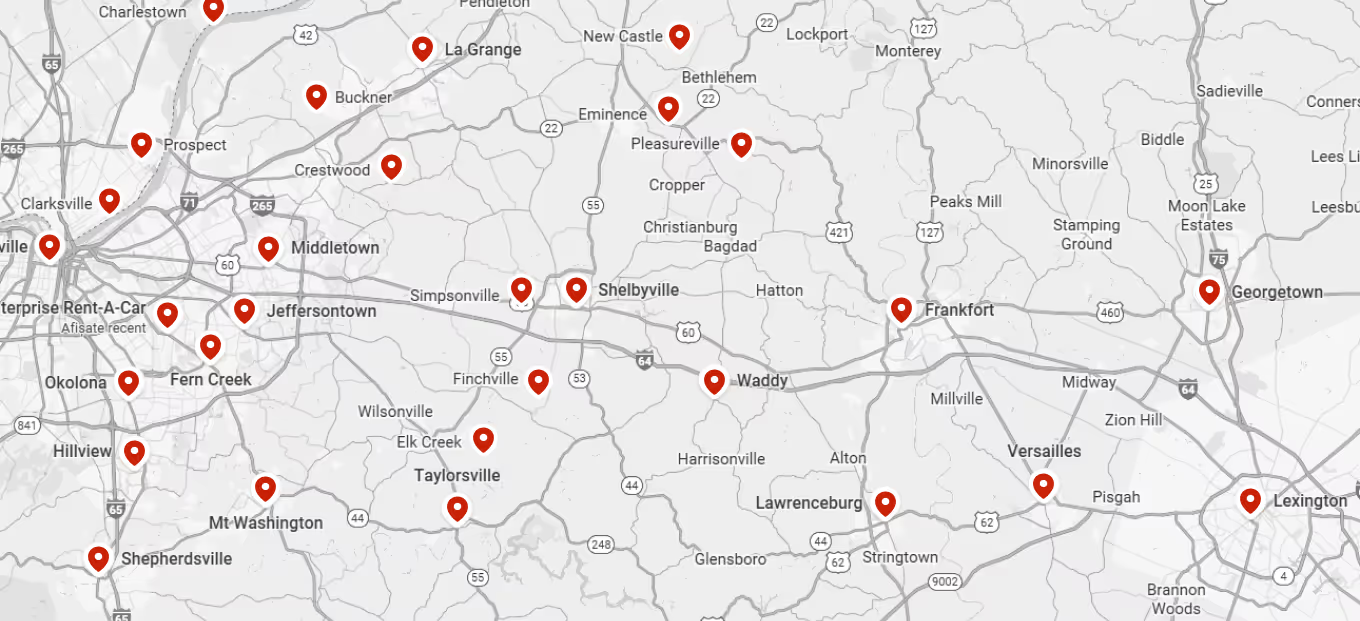
Proudly serving Spencer county, Jefferson county, Bullitt county, and the surrounding areas
Short Heading Goes Here
Sed iaculis aenean sit sed risus arcu vitae integer elit.

