

.svg)


.avif)



5 min read
How Falling Leaves and Debris Threaten Your Heat Pump's Efficiency
The Immediate Impact of Autumn Debris on Outdoor HVAC Units
As the early fall pre-heating season arrives in September 2026, understanding how falling leaves and debris threaten your heat pump's efficiency is critical to keeping your home comfortable before the first freeze. The transition from summer cooling to winter heating is a demanding time for your climate control system. While most homeowners are diligent about scheduling indoor filter changes and checking their thermostats, our technicians at 3D Heating and Cooling find that the large metal cabinet sitting outside often goes ignored precisely when it is most vulnerable to environmental buildup.
For comprehensive support with your heat pump systems, investing in routine HVAC maintenance ensures your equipment is fully prepared for the changing seasons.
The seasonal shift: During early autumn, trees begin shedding their foliage at the exact moment your outdoor unit is gearing up for its heating cycle. This creates a challenging scenario. The system must draw in massive amounts of ambient air through its exterior panels to function properly. When wet, heavy leaves, wind-blown twigs, and grass clippings plaster themselves against the metal grates during the peak October leaf drop, they act like a thick, suffocating blanket.
The homeowner's decision point: You are faced with a clear choice as the weather turns. You can proactively manage the exterior clearance around your unit, or you can allow yard waste to accumulate and risk severe system strain. Ignoring the buildup around the outdoor cabinet directly undermines the equipment's ability to operate. Proactive exterior maintenance is not just about keeping your yard looking tidy; it is a fundamental requirement for keeping your heating equipment healthy, efficient, and reliable throughout the colder months.
The Physics of Airflow: How Restricted Circulation Chokes Heat Extraction
To understand why yard waste is so detrimental, you have to look at the mechanics of heat extraction. Even when the air outside feels chilly, there is still thermal energy present. Your heat pump's job is to absorb that ambient thermal energy using the refrigerant circulating through its outdoor condenser coils, compress it to raise the temperature, and transfer that warmth inside your home.
This entire process relies entirely on the continuous, unobstructed flow of massive volumes of air. The fan inside the outdoor cabinet pulls air through the narrow metal fins that protect the coils. When those fins are blocked by layers of autumn leaves, pine needles, or overgrown vegetation, the volume of air passing over the coils drops dramatically. The system is suddenly starved of the very medium it uses to gather heat. In our experience servicing everything from older 12 SEER single-stage units to modern 18 SEER variable-speed systems, a choked coil drops efficiency universally.
For a system to operate at peak performance, it requires professional heating services to ensure all mechanical parts are functioning, but it also requires a completely clear perimeter to breathe.
Compressor Strain and Energy Inefficiency
When the airflow is choked off, the compressor—the heart of your system—is forced to run longer and work significantly harder to extract the same amount of heat. This prolonged operation leads to a host of mechanical and financial issues.
• Premature component wear: Motors and compressors are designed to run in specific cycles. When forced to run continuously to compensate for blocked airflow, these parts overheat and wear out far before their expected lifespan.
• Plummeting energy efficiency: The primary benefit of this type of heating system is its incredible energy efficiency. Airflow blockages completely negate this benefit, causing the system to consume vastly more electricity to achieve the same indoor temperature.
• Inconsistent indoor comfort: A choked system cannot deliver a steady supply of warm air, leading to cold spots and temperature fluctuations inside your living spaces.
• Unobstructed Unit — Airflow Volume: Maximum intake through all coil fins — Compressor Workload: Normal, cyclic operation — Efficiency Impact: High efficiency, optimal heat transfer
• Partially Blocked — Airflow Volume: Reduced intake, uneven distribution — Compressor Workload: Extended run times — Efficiency Impact: Noticeable drop in performance
• Heavily Choked by Debris — Airflow Volume: Severely restricted, starved of air — Compressor Workload: Continuous, strained operation — Efficiency Impact: High energy consumption, risk of failure
Establishing the 2-Foot Clearance Rule for Exterior Maintenance
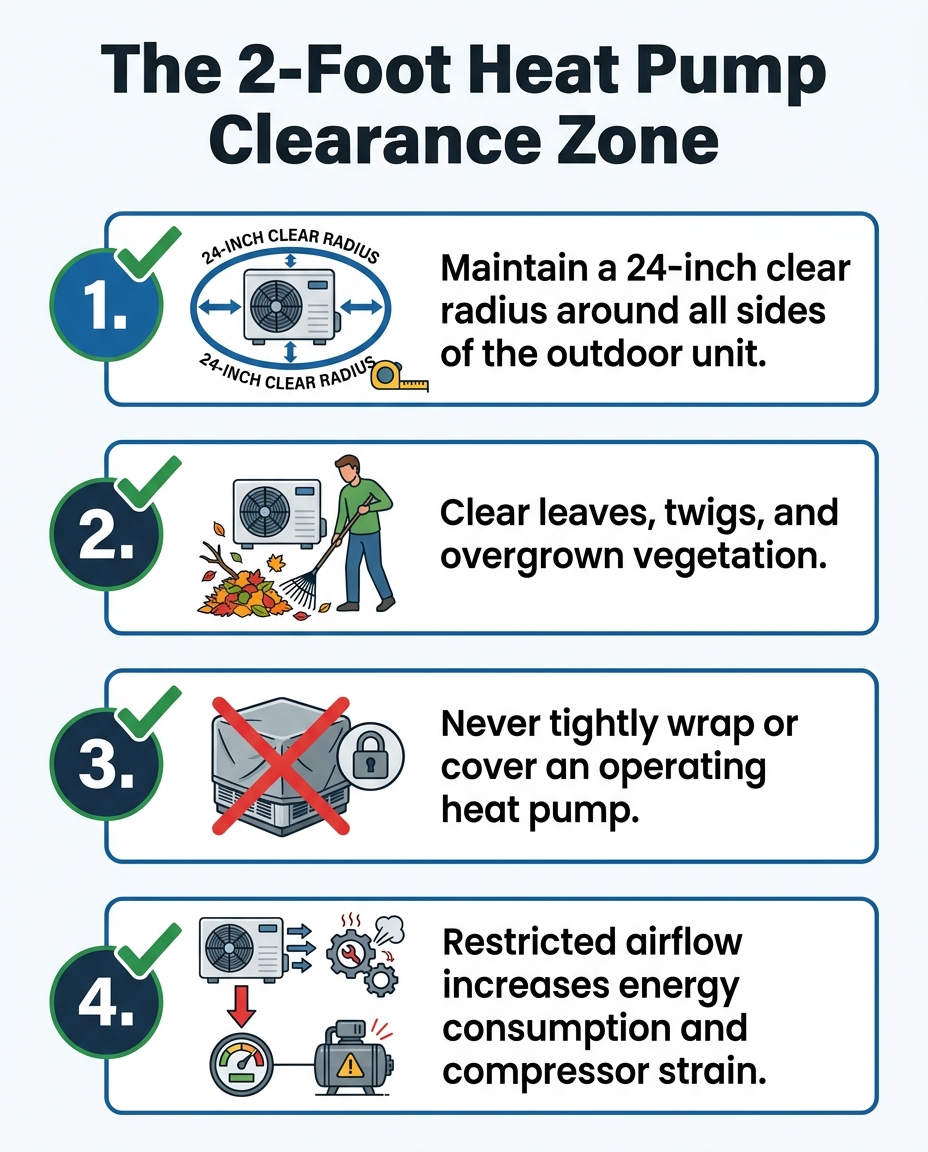
Protecting your system from the onslaught of autumn yard waste requires establishing and maintaining a strict perimeter. The industry standard is clear: you must maintain a minimum 2-foot clearance zone around the entire outdoor unit. This ensures the fan can pull in sufficient air from all directions without resistance.
We always advise our Taylorsville customers to safely establish and maintain this critical clearance zone throughout the fall season by following these steps:
1. Measure the perimeter: Use a tape measure to visually establish a 24-inch radius extending outward from every side of the metal cabinet, as well as checking the 4 to 5 feet of vertical clearance above the unit.
2. Rake and remove ground debris: Carefully rake away fallen leaves, pine needles, grass clippings, and twigs from the base of the unit. Pay special attention to the corners and the narrow gap between the unit and your home's exterior wall, where wind often deposits heavy piles of debris.
3. Trim back encroaching vegetation: Use pruning shears to cut back any shrubs, bushes, or ornamental grasses that have grown into the 2-foot zone over the summer. Plants should never touch the metal cabinet.
4. Clear the top grille: Gently brush off any leaves or branches resting on the top fan grille. Do not poke sticks or tools through the metal grate, as you risk damaging the fan blades or internal wiring.
5. Monitor after heavy winds: Make it a habit to inspect the clearance zone after every major autumn storm or high-wind event, as the perimeter can become choked with new debris overnight.
The danger of covering the unit: A common misconception is that you should tightly wrap or cover the outdoor cabinet during the fall and winter to protect it from falling leaves. This is a critical mistake. These systems are built to withstand rain and snow. Tightly wrapping the unit traps moisture inside, which accelerates rust and corrosion. Furthermore, if the system turns on while covered, the complete lack of airflow will cause immediate and severe damage to the compressor. Never cover a heat pump that is actively operating.

The Danger of Internal Cabinet Debris: Why Professional Cleaning is Required
While clearing the exterior 2-foot zone is a safe and necessary homeowner responsibility, dealing with the debris that makes its way inside the cabinet is an entirely different matter. Despite the protective grates, small organic matter inevitably gets sucked through the exterior panels and settles deep inside the unit.
How internal buildup happens: When our team opens up outdoor cabinets during pre-season tune-ups, we frequently find pine needles, pulverized dry leaves, cottonwood seeds, and dirt that have been pulled toward the unit by the powerful suction of the fan. Over months of operation, this fine debris coats the delicate aluminum fins of the condenser coil and accumulates in a thick, sludgy layer in the base pan of the cabinet. This internal buildup blocks airflow from the inside out and traps moisture against critical components, accelerating corrosion.
The risks of DIY internal cleaning: It is highly dangerous for a homeowner to attempt to clean the inside of the cabinet. Opening the unit exposes you to high-voltage electrical components and capacitors that hold a lethal charge even after the power is turned off. Furthermore, many homeowners attempt to clean the coil fins by spraying high-pressure water from a garden hose or power washer directly into the cabinet. This is a costly mistake. The aluminum fins are incredibly thin and easily bent. A blast of high-pressure water will flatten the fins, permanently blocking airflow and ruining the coil.
The professional solution: Internal maintenance requires professional heat pump repair and installation expertise. A licensed technician follows a strict, safe protocol. They safely discharge the electrical components, remove the top grille and fan assembly, and meticulously extract the debris from the base pan. They then apply specialized, non-acidic chemical foaming agents that push dirt and grime out from between the delicate fins without bending them. This process restores optimal airflow and heat transfer without risking damage to the equipment or voiding your manufacturer's warranty.
The Domino Effect: Outdoor Strain Leading to Indoor System Failure
The consequences of ignoring outdoor yard waste extend far beyond a slight drop in efficiency. Restricted airflow sets off a dangerous domino effect that can quickly escalate from minor outdoor strain to a complete indoor system failure.
The path to a freeze-up: When a heat pump is starved of air, the refrigerant cycle is deeply disrupted. The system struggles to absorb enough ambient heat, causing the temperature of the outdoor coils to drop significantly below normal operating levels. If the outdoor temperature is already chilly, any moisture in the air will rapidly condense and freeze on the super-cooled coils.
While these systems have a built-in defrost cycle to handle light frost, a unit choked by autumn leaves cannot draw in enough air to successfully execute its defrost mode. The frost quickly builds into a solid block of ice, encasing the entire coil. Once the unit is encased in ice, heat transfer stops completely, and the compressor is pushed to its absolute breaking point.
Real-world consequences: This domino effect rarely happens on a mild afternoon; it typically culminates during severe weather when the system is working its hardest. During the sudden early-winter freeze of November 2025, our dispatch board at 3D Heating and Cooling was flooded with calls from local homeowners whose HVAC systems failed on the coldest day of the year. Our technicians diagnosed airflow and freezing issues, and quickly restored the systems. Had the underlying airflow restriction been addressed earlier in the season, those late-night failures could have been avoided.
If you notice ice forming on your outdoor cabinet or experience a sudden drop in heating output, it is critical to seek professional guidance for troubleshooting heat pump freeze-ups before the compressor fails entirely.
Navigating Regional Fall Weather Challenges in Local Neighborhoods
The threat of yard waste is not just a general concept; it is heavily influenced by the specific weather patterns of your region. In Taylorsville KY neighborhoods built in the 1990s and early 2000s with mature oak and maple canopies, the transition into autumn presents a unique set of challenges that demand proactive exterior maintenance.
The perfect storm for airflow restriction: The local climate features a challenging combination of heavy autumn foliage drop and highly fluctuating early fall temperatures. Properties are often surrounded by mature trees that shed massive volumes of leaves over a short period. At the exact same time, the region experiences sudden, sharp cold snaps, especially overnight. This means your heating equipment is frequently asked to jump from mild operation to peak heating capacity with very little warning.
If a sudden overnight freeze hits while your outdoor cabinet is choked with wet maple and oak leaves, the system is immediately at a severe disadvantage. The heavy, wet debris forms an almost airtight seal against the intake grates, setting the stage for rapid ice buildup and system strain.
The value of local expertise: Navigating these specific regional challenges highlights the importance of working with our trusted local HVAC experts at 3D Heating and Cooling who understand Kentucky's specific fall weather patterns. A local technician knows exactly how the combination of regional humidity, specific local foliage, and sudden temperature drops impacts outdoor units. They can provide targeted maintenance that prepares your specific system for the exact weather conditions it will face, ensuring your home remains warm and protected no matter how quickly the weather turns.
Frequently Asked Questions About Heat Pumps and Fall Debris
Can leaves damage an outdoor HVAC unit?
Yes, leaves can cause significant damage to an outdoor HVAC unit by severely restricting airflow. When leaves plaster against the exterior fins, the system is starved of air, forcing the compressor to overheat and work harder to extract heat. Over time, this strain leads to premature mechanical wear and significantly higher energy bills. Additionally, wet leaves trapped against the metal cabinet accelerate rust and corrosion.
How much clearance does a heat pump need?
Industry standards dictate that a heat pump requires a minimum of 24 inches (2 feet) of completely clear space around all sides of the cabinet. This 2-foot zone ensures the fan can pull in an adequate volume of ambient air without resistance. You must also ensure there is at least 4 to 5 feet of unobstructed vertical clearance above the unit to allow exhaust air to vent properly.
Should I cover my heat pump in autumn?
No, you should never tightly cover or wrap an operating heat pump during the autumn or winter months. These units are engineered to withstand rain, snow, and outdoor elements. Tightly covering the unit traps moisture inside, which promotes rust, mold, and pest infestations. Most importantly, if the system turns on while covered, the complete lack of airflow will cause immediate and severe compressor damage.
Does restricted airflow affect heat pump efficiency?
Restricted airflow has a devastating impact on heat pump efficiency. The system relies on the continuous movement of air over its coils to transfer thermal energy. When airflow is blocked by debris, the system cannot absorb enough heat, causing it to run continuously while consuming vastly more electricity. This negates the inherent energy-saving benefits of the system and leads to poor indoor comfort.
How often should a heat pump be professionally cleaned in regions with heavy foliage?
In regions with heavy autumn leaf fall, our team recommends a heat pump receive a professional cleaning and tune-up at least twice a year—once in the spring before cooling season, and once in the early fall before heating season. The fall visit is particularly critical, as the technician will safely open the cabinet, extract accumulated organic debris from the base pan, and chemically clean the internal coils to ensure optimal performance during winter.
Ensure Efficient Heating Before the Cold Snaps Arrive
The link between unobstructed airflow and efficient heat extraction is undeniable. As the early fall pre-heating season progresses, taking a few moments to clear the yard waste from around your outdoor cabinet is one of the most effective ways to protect your comfort and your equipment. By maintaining a strict 2-foot clearance zone, you allow the system to breathe, reducing compressor strain and keeping your energy consumption in check.
However, exterior clearing is only half the battle. To ensure the internal coils are free of the fine debris that accumulates over the summer, professional intervention is required. Additionally, upgrading to a high-efficiency system unhindered by debris can sometimes qualify for generic incentives; federal tax credits may apply to qualifying heat pump installations, though we advise checking with your utility provider or a tax professional for current program details. Scheduling routine HVAC maintenance before the severe cold snaps arrive ensures that every component of your system is clean, calibrated, and ready to deliver reliable, efficient warmth all winter long.
Financing

Now Offering Financing Options with Affordable Monthly Payments
where we operate
Service Areas
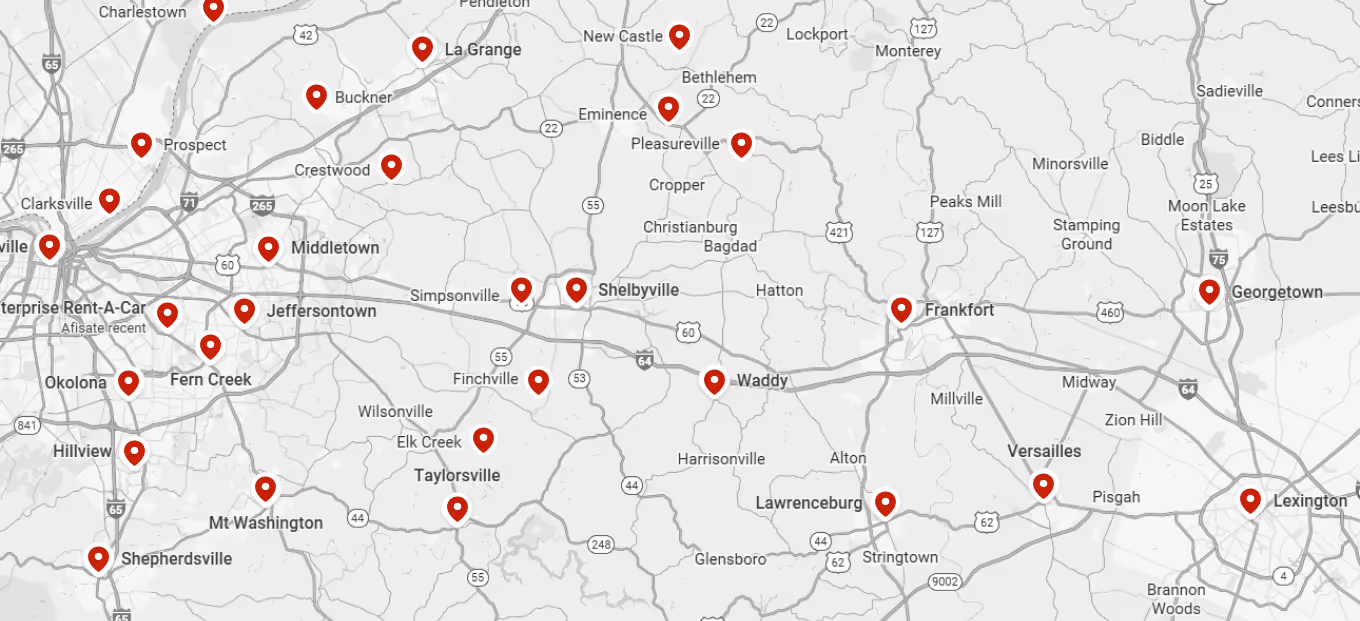
Proudly serving Spencer county, Jefferson county, Bullitt county, and the surrounding areas
Short Heading Goes Here
Sed iaculis aenean sit sed risus arcu vitae integer elit.

