

.svg)


.avif)



5 min read
Why Late August is the Ideal Time to Evaluate Your AC's Overall Performance
The End-of-Summer Trap: Why We Ignore Lingering Cooling Struggles
The late August transition to fall brings cooler evenings and a subtle shift in the weather, which explains exactly why late August is the ideal time to evaluate your AC's overall performance. Your air conditioning system has been running hard for months. It has battled peak afternoon temperatures, high humidity, and constant cycling just to keep your living spaces comfortable. But as the outside temperatures begin to hint at cooling, the urgency to fix minor air conditioning quirks plummets. This creates a trap that many homeowners fall into year after year.
The concrete problem is assuming a struggling system is perfectly fine just because it survived the worst of the summer heat. You might notice that the unit runs a little louder than it did in May, or that the upstairs hallway never quite reaches the temperature set on the thermostat. Because the weather is becoming more forgiving, it is easy to shrug off these symptoms. However, ignoring these signs now only guarantees they will return—usually worse—when the heat ramps back up next year.
Right now, you face a strategic decision point. You can choose to evaluate and document your system's performance today, before turning it off for the winter. Taking the time to assess your equipment sets the stage for a strategic, stress-free tune-up rather than a panicked mid-summer emergency response next season. For more information on keeping your entire system running smoothly, explore professional Air Conditioning services.
Combating the 'Memory Fade' Phenomenon Before Winter Sets In
It happens almost automatically. Once the autumn breeze arrives in Taylorsville KY, homeowners quickly forget the discomfort of a struggling air conditioner. This is the "memory fade" phenomenon. When your house is naturally comfortable, the memory of sweating through a hot July evening completely vanishes. The problem with this psychological shift is that failing to document these issues now leads to a rude awakening during the first heatwave of the following year.
Evaluating the system while the quirks are still fresh in your mind allows for clear-headed decision-making. You are not under the intense pressure of an active heatwave, meaning you can take your time to plan, budget, and schedule a professional Maintenance Plan without rushing.
To combat memory fade, create an end-of-season comfort log. Write down exactly how the system performed over the last few months. Here is a simple checklist to guide your documentation:
• Hot and cold spots: Note which rooms stayed too warm and which ones felt like an icebox.
• Unusual cycling: Record if the system turned on and off rapidly (short cycling) or ran continuously without ever shutting down.
• Strange odors: Document any musty, burning, or stale smells that occurred when the blower kicked on.
• Thermostat accuracy: Note if you had to set the thermostat lower than usual just to feel comfortable in the main living areas.
• Utility bills: Compare this August's energy bill to last year's to spot unexplained spikes in power usage.
Why Your Comfort Log Matters
Writing these details down gives you a tangible record to hand to a technician. Instead of vaguely saying, "It didn't work great last summer," you can provide specific symptoms. This helps professionals diagnose hidden wear and tear much faster, saving you time and diagnostic guesswork.
Assessing Humidity Control After Months of Heavy Strain
An air conditioner performs a dual role in your home. While its primary job is cooling the air, its secondary—and equally important—job is removing indoor humidity. Taylorsville's hot, humid summers cause specific late-season moisture and condensation strain that must be evaluated before fall. After months of continuous, heavy operation, a system's ability to dehumidify can severely degrade.
When the evaporator coil becomes coated in summer dust, or when the refrigerant levels drop slightly, the system loses its grip on moisture control. The air coming out of your vents might still feel cool, but the house will feel sticky and uncomfortable. If you are wondering Should I Repair My Broken AC in August or Wait Until Next Spring?, the answer often lies in how well the system handles this moisture. Unresolved moisture issues can lead to larger indoor air quality problems, including organic growth in your ductwork, if ignored before sealing the house up for the winter.
Here is a breakdown of normal versus abnormal humidity symptoms to look for during the late August transition to fall:
• Indoor Air Feel — Normal Operation: Crisp and comfortable — Sign of Degraded Performance: Clammy, sticky, or heavy
• Windows — Normal Operation: Clear glass — Sign of Degraded Performance: Condensation pooling on the inside panes
• Odors — Normal Operation: Neutral or unnoticeable — Sign of Degraded Performance: Lingering musty smells near vents
• Condensate Drain — Normal Operation: Steady drip outside — Sign of Degraded Performance: Backed up, slow draining, or overflowing pan
Identifying Uneven Cooling and Hidden Component Wear
Subtle mechanical issues often mask themselves as minor inefficiencies. A slow refrigerant leak or a dirty evaporator coil might not stop the system from running, but it will force the equipment to work twice as hard. Guiding yourself through a basic mechanical evaluation helps you spot component fatigue before it turns into a total breakdown.
One homeowner reached out in the spring when their AC started having issues with a faulty coil and a unit leak. A technician diagnosed and fixed both on the same day, ensuring the system was fully repaired and running properly. Catching these exact types of faults at the end of the season prevents that same situation from happening next year.
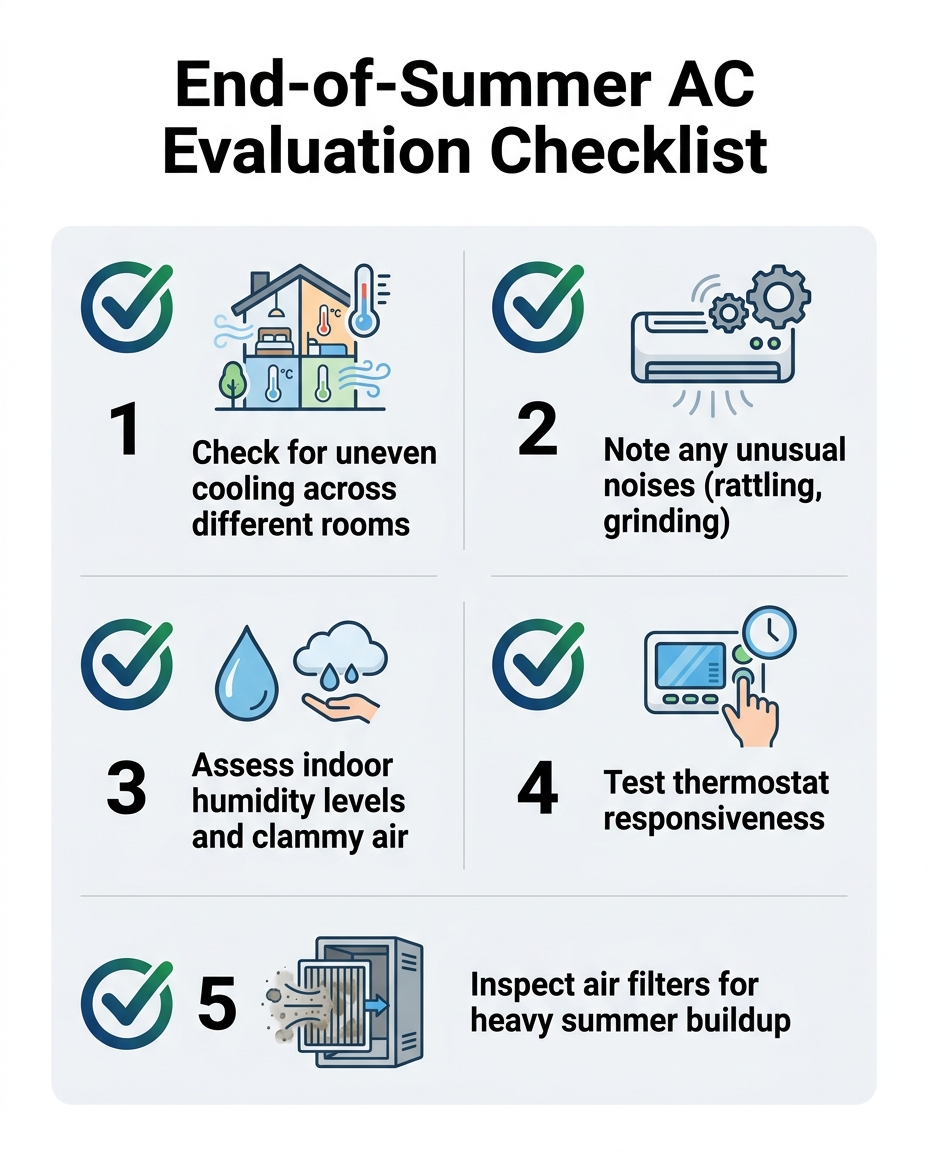
Walk through your home and evaluate the system using this checklist:
• Check for temperature disparities: Use a simple thermometer to measure the air temperature in different rooms. A difference of more than a few degrees indicates airflow restrictions or ductwork issues.
• Listen to the outdoor unit: Stand next to the condenser. Rattling, grinding, or loud humming sounds that developed over the summer indicate worn motor bearings or loose components.
• Inspect the indoor coils: If you can safely access the indoor air handler, check for ice buildup on the coils. Ice in late summer is a major red flag for airflow or refrigerant problems.
• Check the outdoor coil fins: Look for bent fins or heavy debris blocking the sides of the outdoor unit, which suffocates the system.
The Danger of Ignoring Minor Leaks
Small refrigerant leaks force the compressor to work harder, accelerating wear on the most expensive part of your system. Diagnosing and fixing coil or leak issues now ensures the system is fully repaired and ready for its next cycle. If you let a system sit idle all winter with a slow leak, you will turn it on next spring only to find it completely empty and unable to cool.

Bridging the Gap: How AC Evaluation Prepares Your Heating System
Central cooling and heating systems share vital infrastructure. While the outdoor condenser rests during the winter, the indoor blower motor, the ductwork, and the thermostat work year-round. Because these components are shared, evaluating your air conditioner during the late August transition to fall directly benefits your upcoming winter heating performance.
If your AC struggled to push air to the second floor in July, your furnace will struggle to push warm air to that same floor in December. Evaluating airflow issues now—like blocked vents, leaky duct seams, or a failing blower motor—is step one of a comprehensive heating system preparation strategy.
Testing the thermostat's responsiveness during this seasonal transition is also critical. If the thermostat is misreading the room temperature or failing to communicate quickly with the cooling equipment, it will do the exact same thing to the furnace. Resolving these shared-component issues now ensures a smooth transition when the first freeze hits.
• Blower Motor — Summer Strain (Cooling): Runs continuously to circulate cool air — Winter Impact (Heating): Must be strong enough to push heavy, warm air
• Ductwork — Summer Strain (Cooling): Condensation can form on poorly insulated ducts — Winter Impact (Heating): Leaks cause massive heat loss into attics/crawlspaces
• Thermostat — Summer Strain (Cooling): Frequent adjustments cause sensor wear — Winter Impact (Heating): Inaccurate readings lead to a freezing house
Evaluating Indoor Air Quality Before the Windows Close
Summer air conditioning usage circulates a massive amount of dust, pollen, and pet dander through your system. By the end of the season in Taylorsville KY, your filter and indoor components have trapped months' worth of airborne debris. Evaluating your system's cleanliness now prevents blowing accumulated summer allergens back into your home all winter long.
Once the weather turns cold, windows stay shut and houses get sealed up tight. Any pollutants trapped in the HVAC system will continuously cycle through your breathing air. This is the perfect time to check the physical condition of the air filter, the evaporator coil, and the blower motor for debris buildup.
The Filter's Journey
A standard filter might look fine at a quick glance, but deep inside the pleats, late-summer pollen and dust mites are packed tight. Pull the filter out and hold it up to a light source. If you cannot see light shining through, the filter is suffocating your system. Beyond just changing the filter, the end of summer is the best time to introduce advanced indoor air quality solutions. Upgrading to a thicker media filter or adding a whole-home purifier while the system is being evaluated prepares your indoor environment for a healthy winter.
Strategic Planning vs. Emergency Panic: The Proactive Advantage
There is a massive difference between the stress of a mid-summer AC failure and the calm, calculated approach of an end-of-season evaluation. When a system breaks down in July, you are forced to make rushed decisions just to get the house cool again. By evaluating the system during the late August transition to fall, you take back control.
Knowing the exact condition of your unit now gives you months to budget for potential repairs or replacements. You can weigh your options carefully, research different models if a replacement is near, and schedule the work at your convenience. Working with a team that shares 3D Heating and Cooling's commitment to comprehensive home comfort means you get a proactive assessment, catching end-of-season wear before it becomes a costly breakdown next spring. Proactive comfort strategists focus on comprehensive assessments that educate the homeowner, rather than pushing immediate, high-pressure sales.
The financial and emotional peace of mind that comes from knowing exactly where your system stands is invaluable. You won't spend the winter wondering if your air conditioner will turn back on next year, because you already have a documented plan.
Secure Your Comfort for Next Year Without the Rushed Pressure
Having a clear understanding of your air conditioner's health before it goes dormant provides incredible satisfaction. You no longer have to cross your fingers and hope for the best when the weather warms up again in Taylorsville KY. Acting now provides the luxury of time to plan for any necessary tune-ups, repairs, or system upgrades.
Do not let the memory of your system's summer struggles fade away with the autumn breeze. Take the time to document how your home feels today, check for signs of component wear, and schedule a professional evaluation to transition smoothly into the heating season. Taking control of your home comfort now ensures you are ready for whatever the weather brings next year.
Frequently Asked Questions
What should I check on my AC at the end of summer?
You should start by checking the air filter, listening for unusual noises, and measuring temperature differences between rooms. A dirty filter or strange grinding sounds indicate the system has taken a beating over the summer. Documenting these issues now helps a technician address them before the unit is shut down for winter.
How do I evaluate my air conditioner's performance?
Evaluate performance by checking how well the system cools and dehumidifies your home. If the air feels sticky, or if the unit runs constantly without reaching the set temperature on the thermostat, performance has degraded. Keeping a simple log of these symptoms provides a clear picture of the system's overall health.
Should I service my AC at the end of summer?
Yes, having your AC serviced at the end of summer is highly beneficial. It allows a professional to clean away months of accumulated dust and fix minor wear and tear before it worsens. Addressing these issues now prevents a surprise breakdown during the first heatwave of the following year.
Is it better to replace an AC in the fall?
Replacing an AC in the fall often provides a less stressful experience than replacing it during a summer emergency. Because the weather is cooler, you are not rushing to restore comfort to a sweltering house. This gives you ample time to research options and schedule an installation at your convenience.
How do I know if my AC is losing efficiency?
An unexplained spike in your late-summer energy bills is a strong indicator of lost efficiency. You might also notice the system running longer cycles just to maintain the same temperature it easily hit in May. When components wear down or coils get dirty, the system simply requires more power to do the same amount of work.
Can end-of-summer AC issues affect my winter heating?
Yes, because your cooling and heating systems share vital components like the blower motor, ductwork, and thermostat. If the blower motor is struggling to push cold air in August, it will also struggle to push warm air in December. Fixing airflow and thermostat issues now directly improves your upcoming winter heating performance.
Financing

Now Offering Financing Options with Affordable Monthly Payments
where we operate
Service Areas
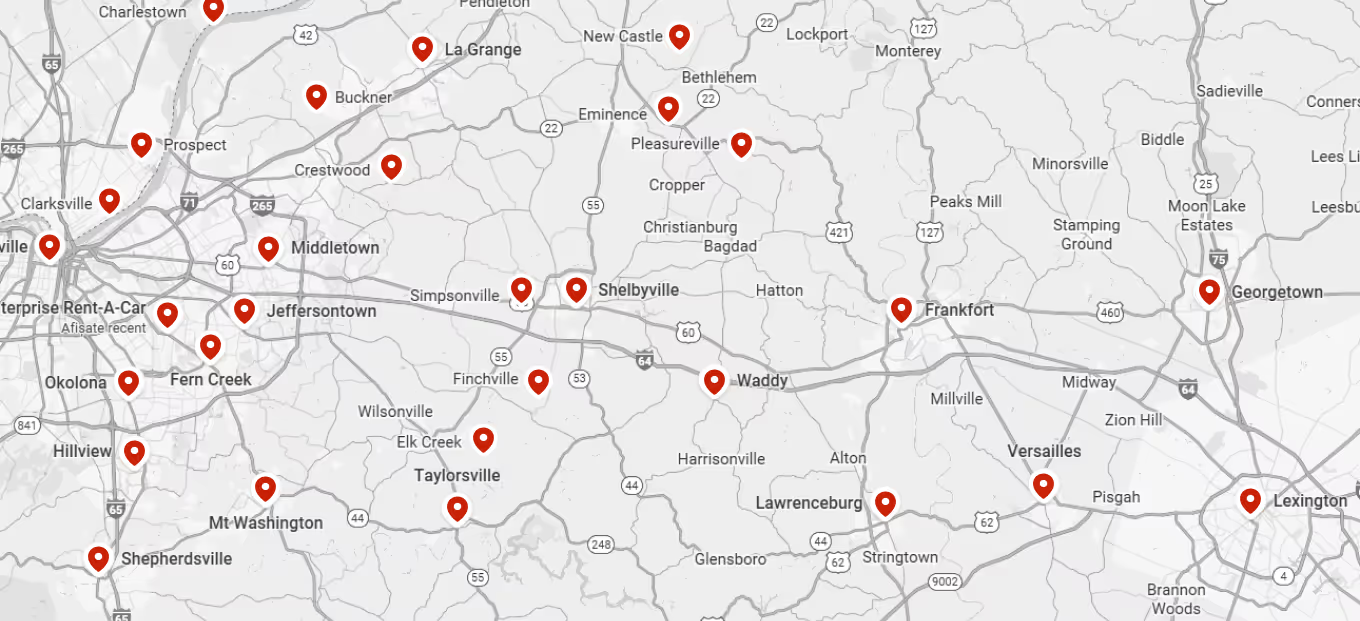
Proudly serving Spencer county, Jefferson county, Bullitt county, and the surrounding areas
Short Heading Goes Here
Sed iaculis aenean sit sed risus arcu vitae integer elit.

