

.svg)


.avif)



5 min read
Navigating Emergency AC Repair Wait Times in Bardstown and Taylorsville
The Reality of Peak Summer Heatwaves and HVAC Demand
July in Central Kentucky brings a heavy, relentless heat. At 3D Heating and Cooling, our team has seen firsthand how stressful it is when your cooling system fails right as the heat index pushes above 100 degrees. Navigating emergency AC repair wait times in Bardstown and Taylorsville is a stressful reality for many homeowners each season. You are suddenly stuck in a rapidly warming house, wondering when relief will arrive.
For professional support and reliable scheduling, explore our Air Conditioning Services and Air Conditioning Repair and Service options.
The immediate stress of an air conditioning breakdown is entirely understandable. Your home is supposed to be your sanctuary from the weather, and losing that barrier feels overwhelming. However, in our experience serving local families, it helps to understand that regional demand surges inevitably lead to dispatch wait times, even with dedicated emergency service protocols in place. When peak summer heatwaves hit our area, the extreme temperatures place maximum strain on every aging or struggling HVAC system simultaneously.
This means local service boards fill up rapidly. Hundreds of homeowners find themselves in the exact same situation on the exact same afternoon. Setting the right expectations is essential. A wait time is going to happen, but you are not helpless during this window. Taking immediate, safe triage steps will keep your home's indoor temperature manageable and protect your expensive cooling equipment from further damage while you wait for one of our dispatched technicians.
Understanding Emergency Dispatch Surges in Central Kentucky
When extreme weather events blanket Bardstown and Taylorsville, simultaneous equipment failures occur across the region. In our years of dispatching technicians throughout Central Kentucky, we've observed it comes down to simple mechanics: systems that have been running with minor, unnoticed issues suddenly cross their breaking point under the heavy load of a 95-degree afternoon.
Dispatch logistics during a massive surge require careful triage. Reputable contractors prioritize calls based on safety and severity. For example, a home with a complete system failure where elderly residents reside takes precedence over a home where the system is still running but struggling to reach the set temperature. This triage process ensures that the most vulnerable households receive attention as quickly as possible, but it also means that standard repair calls are placed in a queue.
The Value of Honest Communication
During these high-stress periods, honest communication matters more than ever. 3D Heating and Cooling is committed to transparent communication regarding wait times. We believe in empowering homeowners with the truth rather than leaving them in the dark. Many companies might make unrealistic "fastest service" promises just to secure your business, only to leave you waiting for days without an update.
Our team takes a different approach. We provide realistic timelines for HVAC Services in Bardstown, KY, so you can make informed decisions about how to manage your household in the meantime. Knowing exactly what to expect reduces anxiety and allows you to put practical cooling strategies into action.
The Crucial First Step: Turn Off Your Malfunctioning AC
If your system is blowing warm air, making strange grinding noises, or constantly tripping the circuit breaker, you must take immediate action to protect the machinery. One of the most common pieces of advice our dispatchers give during peak summer heatwaves is to shut the system down completely.
1. Switch the thermostat to OFF: Do not just turn the temperature up. Physically switch the system mode from "COOL" to "OFF."
2. Leave the fan setting alone: Ensure the fan is set to "AUTO" rather than "ON" so the blower motor stops running.
3. Check the outdoor unit: Step outside and verify that the outdoor compressor and fan have stopped spinning.
4. Wait for professional diagnosis: Do not attempt to turn the system back on after a few hours to see if it "fixed itself."
Why Turning It Off Matters
Continuing to run a broken air conditioner can cause severe secondary damage. If the system has low refrigerant or a failing blower motor, the evaporator coil inside your home gets too cold. The natural condensation on the coil will freeze solid, turning your indoor unit into a block of ice.
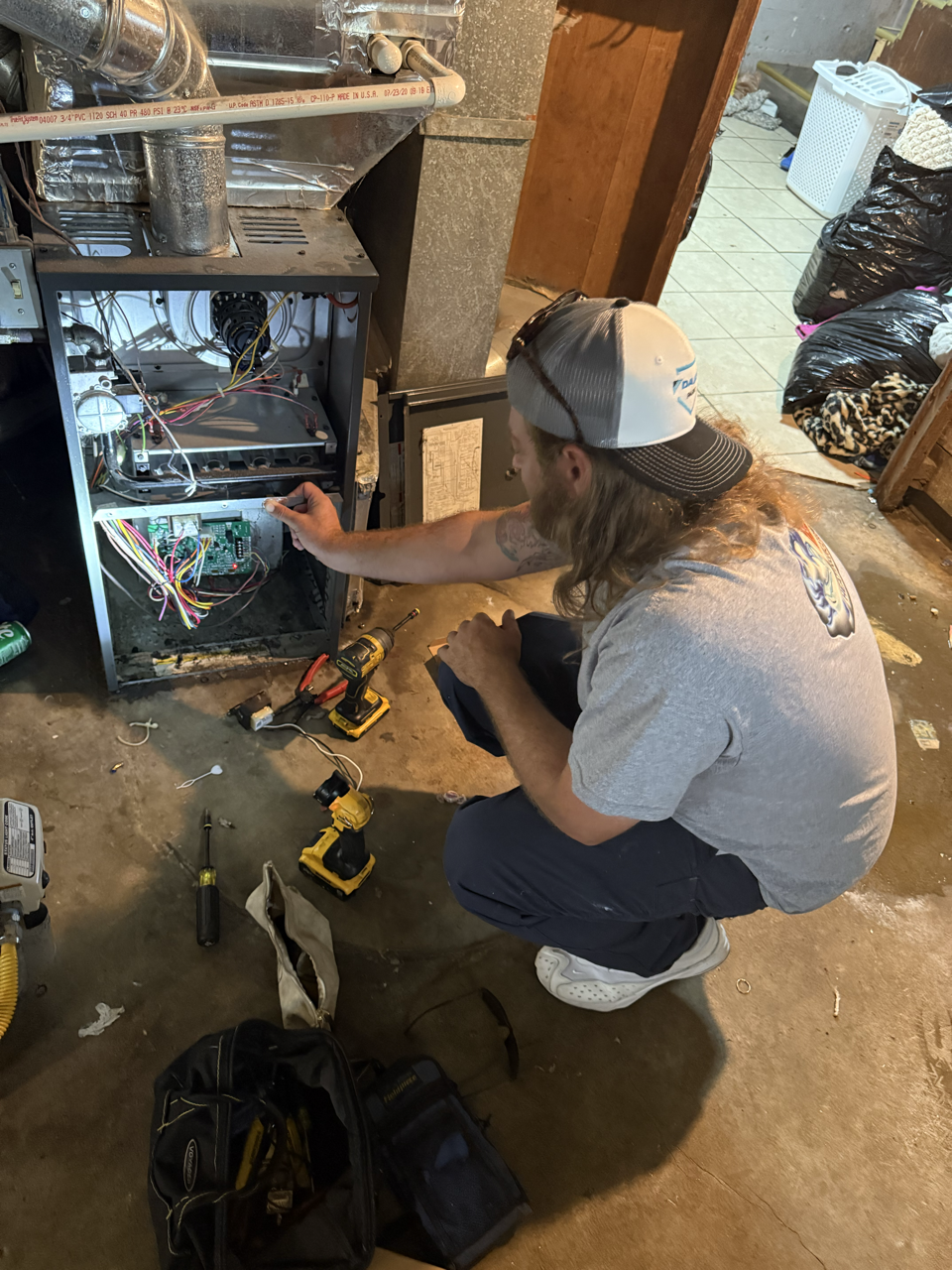
A frozen coil adds 2 to 24 hours of mandatory thawing time before our technicians can even begin repairs. We cannot test refrigerant pressures, check for leaks, or replace components while the unit is encased in ice. By turning the system off immediately, you prevent this freeze-up, ensuring that when the technician arrives for your Air Conditioning Repair and Service, they can get straight to work.
Strategies to Block Heat Gain While Awaiting a Technician
Once the system is safely powered down, your next goal is to slow the rate at which your home absorbs heat. In our experience walking into hundreds of overheated homes across Taylorsville and Bardstown, we know spaces can warm up incredibly fast when the sun is beating down on the roof and windows.
Use this practical checklist our team shares with customers to block heat gain and trap the remaining cool air inside your living spaces:
• Keep all windows and exterior doors tightly closed: It might be tempting to open a window, but if it is 95 degrees outside, you are only letting hot air in. Keep the house sealed.
• Deploy blackout curtains and heavy blinds: Sun-facing windows act like magnifying glasses. Closing your blinds can reduce solar heat gain by up to 33%, significantly slowing the temperature rise in those rooms.
• Avoid heat-generating appliances: Do not use your oven, stove, or clothes dryer during the hottest parts of the day. Opt for microwave meals or cold sandwiches to keep ambient heat down.
• Turn off unnecessary lighting: Traditional incandescent bulbs generate a surprising amount of heat. Keep the lights off in rooms you aren't actively using.
• Limit opening the refrigerator: Every time you open the fridge, its motor has to work harder to cool back down, which expels more warm exhaust air into your kitchen.


Combating High Indoor Humidity Without Air Conditioning
When our technicians evaluate indoor air quality, one of the biggest challenges we note during peak summer heatwaves in Central Kentucky is the moisture in the air. Our region experiences subtropical summer conditions, with dew points frequently sitting in the uncomfortable 70s. When your air conditioner stops running, it stops dehumidifying your home. Indoor stuffiness escalates rapidly when air circulation stops.
High humidity makes the ambient temperature feel much hotter than the thermometer reads because it prevents your body's sweat from evaporating quickly. To combat this, you need to keep the air moving.
Optimizing Airflow and Dehumidification
Run your ceiling fans counterclockwise at their highest speed. This pushes air straight down, creating a wind-chill effect on your skin. However, remember that fans cool people, not rooms. Running a fan in an empty room just wastes electricity and adds a tiny amount of motor heat to the space. Turn them off when you leave the room.
If you have a portable dehumidifier in your basement or a closet, bring it into your main living area. Removing the heavy moisture from the air will make an 82-degree room feel far more tolerable. Understanding Why Your Taylorsville Home Feels Stuffy Even When the AC is Running comes down to managing this exact balance of moisture and airflow.
Keeping Your Household Safe During Extended Outages
While protecting your equipment and blocking heat are important, personal safety is always the top priority. When our dispatchers speak with families dealing with extended wait times in Bardstown and Taylorsville, we always emphasize monitoring the physical well-being of everyone in the house.
Prioritize hydration. Drink plenty of water throughout the day, even if you do not feel thirsty, and wear loose, breathable cotton clothing. It is especially critical to monitor vulnerable family members. Elderly relatives, infants, young children, and pets are far more susceptible to heat exhaustion than healthy adults.
Knowing When to Relocate
You need to establish a firm threshold for when it is safer to leave the house. Do not try to tough it out if the indoor environment becomes dangerous.
• 75°F to 80°F (Moderate Humidity) — Recommended Action: Stay home, use fans, block sunlight, and stay hydrated.
• 80°F to 85°F (High Humidity) — Recommended Action: Limit physical activity, run portable dehumidifiers, monitor vulnerable family members.
• 85°F+ (Oppressive Humidity) — Recommended Action: Relocate to a public cooling center, local library, or a friend's house with working AC.
Keep your phone charged and handy so our dispatch team can reach you when the technician is en route. It is perfectly fine to wait out the hottest hours of the afternoon at a local indoor mall or library and return home when the sun goes down.
Reducing the Risk of Mid-Summer System Failures
While emergencies do happen, our service records show that the vast majority of breakdowns during peak summer heatwaves stem from deferred maintenance. When a system is neglected, minor wear and tear compounds until a critical component fails under stress.
Shifting your focus to proactive care can save you from experiencing this stressful wait time next season. The simplest and most effective step we recommend is changing your air filter regularly. A clogged filter restricts airflow, forcing the blower motor to work twice as hard and increasing the likelihood of an overheated motor or a frozen coil.
The Benefits of Proactive Tune-Ups
Professional seasonal tune-ups are the best defense against mid-summer failures. When our technicians perform routine visits, we test electrical components like capacitors and contactors, which are notorious for failing on 95-degree days. We also check refrigerant levels and clean the outdoor condenser coils so the system can release heat efficiently.
Catching a weak capacitor in May prevents a complete system shutdown in July. Enrolling in a preventative HVAC maintenance plan ensures these checks happen automatically every year, giving you peace of mind before the severe weather arrives.
Frequently Asked Questions About Emergency AC Outages
Homeowners in Bardstown and Taylorsville frequently ask our team the same urgent questions when their systems go down. Here are the direct answers you need.
What should I do while waiting for AC repair?
Turn off the system to prevent freezing, close all blinds, use ceiling fans, and stay hydrated. Keeping exterior doors closed traps the remaining cool air inside. Focus on blocking direct sunlight, as solar heat gain is the fastest way a house warms up.
Should I turn off my AC if it is blowing warm air?
Yes, immediately. Running it can freeze the evaporator coil or damage the compressor, leading to longer repair times. A system blowing warm air is not going to fix itself, and leaving it running only forces broken components to continue grinding away.
How long does emergency AC repair take?
Wait times vary based on regional demand and severe weather, but transparent communication from your HVAC provider is key. During a heatwave, wait times can stretch to the next day due to the sheer volume of neighborhood failures. A reliable company will give you an honest window rather than stringing you along.
How can I cool my house down without AC?
Block direct sunlight, avoid using heat-generating appliances, and optimize airflow with strategically placed fans. Running ceiling fans counterclockwise creates a breeze that cools your skin. If you have a portable dehumidifier, use it to remove heavy moisture from the air.
Is a frozen AC coil an emergency?
It requires professional service, but the system must be turned off to thaw completely before a technician can accurately diagnose the underlying issue. A frozen coil is often a symptom of restricted airflow or a refrigerant leak, neither of which can be fixed while the unit is covered in ice.
Honest Communication and Reliable Solutions for Your Home
Losing your cooling system during peak summer heatwaves is always frustrating, but knowing how to manage the situation gives you back a sense of control. By turning the system off to protect the equipment and taking smart steps to block heat gain, you set the stage for a smoother, faster repair process once our team arrives.
Partnering with a local team that values honesty over unrealistic promises ensures you are never left guessing. If you are currently navigating emergency AC repair wait times in Bardstown and Taylorsville, stay safe, follow these triage steps, and reach out to 3D Heating and Cooling to schedule a reliable diagnostic visit to get your home comfortable again.
Financing

Now Offering Financing Options with Affordable Monthly Payments
where we operate
Service Areas
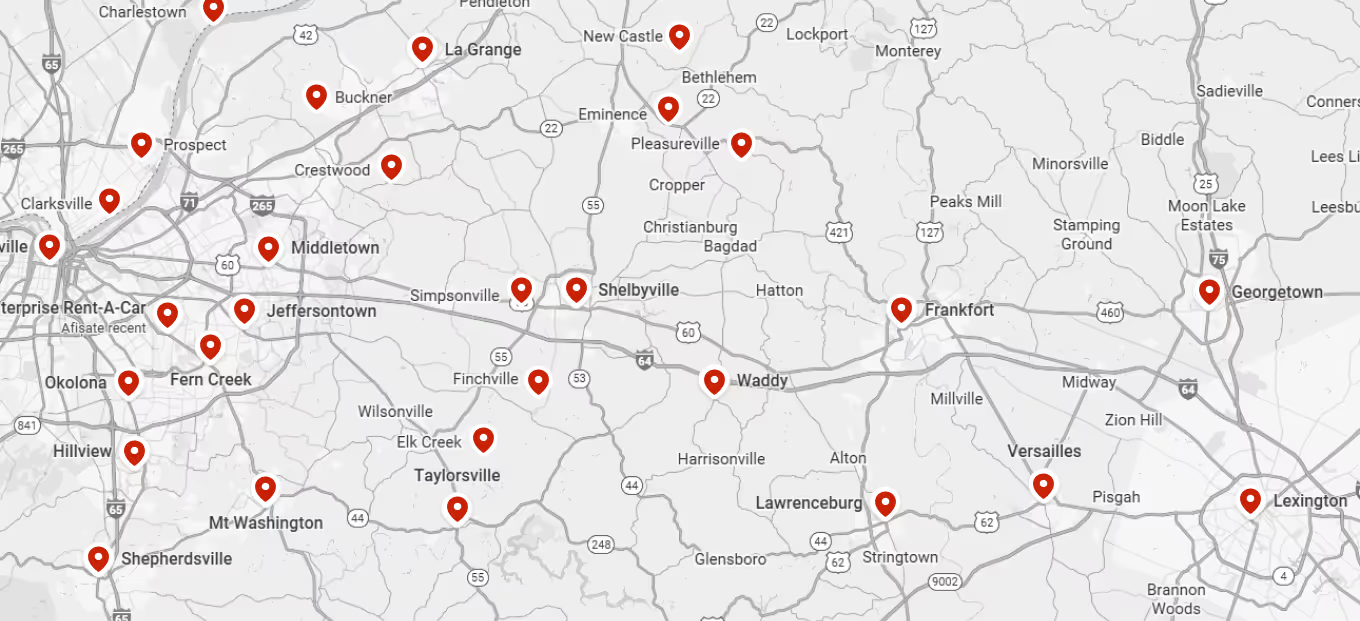
Proudly serving Spencer county, Jefferson county, Bullitt county, and the surrounding areas
Short Heading Goes Here
Sed iaculis aenean sit sed risus arcu vitae integer elit.

