

.svg)


.avif)



5 min read
Pre-Season Heating Tune-Ups vs. Waiting for a Breakdown
The 'If It Ain't Broke' Gamble: Rethinking Fall Heating Prep
A common myth among homeowners is that a furnace running fine last spring doesn't need attention now, but weighing pre-season heating tune-ups vs. waiting for a breakdown reveals exactly why the "if it ain't broke, don't fix it" mentality is so risky. Your heating equipment has been sitting completely idle for months. During that long summer hibernation, dust settles on sensitive sensors, lubrication dries up on moving parts, and electrical connections can loosen. Assuming the system will roar back to life flawlessly on the first freezing night is a gamble that rarely pays off.
To avoid the rush and ensure your home stays comfortable, our team at 3D Heating and Cooling strongly recommends booking professional heating services during the September pre-heating transition as the smartest move you can make.
The choice before you is a clear decision point: schedule preventive maintenance during the calm, mild days of early fall, or risk an emergency failure when temperatures plummet and our technicians are booked solid. Proactive care is entirely predictable. You choose the day, you choose the time, and a professional thoroughly inspects the unit to ensure safe operation. Reactive repairs, on the other hand, compound your risks. A breakdown never happens at a convenient time—it usually occurs when the system is working its hardest to combat extreme cold.
A foundational HVAC maintenance plan goes far beyond simply changing a filter. It involves a comprehensive physical and mechanical audit of the equipment. Technicians test safety controls, calibrate thermostats, inspect the heat exchanger for dangerous cracks, and measure electrical draws. By addressing these foundational elements during the early fall, you secure a reliable, safe, and efficient heating season before the winter weather even arrives.
The Mechanics of Cascading Failures
Heating systems are not just boxes that blow hot air; they are complex, interconnected mechanical networks. Every single component relies on the proper function of the parts around it. When one small part begins to struggle, it does not fail in isolation. Instead, it forces the rest of the system to overcompensate, creating a domino effect that turns minor wear-and-tear into a catastrophic total system failure.
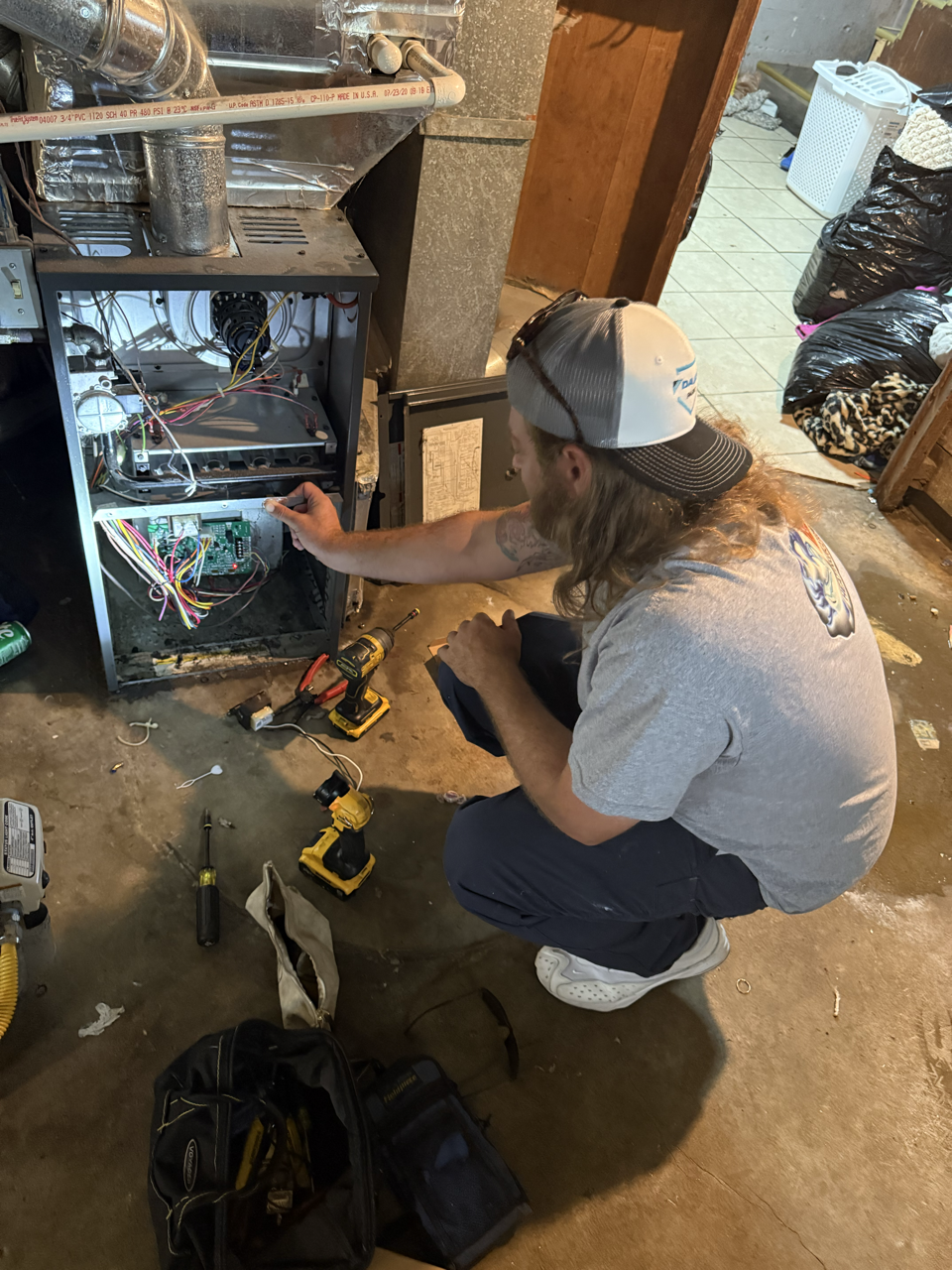
Consider a dirty flame sensor. This small, inexpensive component is responsible for detecting whether the gas burners have successfully ignited. If it is coated in a layer of summer dust, it cannot sense the flame accurately. The system will rapidly shut down for safety, only to try starting again a few minutes later. This constant on-and-off cycle—known as short-cycling—puts immense strain on the igniter, the gas valve, and the heat exchanger. What started as a simple need for a routine cleaning quickly escalates into a scenario where our technicians frequently have to perform extensive residential furnace repair.
Another common example is a weakening electrical capacitor. The capacitor provides the initial jolt of energy needed to start the heavy blower motor. If the capacitor is failing, the blower motor pulls excessive electrical current to force itself to start. This causes the motor to overheat, degrading its internal wiring. Eventually, the expensive blower motor burns out completely—all because a minor, easily replaceable electrical component was ignored.
How Small Issues Strain the Entire System
In our years serving the community, we've noticed that cascading damage inside a neglected furnace usually follows a predictable pattern across many Taylorsville, KY area homes:
• Friction from dry bearings: Moving parts that lack proper lubrication experience high friction, which increases the electrical draw and overheats motors.
• Restricted airflow: Neglected blower wheels and clogged filters trap heat inside the unit. This causes the heat exchanger to reach unsafe temperatures, leading to metal fatigue and eventual cracking.
• Shortened equipment lifespan: The compounding effect of these minor strains drastically reduces the total operational years you will get out of your investment.
Preventive tune-ups catch these isolated component issues before they trigger a mechanical cascade, saving your equipment from unnecessary damage.
The Harsh Reality of Emergency Winter Breakdowns
Kentucky's sharp and unpredictable fall-to-winter temperature swings frequently trick homeowners into a false sense of complacency. You might experience a mild, 65-degree afternoon, only to see the thermometer plunge below freezing overnight. This sudden, aggressive shift demands maximum output from a furnace that has been completely idle for over half the year. If the system has underlying weaknesses, this sudden stress test is exactly when it will fail.
The reality of an emergency breakdown is far more stressful than most anticipate. When the first major freeze hits, every unprepared home in the area experiences heating failures simultaneously. This creates an massive backlog for local HVAC companies. Wait times for emergency service can stretch from hours into days, leaving your family shivering in a rapidly cooling house. Losing heat on the coldest day of the year, or late on a weekend evening, elevates a simple mechanical failure into a genuine safety concern.
The safety risks extend beyond just freezing temperatures. One local homeowner we helped experienced this firsthand during a recent fall season when their carbon monoxide detectors suddenly began alarming. Our team arrived to investigate and discovered a severely cracked heat exchanger inside the furnace. Because the issue was caught just as the weather turned, the old, unsafe machine was safely removed and a completely new system was installed before the harsh winter weather truly set in. If that cracked heat exchanger had gone unnoticed until the dead of winter, the situation could have been far more dangerous.
Scheduling a September tune-up allows you to bypass the chaotic winter emergency queue entirely. You get the peace of mind knowing your system has been vetted and verified before the first frost ever threatens Taylorsville, KY area homes.
Efficiency Drain: The Hidden Financial Cost of Complacency
Skipping a pre-season tune-up doesn't just increase your risk of a breakdown; it actively drains your wallet every time the thermostat clicks on. According to data from the Department of Energy (DOE) and Energy Star, heating systems lose a significant percentage of their operational efficiency annually if they do not receive proper, professional maintenance. This efficiency drain is a hidden financial cost that inflates your monthly utility bills all winter long.
The mechanics of this efficiency loss are straightforward. A furnace needs to breathe to distribute heat effectively. If the blower motor is caked in dust, or if the internal sensors are dirty, the system has to burn more fuel and run for longer cycles to produce the exact same amount of heat. You are essentially paying a premium for compromised comfort. The unit works harder, consumes more energy, and yet your living room still feels drafty.
This efficiency drain applies to all forms of residential heating, including modern heat pump systems. Heat pumps rely on clean internal and external coils to transfer thermal energy effectively. If the coils are insulated by a layer of grime, the heat transfer process is severely choked, forcing the compressor to run continuously.
Framing a fall tune-up as an expense is a misconception. It is a protective investment. The moderate cost of a September pre-heating transition tune-up pays immediate dividends by restoring the system to its peak factory efficiency, directly lowering the amount of energy required to keep your home warm.
Protecting Your Manufacturer Warranty
One of the most critical, yet frequently overlooked, consequences of skipping pre-season tune-ups is the risk of voiding your equipment's manufacturer warranty. Modern HVAC systems come with warranties that cover major components like heat exchangers and compressors for up to a decade, but those guarantees come with strict homeowner responsibilities.
Most major HVAC manufacturers explicitly require proof of annual professional maintenance to keep their warranties valid. If your system suffers a major failure in the middle of winter, the manufacturer will likely request service records before approving a warranty claim. If our technicians determine that the breakdown was caused by a lack of basic maintenance—such as a burned-out motor caused by years of restricted airflow—the manufacturer has the legal right to deny the claim entirely.
Waiting for a breakdown puts you in a highly vulnerable financial position. Instead of having a multi-thousand-dollar part replaced under warranty, you could be forced to pay entirely out of pocket simply because you skipped a routine inspection.
Think of your annual fall tune-up as an active insurance policy for your equipment's warranty status. By having a licensed professional inspect and document the health of your system every year, you maintain a paper trail of responsible ownership. This guarantees that if a factory defect does cause a failure in Taylorsville, KY area homes, you are fully protected from the financial fallout.
Side-by-Side: Proactive Maintenance vs. Reactive Panic
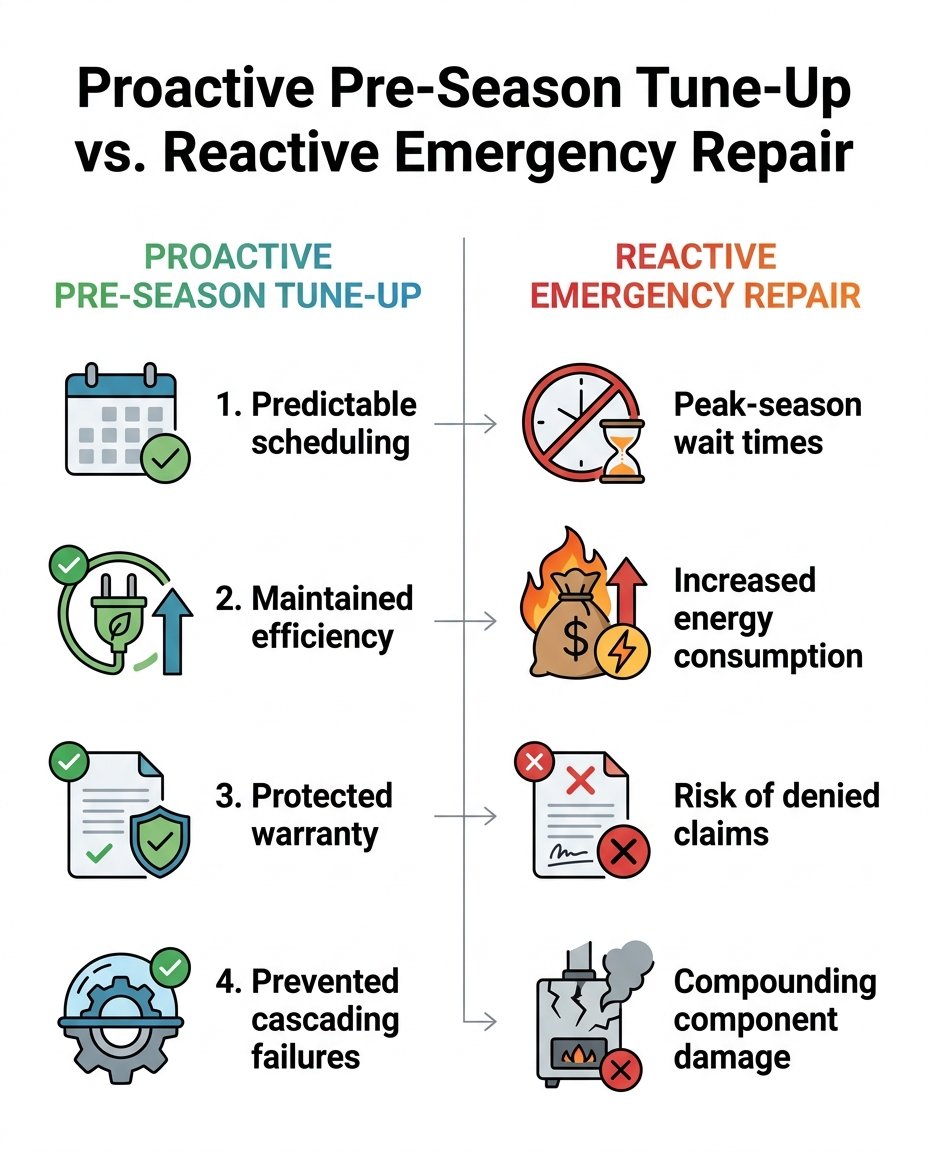
To truly understand the value of early fall preparation, it helps to look at the two approaches side-by-side. The contrast between controlled, convenient scheduling and the chaotic timing of a midnight breakdown highlights exactly why proactive care wins every time.
We recall another local homeowner who found themselves without heat late one evening on the absolute coldest day of the year. While our on-call technician was able to arrive that same night, properly explain the issue, and get the system back up and running quickly, the intense stress of a freezing house in the dark is an experience we want our customers to avoid entirely.
• Timing & Convenience — Proactive Fall Tune-Up: Scheduled on your terms during mild weather. — Reactive Winter Breakdown: Happens unpredictably, often on holidays or freezing nights.
• Financial Impact — Proactive Fall Tune-Up: Predictable, flat investment that lowers energy bills. — Reactive Winter Breakdown: Compounding expenses from emergency labor and major parts.
• System Efficiency — Proactive Fall Tune-Up: Restored to peak factory performance. — Reactive Winter Breakdown: Operates at a severe deficit until failure occurs.
• Warranty Status — Proactive Fall Tune-Up: Fully protected with documented service records. — Reactive Winter Breakdown: High risk of denied claims due to documented neglect.
• Peace of Mind — Proactive Fall Tune-Up: Total confidence your home is winter-ready. — Reactive Winter Breakdown: Constant worry about whether the system will survive the night.
Incorporating a professional HVAC inspection into your broader seasonal home prep checklist ensures that your home is structurally and mechanically ready to handle whatever the winter season delivers during the September pre-heating transition.

Frequently Asked Questions About Fall Heating Prep
Is a furnace tune up really necessary?
Yes, a furnace tune-up is absolutely necessary to prevent minor wear-and-tear from escalating into major cascading failures. Without routine maintenance, small issues like dirty sensors or dry bearings force the system to overwork, which degrades expensive components over time. Regular tune-ups ensure the system operates safely, efficiently, and reliably all winter long.
What happens if I don't service my furnace before winter?
If you skip pre-winter service, your furnace will suffer a significant efficiency loss and an increased risk of sudden breakdowns. Dust buildup and restricted airflow force the system to consume more energy to produce heat, driving up your utility bills. Furthermore, you risk operating a system with undetected safety hazards, such as a cracked heat exchanger that could leak carbon monoxide.
How often should you get a heating tune up?
We recommend scheduling a professional heating tune-up annually, ideally before the heavy heating season begins. Having the system inspected once a year ensures that any wear from the previous winter is addressed, lubrication is refreshed, and safety controls are verified. Annual service is also the standard requirement to keep most manufacturer warranties valid.
Is HVAC maintenance a waste of money?
No, HVAC maintenance is a protective investment that actively saves you money. The cost of a routine tune-up is far less than the compounding expenses associated with emergency repairs, premature system replacement, and inflated monthly energy bills. It pays for itself by maximizing your equipment's lifespan and maintaining its peak efficiency.
When is the best time to schedule heating maintenance in Taylorsville?
At 3D Heating and Cooling, we tell our customers the best time to schedule heating maintenance in Taylorsville is during the early fall, specifically in September, before the first major freeze hits. Booking during this window ensures you bypass the peak-season rush for emergency repairs. It guarantees your system is fully prepared to handle Kentucky's unpredictable temperature drops before you actually need to turn the heat on.
Secure Your Winter Comfort Before the Cold Snaps
Gambling on an unmaintained furnace is a risk that directly compromises both your family's comfort and your home's energy efficiency. Waiting for a breakdown means accepting higher utility bills, risking voided warranties, and inviting the intense stress of a freezing house during a winter emergency. The "if it ain't broke" mentality simply doesn't apply to complex mechanical systems that require precision to operate safely.
Scheduling maintenance now, during the September pre-heating transition, is the smartest way to ensure reliable heat all winter long. By taking action before the severe cold arrives, you lock in predictable performance and genuine peace of mind.
For the ultimate defense against unexpected breakdowns, explore a comprehensive HVAC maintenance plan. A structured plan provides ongoing protection, ensures your equipment stays in peak condition year after year, and offers priority response so you never have to worry about being left in the cold.
Financing

Now Offering Financing Options with Affordable Monthly Payments
where we operate
Service Areas
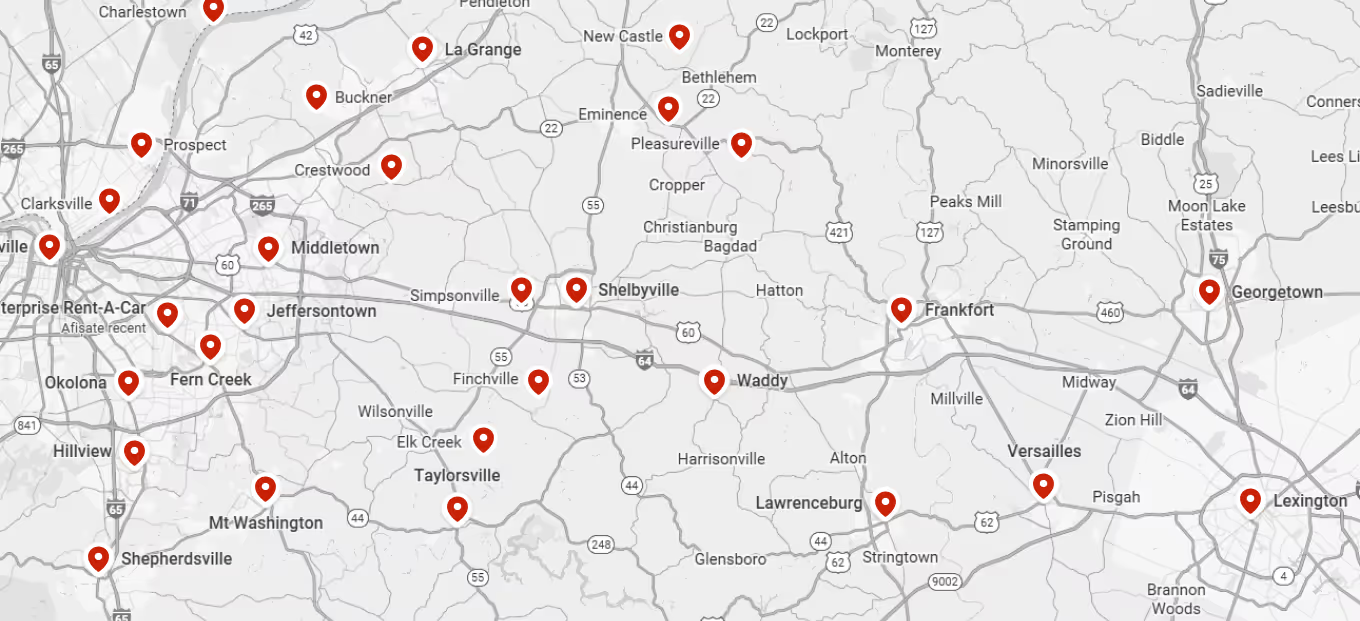
Proudly serving Spencer county, Jefferson county, Bullitt county, and the surrounding areas
Short Heading Goes Here
Sed iaculis aenean sit sed risus arcu vitae integer elit.

