

.svg)


.avif)



5 min read
Preparing Your Ductwork for the Shift to Heating Season
The Hidden Impact of the Early Fall HVAC Transition
September is here, meaning cooler nights are just around the corner, and preparing your ductwork for the shift to heating season is the one critical task you shouldn't skip before the temperatures drop permanently. At 3D Heating and Cooling, we frequently remind our customers that the transition from summer cooling to fall heating involves much more than just flipping a switch on your thermostat. It fundamentally changes how your house breathes. As the weather cools down, you will naturally start closing windows, shutting doors, and sealing up the house to keep the warmth inside. While this keeps you comfortable, it also traps the air inside your living spaces.
To ensure your home remains healthy and comfortable, taking control of your indoor air quality during the September transition to heating season is an absolute priority.
Whatever dust, pollen, and humidity-driven particulates have settled in your air ducts over the long summer months are currently sitting dormant in the dark. The moment your furnace blower kicks on for the first time, all of that accumulated debris is going to be blasted directly into your bedrooms, living room, and kitchen. Proactively clearing this buildup is the only way to prevent an immediate, noticeable drop in your home's air quality.
Our team views this early fall maintenance as a deliberate system reset. Over the summer, your air conditioning system ran constantly, pulling airborne particles through the return vents. While your air filter catches a significant portion of this debris, no filter is completely perfect. Microscopic particles always make their way into the ductwork, where they settle on the metal and fiberglass surfaces. By addressing this hidden buildup now, you ensure that your heating system starts the season with a clean slate, delivering fresh, warm air instead of recycled summer allergens.
What Hides in the Lungs of Your Home After Summer?
Your ductwork acts as the respiratory system of your house, constantly circulating everything that floats in the air. To understand why fall preparation is so critical, you have to look at what actually happens inside those hidden pipes during the hottest months of the year. In our years of servicing Taylorsville area homes, our technicians have seen firsthand how the summer season brings a unique set of challenges that directly impact the condition of your HVAC system.
High summer humidity is the primary culprit. As warm, moist air moves through the cooler ductwork, it can cause the interior surfaces of the ducts to become slightly sticky. This condensation creates a perfect trap for airborne particles. Instead of passing harmlessly through the system and getting caught by the filter on the next cycle, dust, pet dander, and lint begin to cling to the walls of the ductwork. Over several months, this creates a stubborn, textured layer of debris.
Common Summer Contaminants Trapped in Ducts:
• Late-Summer Pollen: Ragweed peaks heavily in September across the broader Kentucky region, easily finding its way indoors and settling into the ventilation system.
• Pet Dander and Hair: Pets shed continuously, and their microscopic dander sticks easily to humidity-coated duct walls.
• Microscopic Mold Spores: Summer moisture can allow dormant spores to settle in darker, cooler sections of the ductwork.
• Household Dust and Lint: Everyday activities generate dust that slowly builds up in the ridges of flexible ducting.
When the weather finally turns cold and the furnace blower activates, the environment inside the ducts changes rapidly. The hot, dry air from the furnace bakes that sticky summer residue. As the moisture evaporates, the trapped particulate matter dries out, flakes off, and is forcefully dislodged by the high-velocity airflow. This is why we often see the first few weeks of heating season trigger unexplained sneezing, dry throats, and allergy flare-ups indoors.
• Internal Environment — Summer (Cooling Season): Cool, prone to condensation, slightly sticky surfaces. — Fall/Winter (Heating Season): Hot, bone-dry, high-velocity air movement.
• Debris Behavior — Summer (Cooling Season): Particulates cling to the walls and accumulate in layers. — Fall/Winter (Heating Season): Dried debris flakes off and becomes airborne instantly.
• Airflow Impact — Summer (Cooling Season): Gradual restriction as sticky dust builds up on ridges. — Fall/Winter (Heating Season): Sudden distribution of allergens into living spaces.
Understanding this cycle is the first step in breaking it. By treating the ductwork as a vital component of your home's health, you can interrupt this seasonal shedding process before it ever reaches your living room.
The Truth Behind That First-Use Burning Smell
Every September, our dispatch board at 3D Heating and Cooling lights up with calls from homeowners concerned about the distinct, slightly alarming odor that fills the house the very first time the heat turns on. Many people expect a brief odor, dismissing it as a normal part of the transition to heating season. However, we always clarify the distinction between a harmless, temporary burn-off and a prolonged issue caused by neglected ductwork.
The Quick Fix vs. The Lingering Problem:
When a furnace sits idle for months, a thin layer of household dust naturally settles directly onto the heat exchanger—the metal component that gets incredibly hot to warm the air. When the burners ignite for the first time, this localized dust instantly burns up. This creates a very specific, sharp odor that usually dissipates within ten to fifteen minutes. If you open a window, the smell clears out quickly, and you likely won't smell it again for the rest of the winter.
However, if you are dealing with your furnace smelling like burning dust on the first use and the odor lingers for hours—or returns every time the blower cycles on—you are experiencing something entirely different. In our experience, a prolonged or heavy dusty smell strongly indicates that the ductwork itself is dirty.
In this scenario, the blower motor is continuously distributing settled allergens, dried-out summer dust, and loose particulates alongside the newly heated air. The hot air moving through the vents acts as a vehicle, carrying the stale, dusty smell into every room of the house. Preparing the ductwork before the cold weather sets in minimizes this unpleasant and irritating phenomenon. By removing the fuel for the smell—the dust in the ducts—you ensure that your first night of heating is cozy and fresh, rather than stuffy and concerning.
The Air Quality Trap of Sealed Winter Homes
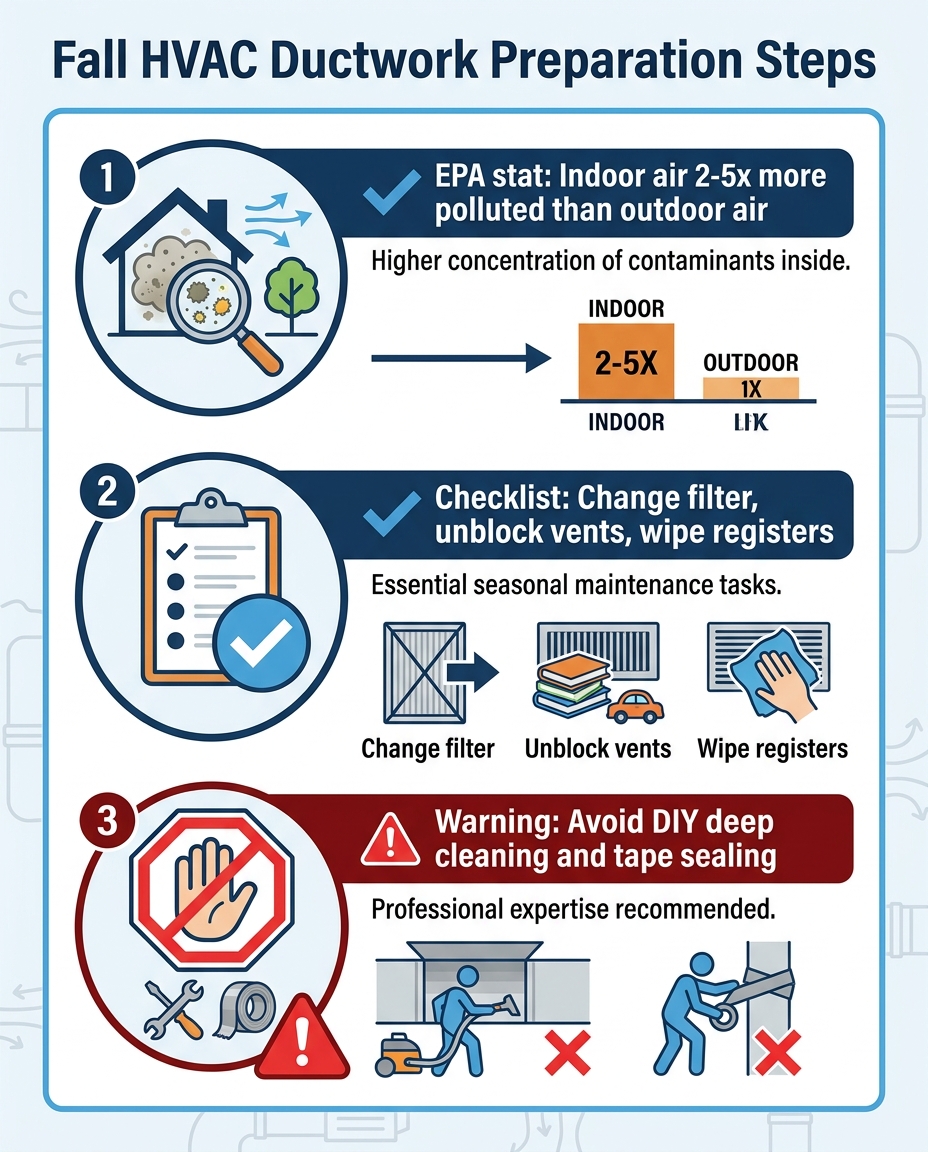
To fully grasp why fall duct preparation matters, you have to look at the science of indoor air quality. According to the Environmental Protection Agency (EPA), indoor air can be two to five times more polluted than outdoor air. While this statistic is true year-round, we see how the winter months severely exacerbate the issue due to the way modern Taylorsville homes are constructed and utilized.
During the spring and summer, your home naturally breathes. Open windows, screen doors, and frequent foot traffic in and out of the house provide natural ventilation. This constant exchange of air dilutes indoor pollutants, allowing volatile organic compounds (VOCs), cooking odors, and airborne dust to escape outside. The fresh outdoor air constantly replaces the stale indoor air.
Once homes are sealed for winter to conserve heat, this natural ventilation completely stops. Weatherstripping, caulking, and closed windows create a tight thermal envelope. While this envelope is fantastic for energy efficiency, it creates an air quality trap. The HVAC system begins to endlessly recirculate the exact same trapped air, pulling it through the return vents, heating it, and pushing it back out through the supply vents.
If your ductwork starts the season dirty, that trapped air is constantly being pushed over layers of dust and summer allergens. Because no fresh air is entering the home to dilute the concentration of particulates, the indoor air quality will steadily decline and remain poor until spring arrives. This continuous recirculation is a primary driver of wintertime allergies, dry skin, and respiratory irritation.
We consistently advise homeowners that securing a seasonal maintenance plan is one of the most effective ways to ensure your system is evaluated before this winter lockdown occurs, keeping the air you breathe clean and healthy for months on end.
Your Pre-Heating Season Ductwork Checklist
Taking action before the freezing temperatures arrive requires a systematic approach. There are several safe, highly effective steps you can take to prepare your system without crossing into dangerous or counterproductive DIY territory. Based on the common issues our technicians encounter during fall tune-ups, we recommend following this checklist to get your home ready for the shift.
1. Inspect and Replace the HVAC Air Filter: Before the very first heating cycle, pull out your current filter. If it is gray, clogged, or has been in place since mid-summer, throw it away. Replace it with a fresh, high-MERV option (MERV 8 to 11 is ideal for most residential systems). A clean filter ensures maximum airflow and catches the initial wave of dust when the blower turns on.
2. Unblock All Return and Supply Vents: Walk through every room in the house and physically inspect the registers. Over the summer, furniture, rugs, or heavy curtains may have been moved over floor vents or in front of wall returns. Blocked vents strangle your system's airflow, forcing the blower motor to work harder and increasing the static pressure inside the ducts.
3. Wipe Down Vent Covers and Registers: Take a damp microfiber cloth and thoroughly wipe down the exterior of all vent covers. You will likely find a thick layer of fuzzy dust clinging to the grilles. Removing this visible surface dust prevents it from being immediately blown into the room when the air kicks on.
4. Listen for Unusual Whistling Sounds: Turn the fan setting on your thermostat to "ON" so the blower runs without the heat. Walk the house and listen closely to the vents. High-pitched whistling sounds usually indicate restricted airflow, a severely clogged filter, or disconnected ductwork in the walls or attic that needs professional attention.
When to Avoid DIY Methods
While surface-level preparation is highly encouraged, the interior of your ductwork is delicate and complex. Attempting to deep-clean or repair the system yourself can lead to expensive damage.
• Never use household vacuums deep inside the ducts: Shoving a standard vacuum hose down a vent can easily tear, crush, or puncture flexible fiberglass ductwork, leading to massive air leaks in your attic or crawlspace.
• Avoid using over-the-counter "duct tape" for sealing leaks: Despite its name, standard cloth-backed duct tape degrades rapidly when exposed to the high heat of a furnace. It will dry out, peel off, and leave a sticky, useless residue behind within a single season.

Why Advanced Duct Care Requires Complete System Expertise
While wiping down registers and changing filters are excellent proactive steps, true ductwork health goes far beyond what you can reach from the living room. The network of pipes running through your walls, attic, and basement is a highly engineered system that requires professional oversight to function correctly.
When our crews perform fall inspections, we often find that if your ductwork has significant leaks, simple tape won't fix the problem. True duct sealing requires professional mastic—a thick, durable sealant—or specialized aeroseal applications that are specifically designed to withstand extreme furnace temperatures and constant expansion and contraction. When ducts leak, you aren't just losing warm air into your attic; you are also sucking dusty, unconditioned attic air into your clean living spaces.
"Restricted airflow from heavy debris buildup or crushed ducts doesn't just hurt your air quality—it actively reduces your HVAC efficiency and places massive strain on the blower motor, leading to premature mechanical failure."
This is where a holistic approach to home maintenance becomes vital. Evaluating the entire air delivery system, not just the mechanical furnace unit sitting in the basement, is essential for optimal performance. At 3D Heating and Cooling, our commitment to complete home comfort and health means we view your HVAC equipment and your ductwork as one interconnected system. We know from daily field experience that the best furnace in the world cannot deliver comfort if the delivery system is compromised. By reaching out to Louisville area heating experts, you ensure that your entire system is evaluated for both safety and efficiency, guaranteeing that your home's air quality remains pristine all winter long.
Frequently Asked Questions About Fall Duct Preparation
Why does my heater smell like burning dust when I turn it on?
That distinct burning smell is usually caused by the thin layer of summer dust that has settled on your furnace's heat exchanger. When the burners ignite for the first time in the fall, this dust instantly burns off, creating a sharp odor that typically dissipates within ten to fifteen minutes. However, if the smell lingers for hours or days, it likely means your ductwork is heavily coated in dust, and the blower is continuously circulating those stale particles through the house. If the smell persists, we highly recommend having the system professionally inspected.
Should I clean my ducts before winter?
Yes, preparing and cleaning your ducts before winter is highly recommended to protect your indoor air quality. During the summer, high humidity and airborne allergens like ragweed and pet dander settle inside the ductwork, creating a sticky layer of debris. When you seal your windows for the winter, your HVAC system will endlessly recirculate those trapped contaminants. Proactively addressing this buildup ensures you start the heating season with clean, fresh air rather than recycled summer dust.
How do I prepare my HVAC ductwork for winter?
Start by replacing your HVAC air filter with a fresh, high-quality option to ensure maximum airflow and filtration. Next, walk through your home and ensure all supply and return vents are completely unblocked by furniture, rugs, or curtains. Wipe down the exterior of the vent covers with a damp microfiber cloth to remove visible dust buildup. Finally, listen for any high-pitched whistling sounds when the system runs, which could indicate hidden airflow restrictions or leaks that require professional attention.
How often should ductwork be cleaned?
For the average home, professional duct cleaning is typically recommended every three to five years. However, our team notes that this timeline can accelerate depending on your specific living conditions and indoor environment. If you have multiple pets that shed heavily, have recently completed a major home renovation that generated drywall dust, or suffer from severe seasonal allergies, you may benefit from more frequent cleanings. Regular visual inspections of your registers and filters will help you gauge when a deep cleaning is necessary.
Does summer humidity increase dust buildup in my air ducts?
Yes, high summer humidity plays a major role in how quickly dust accumulates inside your ventilation system. As warm, moist air circulates through the cooler ductwork, it can cause the interior surfaces to become slightly damp and sticky. Instead of airborne particles passing through to the filter, dust, lint, and pollen cling tightly to the duct walls. When the dry heat of the furnace kicks on in the fall, this hardened layer of debris flakes off and is blown into your living spaces.
Secure Your Home's Air Quality Before the Cold Hits
Don't wait until the first freezing night of the year to discover your ductwork is full of summer dust and allergens. The transition from cooling to heating is the perfect window of opportunity to reset your home's respiratory system. Proactive preparation guarantees a cleaner, fresher start to the heating season, protecting your family from the poor indoor air quality that plagues so many sealed winter homes.
Our team at 3D Heating and Cooling knows that taking the time to check your filters, clear your vents, and assess your airflow can make a massive difference in your daily comfort. If you want the peace of mind that comes with a fully optimized system, reach out to our local experts to evaluate your ductwork and schedule comprehensive professional heating services. Understanding exactly what hides in your ducts after a humid summer and knowing the actionable steps to prepare your system ensures clean air circulation before closing the windows for winter.
Financing

Now Offering Financing Options with Affordable Monthly Payments
where we operate
Service Areas
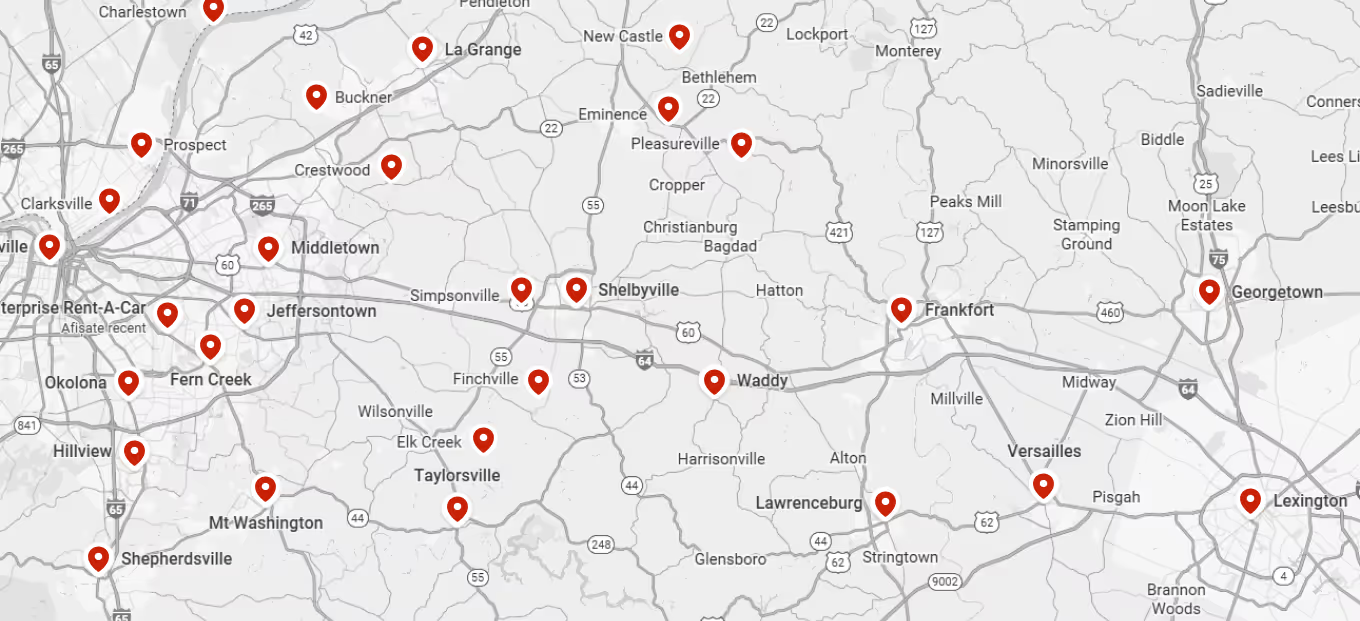
Proudly serving Spencer county, Jefferson county, Bullitt county, and the surrounding areas
Short Heading Goes Here
Sed iaculis aenean sit sed risus arcu vitae integer elit.

