

.svg)


.avif)



5 min read
Should I Run My AC and Furnace on the Same Day During September?
Is It Safe to Switch Between Heating and Cooling on the Same Day?
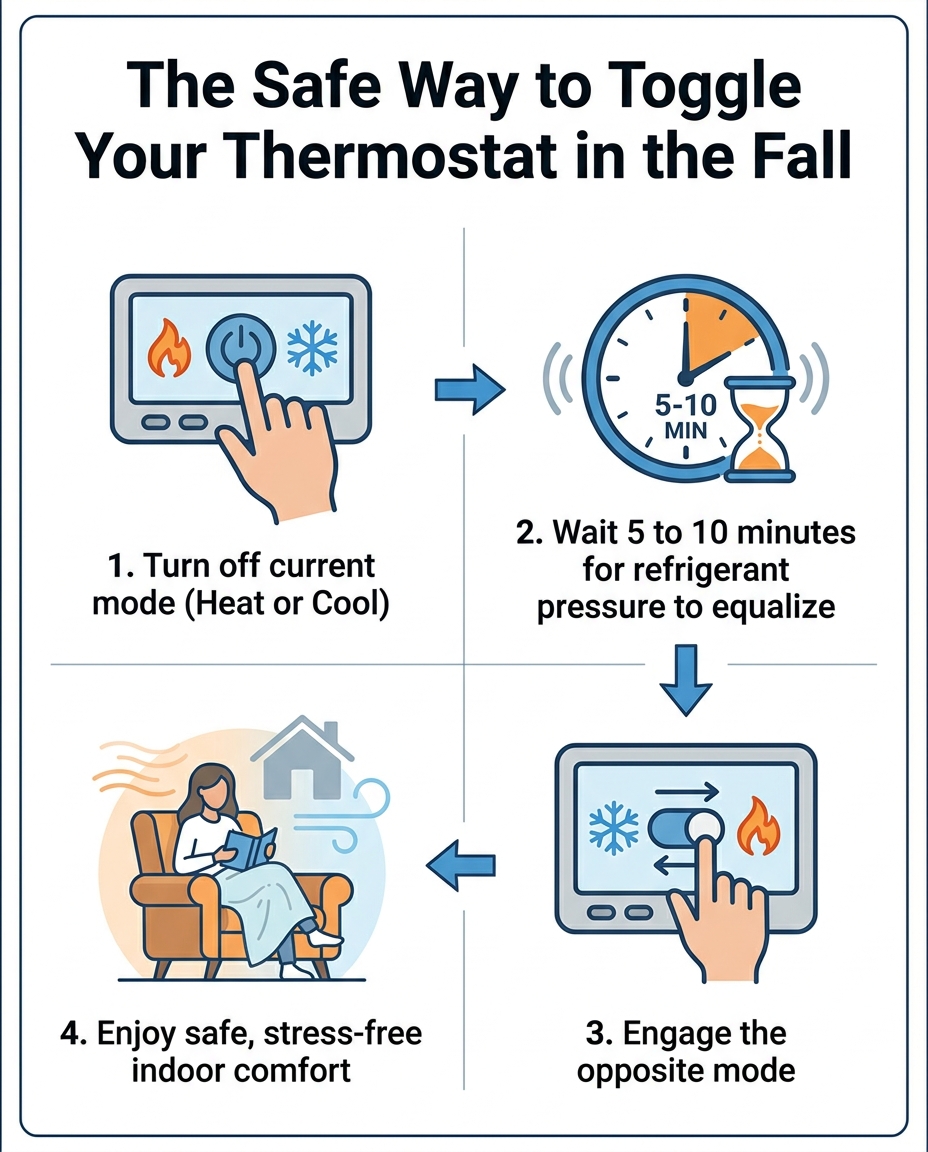
Are you asking yourself, "Should I run my AC and furnace on the same day during September?" At 3D Heating and Cooling, our team hears this question constantly from Taylorsville homeowners when the morning starts out freezing and the afternoon feels like the middle of summer. You wake up to a chilly house and turn on the heat, only to find yourself sweating by 2:00 p.m. Is it actually safe to flip your thermostat back and forth, or are you going to ruin your equipment? The short answer is yes, it is completely safe to use both systems in a single day. However, there is a catch. You must wait 5 to 10 minutes between switching modes to protect your compressor from severe mechanical damage.
Need help right away? Learn more about optimizing your HVAC system, or schedule professional heating services to ensure your equipment is ready for the season.
During the unpredictable September weather transition in Kentucky, making the switch from heating to cooling is often necessary for indoor comfort. The problem does not lie in using both systems, but rather in how quickly you force them to transition. Toggling your thermostat instantly from heat to cool forces moving parts to reverse operations while under immense physical pressure. By simply waiting a few minutes, you allow the internal pressures to settle, ensuring your system operates safely and efficiently throughout the volatile fall season.
The Mechanical Reality: What Happens Inside Your Compressor
To understand why a resting period is necessary, you have to look at how your air conditioning equipment actually works. Your air conditioner relies on a compressor to pump chemical refrigerant through the system. This compressor acts as the heart of your cooling setup, squeezing the refrigerant gas into a highly pressurized state so it can absorb and release heat. When your cooling cycle is actively running, the pressure inside these copper lines is intense.
If you abruptly shut off the cooling cycle and immediately switch to heating, you leave the system in a highly pressurized state. Forcing a highly pressurized compressor to restart or reverse operations instantly causes a phenomenon known as "short-cycling." This places immense mechanical stress on the compressor motor. Over time, this intense stress can cause the compressor to overheat, lock up, or fail entirely.
Understanding Refrigerant Pressure Equalization
Pressure equalization is exactly what it sounds like: giving the pressurized refrigerant time to balance out across the system after the unit shuts down. When the compressor stops, the high-pressure gas slowly disperses until the pressure is equalized throughout the lines. This natural settling process is why waiting 5-10 minutes between system switchovers is a mandatory practice for protecting your equipment.
• Immediate Switch (No Wait) — Refrigerant Pressure Status: Highly unequal and pressurized — Mechanical Impact on Compressor: Severe stress, high risk of motor lock-out, potential failure
• Waiting 5 to 10 Minutes — Refrigerant Pressure Status: Fully equalized and balanced — Mechanical Impact on Compressor: Safe, smooth startup with zero added mechanical strain
• Continuous Single Mode — Refrigerant Pressure Status: Actively cycling normally — Mechanical Impact on Compressor: Standard wear and tear based on regular operational cycles
Furthermore, your furnace and AC share the same blower motor and ductwork to distribute air throughout your home. Rapidly toggling between modes forces the blower to abruptly shift airflow and thermal operations. A sudden blast of cold air immediately following a cycle of intense heat can cause rapid expansion and contraction of metal components inside the ductwork and the furnace itself. Giving the entire system a brief pause allows both the refrigerant pressures and the physical components to normalize.
Applying the 5-to-10 Minute Rule for Thermostat Toggling
Transitioning your home's climate control safely requires a deliberate, step-by-step approach. If you are accustomed to just sliding the thermostat lever back and forth as fast as possible, you need to adjust your habits. Following a specific sequence ensures that your equipment avoids the mechanical lock-out issues associated with rapid toggling.
Follow these exact steps for a safe system transition:
1. Turn the thermostat to the "Off" position: Do not just switch directly from "Heat" to "Cool." Move the selector to the neutral off setting first.
2. Wait the required time: Leave the system completely off for at least 5 to 10 minutes. This is the critical window for pressure equalization.
3. Engage the new mode: Once the resting period has passed, switch the thermostat to your desired mode (either heating or cooling).
4. Set your target temperature: Adjust the temperature setting to your comfort level and let the system cycle on naturally.
If you have a modern, digital thermostat, you might notice that the screen flashes a "wait" or "delay" message when you try to switch modes quickly. Do not panic if you see this. This is a built-in protective feature designed specifically to prevent short-cycling. The thermostat is actively enforcing the 5-minute delay to protect your compressor from your commands.
You can also automate this process. If you use a programmable or smart thermostat, you can set schedules that naturally build in these resting periods. For example, you can program the heat to shut off entirely at 9:00 a.m., leaving a wide gap before the cooling schedule kicks in at 1:00 p.m. If you need more guidance on switching your thermostat from cool to heat, reviewing your thermostat's scheduling features is a great place to start.

Navigating Kentucky's Extreme 40-Degree Daily Swings
The rules of thermostat management become incredibly relevant when you look at the reality of regional early fall weather. In our years keeping local homes comfortable, our team has found that the September weather transition in Kentucky is notorious for extreme temperature fluctuations. It is completely normal to wake up to a brisk 45-degree morning that demands a running furnace, only to face an 85-degree afternoon that makes the house feel like an oven.
For Louisville homeowners and those in the surrounding areas, this specific climate profile makes same-day toggling unavoidable. You cannot simply tough it out when the indoor temperature climbs past 80 degrees, nor should you freeze during breakfast. The situation is often compounded by your home's insulation. Modern insulation is excellent at trapping heat. The warmth your furnace generates at 7:00 a.m. gets locked inside the house. By the time the afternoon sun hits your roof, that trapped morning heat combines with the rising outdoor temperatures, creating a heavy, uncomfortable indoor environment that absolutely requires afternoon cooling.
A practical timeline for a typical September day looks like this:
• 6:00 a.m. to 9:00 a.m. Run the furnace to take the chill out of the morning air.
• 9:00 a.m. to 1:00 p.m. Turn the thermostat to "Off." Let the house coast on the trapped heat while the outdoor temperature slowly rises.
• 1:00 p.m. to 2:00 p.m. As the indoor temperature becomes uncomfortable, switch the system to "Cool." Because the system has been resting for hours, the transition is completely safe.
• Evening: Shut the cooling cycle down as the sun sets, allowing another resting period before the next morning's heating demand.
How System Age and Maintenance Impact Toggling Resilience
While waiting 5-10 minutes between system switchovers protects the equipment, the overall health of your HVAC system plays a massive role in how well it handles shoulder seasons. In our experience servicing heating and cooling systems across the region, older units are far more susceptible to mechanical failure when forced to toggle frequently. As components age, they lose their tolerance for rapid thermal and pressure shifts.
Consider the electrical components that drive your system. Worn capacitors and aging contactors struggle under the dual demand of running heat in the morning and AC in the afternoon. A dirty blower motor, burdened by a summer's worth of dust, works twice as hard to push air across the heat exchanger and the evaporator coil. When these weakened components face the stress of a volatile September day, they are much more likely to fail.
This is where proactive care becomes critical. At 3D Heating and Cooling, our preventative maintenance approach focuses on preparing your entire system for these exact seasonal extremes. Routine checks ensure that both the heating and cooling elements are optimized to handle transitional stress. A well-maintained system safely manages pressure equalization without premature wear, while a neglected system often breaks down at the worst possible time.
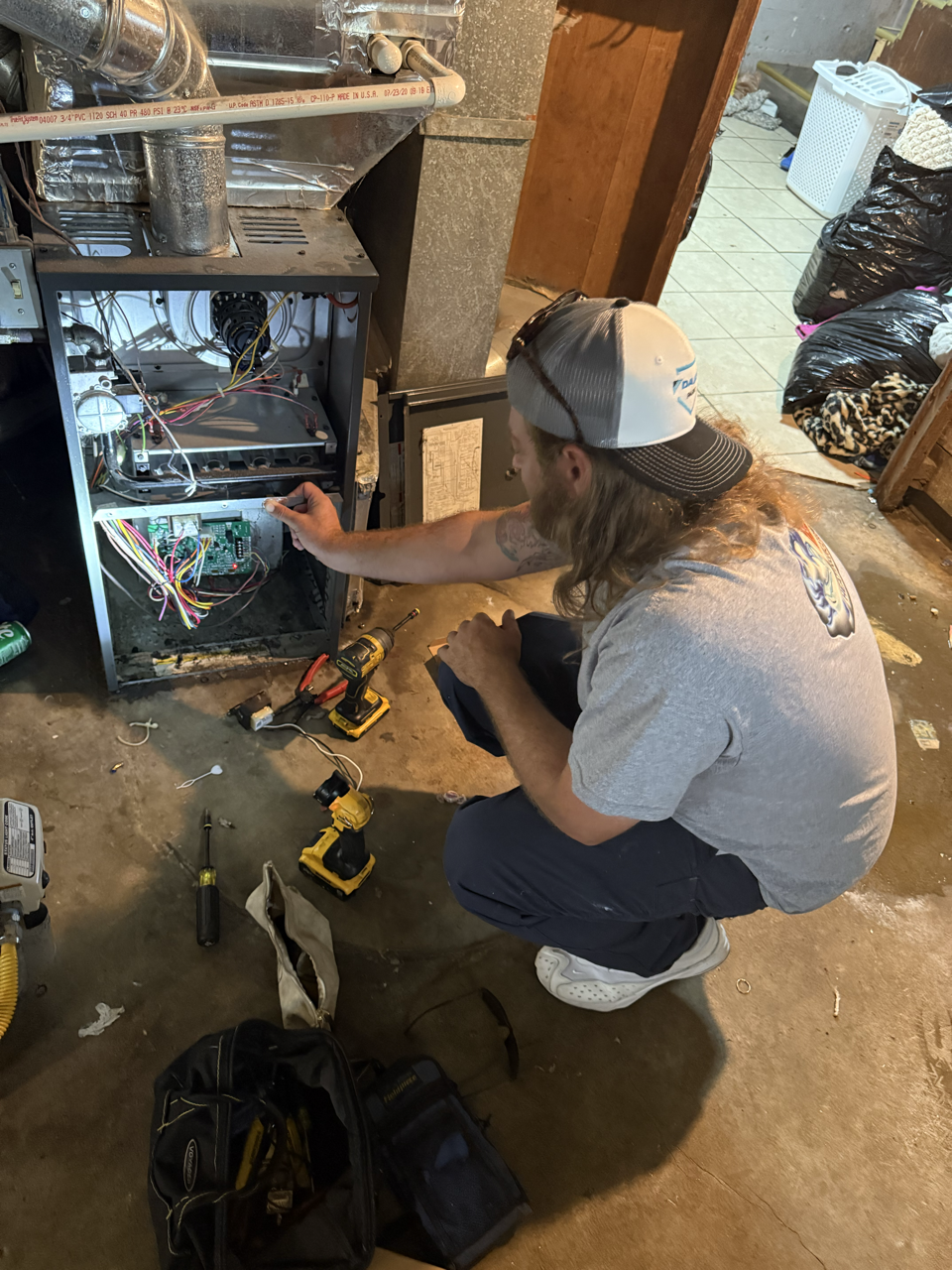
Our technicians see the consequences of neglected maintenance frequently during the fall. In one local case, a homeowner reached out because their carbon monoxide detectors were alarming repeatedly. Our team discovered a severely cracked heat exchanger inside an aging furnace that simply could not handle the shifting demands of the season. The damage was extensive enough that we had to replace the old machine with a brand new furnace and AC system. Keeping up with routine HVAC maintenance catches these dangerous wear-and-tear issues before they escalate into full system failures during heavy toggling periods.
Frequently Asked Questions About Fall Thermostat Management
How long should I wait to turn on AC after heating?
You should wait a minimum of 5 to 10 minutes before turning on your AC after running the heat. This brief resting period is crucial for the health of your equipment. It allows the highly pressurized refrigerant gas inside the compressor to settle and equalize. Bypassing this wait time forces the compressor to start under extreme mechanical stress, which can lead to immediate system lock-outs or long-term motor damage.
Is it bad to switch from heat to AC in the same day?
No, it is not bad for your system to run both heating and cooling on the same day, provided you do it correctly. The danger comes from rapid, instant switching, not from the simple fact of using both modes. As long as you enforce the 5-to-10 minute resting rule between cycles, your HVAC system is designed to handle multiple modes in a 24-hour period. This practice is entirely safe and often necessary during volatile shoulder seasons.
At what temperature should you switch from AC to heat?
The ideal temperature to switch from AC to heat depends heavily on your personal indoor comfort and the outdoor weather volatility. Generally, most homeowners engage the heat when the indoor temperature drops below 68°F. During early fall, you might only need the heat when morning outdoor temperatures dip into the 40s. The key is to monitor the indoor thermostat reading rather than just the outdoor weather, as your home's insulation will retain heat differently depending on the time of day.
Can switching between heat and AC break the thermostat?
Rapidly switching modes will not physically break the thermostat itself, but it can absolutely break the compressor outside. The thermostat is just a control switch sending low-voltage signals; it does not bear any mechanical load. However, sending conflicting signals too quickly forces the heavy machinery outside to grind against high internal pressures. So while your wall unit remains fine, the expensive equipment it controls could suffer severe mechanical failure.
Why does my thermostat flash 'wait' when I change modes?
If your thermostat flashes 'wait' or 'delay', it is actively protecting your air conditioning compressor from short-cycling. Modern digital and smart thermostats are programmed with a mandatory 5-minute delay built into their software. When you change modes or adjust the temperature rapidly, the thermostat temporarily pauses the signal to the outdoor unit. This ensures the refrigerant pressures have time to equalize before the motor is forced to start again.
Does switching back and forth waste more energy?
Switching back and forth can waste energy if you are battling your own home's thermal mass, but the mode switching itself does not inherently drain extra power. The inefficiency usually comes from trying to cool a house that you just spent money heating an hour prior. To maximize energy efficiency during the fall, allow your home to naturally transition by turning the system off entirely during the mid-morning, rather than forcing the AC to fight residual furnace heat.
Prepare Your System for the Fall Transition
Managing your indoor climate during the September weather transition in Kentucky does not have to be a source of anxiety. It is completely safe to run your furnace to fight off the morning frost and switch to your air conditioner to beat the afternoon heat. The golden rule is simply patience: always wait 5 to 10 minutes between system switchovers to allow the refrigerant pressures to equalize.
Remember that a mechanically sound system handles these rapid temperature transitions much better than a neglected one. If your equipment is struggling to keep up with the daily swings, or if it makes strange noises when switching modes, it is time for a professional assessment. Schedule a thorough inspection to verify the health of both your furnace and your AC, ensuring your home remains comfortable and safe no matter what the fall weather brings.
Financing

Now Offering Financing Options with Affordable Monthly Payments
where we operate
Service Areas
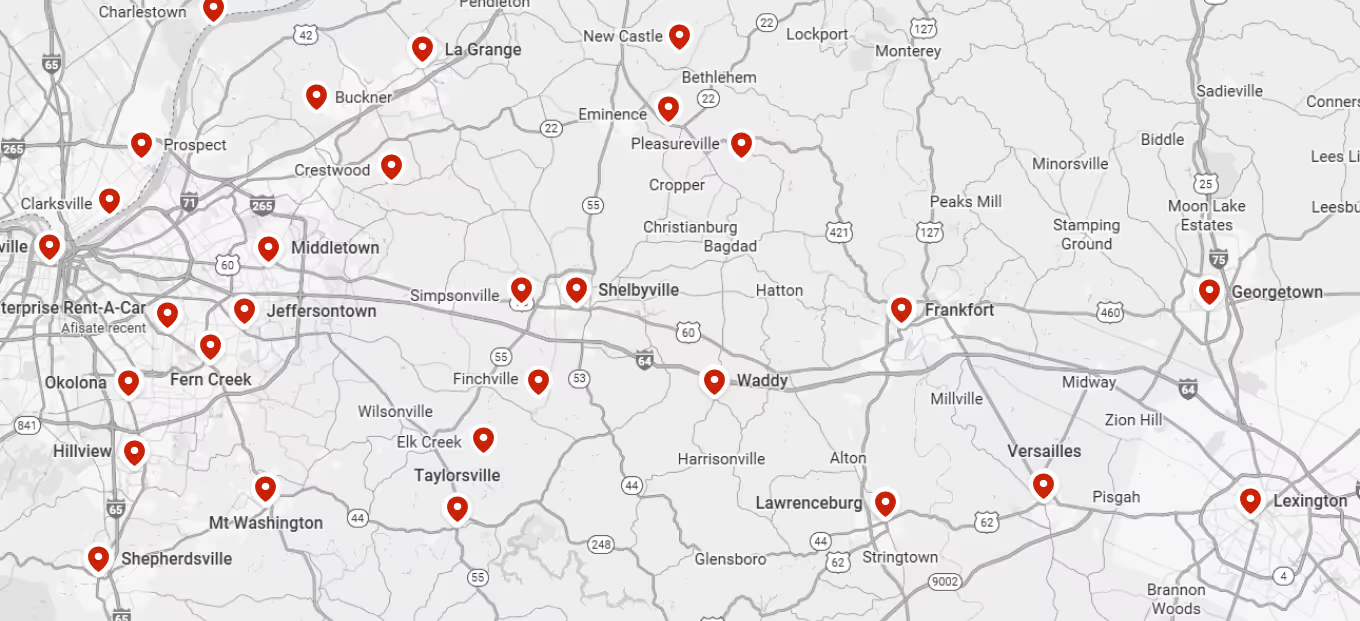
Proudly serving Spencer county, Jefferson county, Bullitt county, and the surrounding areas
Short Heading Goes Here
Sed iaculis aenean sit sed risus arcu vitae integer elit.

