



5 min read
The Importance of Checking Carbon Monoxide Detectors Before Heating Season
The Silent Danger Awakening During the First Cold Snaps
The thermostat drops, a familiar chill fills the house, and you finally switch your furnace on for the first time in months. But while you wait for that warm air to flow through the vents, a hidden hazard might be waking up inside your system. Understanding the importance of checking carbon monoxide detectors before heating season is the only way to protect your family from a threat you cannot see, taste, or smell.
If you want to ensure your heating systems operate safely all winter long, scheduling routine heating maintenance is just as critical as testing your home's alarms.
The transition into the heating season is a critical vulnerability period for home safety. Your gas furnace has been sitting dormant all summer. During those months of inactivity, dust settles, moisture can accumulate, and underlying structural weaknesses within the metal components remain completely hidden. When the first cold snaps of early fall in Kentucky arrive, our technicians at 3D Heating and Cooling see a familiar pattern: homeowners face a crucial decision point—blindly rely on untested carbon monoxide detectors, or take proactive steps to verify their home's safety systems are fully operational.
True safety requires a two-pronged approach. You need verified, unexpired alarms strategically placed throughout your home, and you need professional system checks to ensure the furnace itself is not generating dangerous leaks. Waiting until the dead of winter to find out if your safety nets are working is a gamble no homeowner should take.
How Thermal Expansion Creates Hidden Furnace Cracks
To understand why carbon monoxide is such a prevalent threat in residential heating, you have to look inside the furnace itself. The core of any gas heating system is the heat exchanger. This vital metal component acts as a sealed barrier. Its job is to separate the toxic combustion gases—created when your furnace burns fuel—from the clean, breathable air that gets blown through your home's ductwork.
The physics of heating a home take a heavy toll on this metal barrier. Every single time your furnace cycles on, the heat exchanger rapidly heats up, causing the metal to expand. When the cycle finishes and the system cools down, the metal contracts. This constant, repetitive cycle of thermal expansion and contraction is a normal part of operation, but over time, it fundamentally weakens the structural integrity of the metal.
This is especially true given our regional climate. The sharp, sudden temperature drops in Kentucky autumns cause immediate thermal stress on dormant furnaces. When a system that has been off for six months is suddenly forced to fire up and run continuously to combat a steep overnight freeze, the sudden thermal load increases the risk of hairline cracks opening up in the weakened metal. In our years of servicing Taylorsville KY homes, our team has seen firsthand just how frequently aging gas furnaces develop these hidden structural fractures.
The Anatomy of a Heat Exchanger Failure
Metal fatigue does not happen overnight. It is a slow, progressive degradation that typically occurs over a 10 to 15-year lifespan. Here is how that failure unfolds:
• Microscopic stress points: Years of expanding and contracting create weak points in the metal curves of the exchanger.
• Invisible hairline cracks: These weak points eventually split. When the metal is cold, the crack may sit flush and appear invisible to the untrained eye.
• Thermal opening: When the furnace fires up and the metal expands, the crack opens wide, allowing toxic combustion gases to escape the exhaust flue.
• Immediate danger: The blower fan then pushes those toxic gases directly into your ductwork, mixing them with the circulating air in your living spaces.
• Healthy Heat Exchanger — System Behavior: Metal expands and contracts smoothly; combustion gases vent outside. — Safety Outcome: Clean, warm air circulates safely through the home.
• Fatigued Heat Exchanger — System Behavior: Metal shows rust, stress marks, and microscopic wear. — Safety Outcome: High risk of future failure; requires close professional monitoring.
• Cracked Heat Exchanger — System Behavior: Cracks open during the heating cycle, allowing gas to escape. — Safety Outcome: Carbon monoxide actively leaks into the home's breathable air supply.
Why You Cannot Detect a Carbon Monoxide Leak on Your Own
The most terrifying aspect of a carbon monoxide leak is its complete invisibility. Carbon monoxide is entirely colorless, odorless, and tasteless. It has rightfully earned the nickname "the silent killer" because human senses are entirely incapable of detecting its presence in a room.
When a cracked heat exchanger allows carbon monoxide to escape, the gas mixes seamlessly with the breathable air distributed throughout the home. Because the furnace blower fan is actively pushing this air into every room through the vents, a leak in the basement or utility closet quickly becomes a whole-house hazard. The threat of poor air circulation only compounds this issue, trapping toxic gases indoors. This is why addressing carbon monoxide risks is a foundational part of implementing comprehensive indoor air quality solutions.
The deceptive nature of early symptoms:
Another reason technological intervention is mandatory is how carbon monoxide affects the human body. Early symptoms of low-level exposure are incredibly subtle and easily mistaken for common seasonal ailments. For families living in Taylorsville KY homes with aging gas furnaces, recognizing these signs is vital.
• Dull, persistent headaches: Often dismissed as tension or stress.
• Dizziness and fatigue: Frequently mistaken for the onset of a fall cold or seasonal flu.
• Nausea or shortness of breath: Easily confused with seasonal fall allergies or exhaustion.
• Confusion and blurred vision: Signs of severe exposure that require immediate emergency medical attention.
Because these symptoms mirror so many other minor illnesses—especially during the transition into fall and winter—homeowners rarely suspect their heating system is the culprit until the situation becomes severe. You simply cannot rely on how you feel to determine if your home is safe.
Your Carbon Monoxide Alarm is a Final Safeguard, Not the First
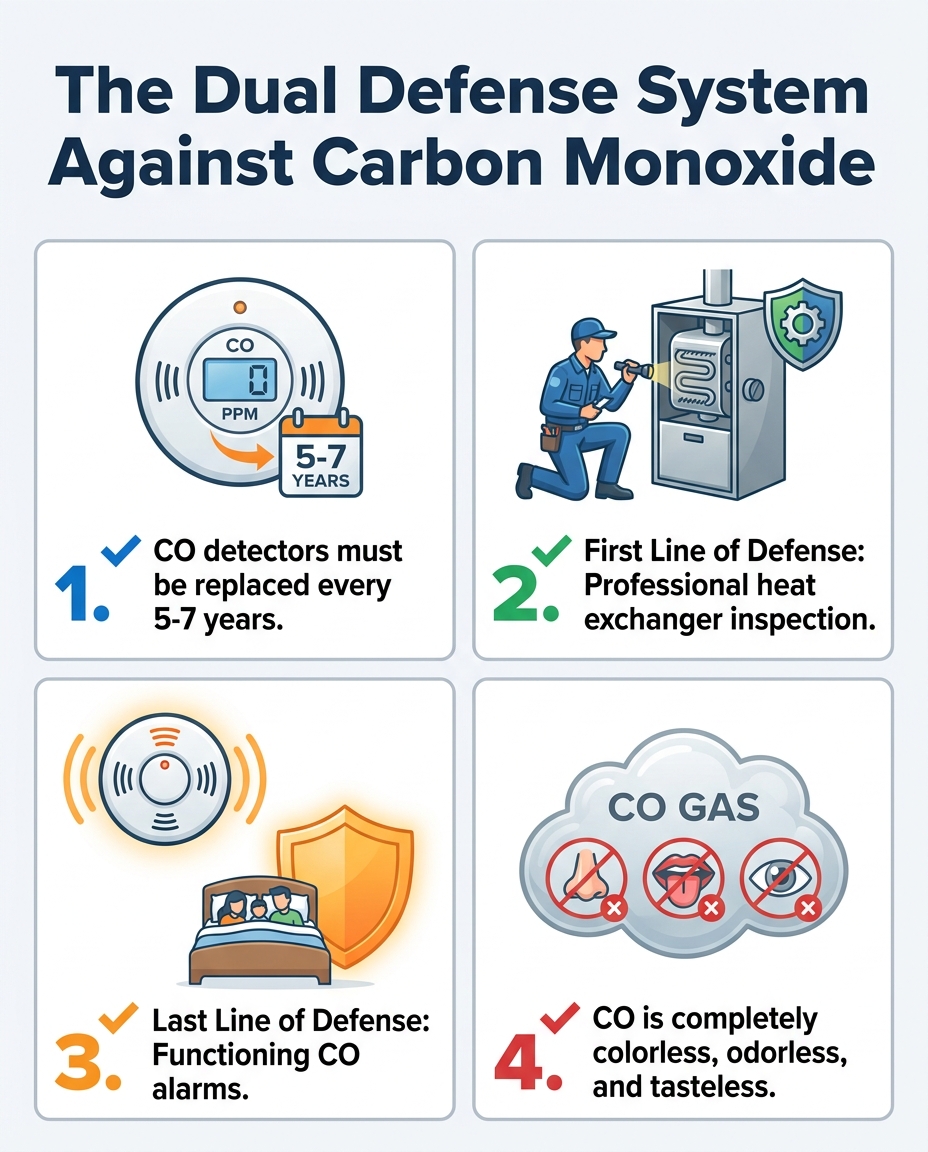
Many homeowners operate under a dangerous misconception: they believe that having a carbon monoxide detector on the ceiling means their home is fully protected. In reality, your carbon monoxide alarm is your absolute last line of defense. If that alarm is sounding, it means a critical failure has already occurred, and toxic gas is currently present in your living space.
Our team at 3D Heating and Cooling responded to a call last winter where a local homeowner discovered this the hard way. Their carbon monoxide detectors kept going off unexpectedly, sounding the alarm throughout the house. When our technicians arrived to investigate the source, we found a severely cracked heat exchanger actively leaking gas into the home. To permanently restore safety, the technicians had to rapidly replace the old furnace and AC with an entirely new system. It was a close call that highlights exactly why you cannot ignore an aging unit, and why functional alarms are a lifesaver.
However, those lifesavers do not last forever. The chemical sensors inside carbon monoxide detectors degrade over time. The typical lifespan of a residential CO detector is only 5 to 7 years. After this period, the unit may still beep when you press the test button (indicating the battery and speaker work), but the internal sensor may be entirely blind to actual carbon monoxide gas.
This degradation is exactly why checking these devices before emergency run-times in winter is non-negotiable. As the first cold snaps of early fall in Kentucky approach, you must verify that your final safeguard is actually capable of detecting danger.

Best Practices for Carbon Monoxide Detector Maintenance
Verifying that your alarms are ready for the heating season takes only a few minutes, but it requires more than just a passing glance. Following a structured maintenance routine ensures your home is protected before the heavy winter weather sets in. These actionable steps are essential for anyone living in Taylorsville KY homes with aging gas furnaces.
1. Locate and test every device: Walk through your home and find every carbon monoxide detector. Press and hold the "Test" button until the audible alarm sounds. This verifies that the circuitry, battery connection, and speaker are fully functional.
2. Replace the batteries annually: Even if your detector is hardwired into your home's electrical system, it likely has a backup battery for power outages. Replace these batteries every single year. Timing this replacement with the transition into the heating season is a smart, memorable habit.
3. Check the manufacturer's expiration date: Remove the detector from its mounting bracket and look at the back. The manufacturer will have printed either a "manufacture date" or a "replace by" date. If the unit is more than 5 to 7 years old, throw it away and purchase a new one. The sensors are no longer reliable.
4. Review optimal placement: Carbon monoxide detectors should be installed on every level of the home, particularly near sleeping areas so they can wake you up if a leak occurs at night. However, keep them at least 15 feet away from fuel-burning appliances (like your furnace or gas stove) to prevent false alarms from tiny, normal combustion bursts.
Implementing these steps is just one part of comprehensive home protection. For more ways to safeguard your household, reviewing home HVAC safety tips can help you identify other seasonal vulnerabilities.
Stopping Leaks Before They Start with Pre-Season Inspections
While testing your detectors ensures your last line of defense is ready, the goal should always be to prevent carbon monoxide from ever entering your home in the first place. This makes professional pre-season inspections your primary safeguard. You cannot prevent a heat exchanger crack with a plastic alarm on the ceiling; you prevent it by having the metal inspected before it fails.
The difference between a functional check and a safety verification:
When you turn your thermostat to "heat" and feel warm air coming out of the vents, you have performed a basic functional check. It tells you the system runs, but it tells you absolutely nothing about its safety. A comprehensive safety verification requires specialized tools and a licensed professional. Technicians use high-tech combustion analyzers to measure the exact gas output of the system, and they use flexible inspection cameras to visually examine the deep, hidden curves of the heat exchanger for microscopic stress fractures.
At 3D Heating and Cooling, our years of field experience have shown us that basic functional checks aren't enough. We maintain a strict commitment to thorough, professional safety inspections that prioritize protecting local families from silent hazards before the winter freeze. We do not just check if the furnace is blowing hot air; we verify that the air is clean and the combustion process is completely sealed.
Proactive maintenance is the only way to catch metal fatigue before a crack fully breaches. By scheduling an inspection during the first cold snaps of early fall in Kentucky, you give professionals the opportunity to identify failing components while they are still just a warning sign, rather than an active emergency.
Frequently Asked Questions About Carbon Monoxide and Heating Safety
Can a furnace cause carbon monoxide poisoning?
Yes, a gas or oil furnace can cause carbon monoxide poisoning if the heat exchanger is cracked or the exhaust flue is blocked. When the heat exchanger fails, the toxic gases produced during combustion escape the sealed venting system and are blown directly into the home's living spaces. Regular professional inspections are the only way to ensure the combustion process remains safely contained.
How often should carbon monoxide detectors be replaced?
Carbon monoxide detectors must be completely replaced every 5 to 7 years, depending on the manufacturer's specific guidelines. While the "test" button may still make the alarm beep after a decade, the internal chemical sensors that actually detect the gas degrade over time and lose their sensitivity, leaving your home unprotected.
How do you know if your heat exchanger is cracked?
You cannot reliably detect a cracked heat exchanger on your own because the cracks are often microscopic and hidden deep within the furnace casing. Signs of a problem can include soot buildup, a yellow burner flame instead of blue, or strange smells, but confirming a crack requires a licensed technician using combustion analyzers and specialized inspection cameras.
Where is the best place to put a carbon monoxide detector?
The best place to install carbon monoxide detectors is in the hallway near every sleeping area, ensuring the alarm is loud enough to wake your family in the middle of the night. You should have at least one detector on every level of the home, but keep them at least 15 feet away from gas appliances to prevent false alarms from normal startup combustion.
Why is early fall the most critical time to check CO detectors?
Early fall is critical because your heating system has been sitting dormant all summer and is about to face sudden, heavy workloads. Checking your detectors and inspecting your furnace before the freezing winter weather forces your system to run constantly ensures you catch potential metal fatigue and sensor failures before an emergency occurs.
Secure Your Home's Safety Before the Winter Freeze
The importance of checking carbon monoxide detectors before heating season cannot be overstated. Protecting your household requires a dual approach: ensuring your alarms are tested, unexpired, and properly placed, while simultaneously having a professional verify the structural integrity of your furnace's heat exchanger.
Do not wait for the first cold snaps of early fall in Kentucky to turn into a mid-winter deep freeze. The peace of mind that comes with knowing your heating system is operating safely is invaluable. Take the time today to test your alarms, replace old batteries, and reach out to a licensed professional to schedule your pre-season heating inspection.
Financing

Now Offering Financing Options with Affordable Monthly Payments
where we operate
Service Areas
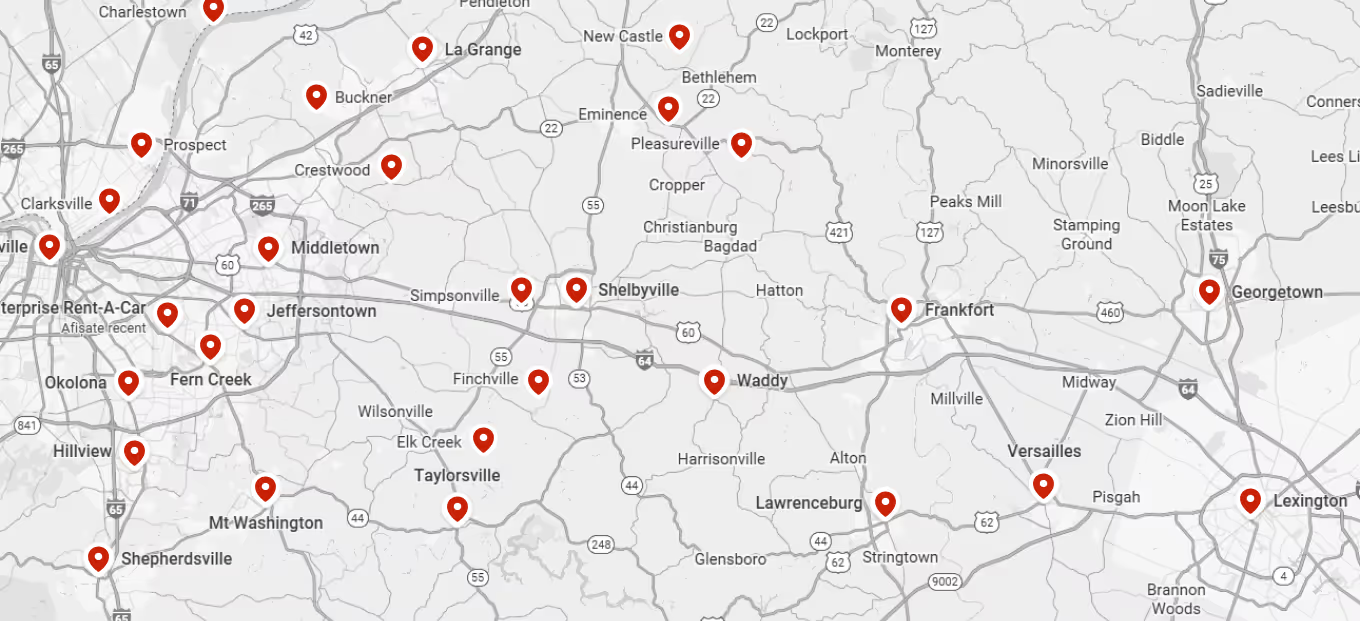
Proudly serving Spencer county, Jefferson county, Bullitt county, and the surrounding areas
Short Heading Goes Here
Sed iaculis aenean sit sed risus arcu vitae integer elit.

