Energy prices keep climbing, and your heating and cooling system often drives the biggest portion of the bill This guide lays out clear, practical steps to cut HVAC energy use without sacrificing comfort You’ll learn common causes of high bills, when maintenance or upgrades make sense, and how 3D Heating and Cooling turns recommendations into measurable savings.
Track your energy use month to month and by season Note bill spikes, bills that stay high year-round, and rooms that run noticeably warmer or cooler than the rest of the house—those clues help you prioritize fixes and measure the effect of repairs or upgrades.
Keep a short log (date, thermostat setpoint, rough runtime, and any unusual events) Over several months this simple record separates normal seasonal changes from problems that need professional attention.
Why Are My HVAC Energy Bills So High Spotting Inefficiencies and Hidden Costs
High HVAC bills usually come from avoidable inefficiencies or hidden losses A quick walkthrough—checking vents, listening for odd sounds, and feeling for drafts—often reveals inexpensive wins you can tackle right away.
Watch whether problems are intermittent (noisy starts, short cycling) or continuous (persistent drafts, nonstop runtime) Intermittent issues often point to controls or electrical connections; continuous problems more likely mean insulation gaps, leaking ducts, or failing equipment.
Make a short list of visible issues, rank them by likely energy impact and repair cost, and try low-cost, reversible fixes first If you’re unsure, take photos and notes—these focus technician visits and reduce diagnostic time.
What Causes Inefficient HVAC Energy Use Common Problems to Check
Several common issues force HVAC systems to work harder Look for:
• Dirty Air Filters: Clogged filters restrict airflow and lengthen run times Replace filters on schedule to restore airflow and comfort.
• Leaky Ductwork: Gaps let treated air escape before it reaches living spaces
Sealing ducts reduces wasted energy and shortens run times.Improperly Sized Equipment: A unit that’s too large or too small won’t run efficiently Correct sizing matters for steady performance and lower energy use.
Tackling these common issues helps systems run efficiently and trims energy bills If you notice uneven temperatures, frequent short cycling, or rising electricity use after basic checks, schedule a professional inspection Ask technicians to check airflow at vents, measure static pressure when possible, and verify electrical connections and refrigerant charge Request a short written assessment that lists findings, immediate actions, and optional upgrades so you can track outcomes over time.
How Does Neglected HVAC Maintenance Raise Your Energy Bill?
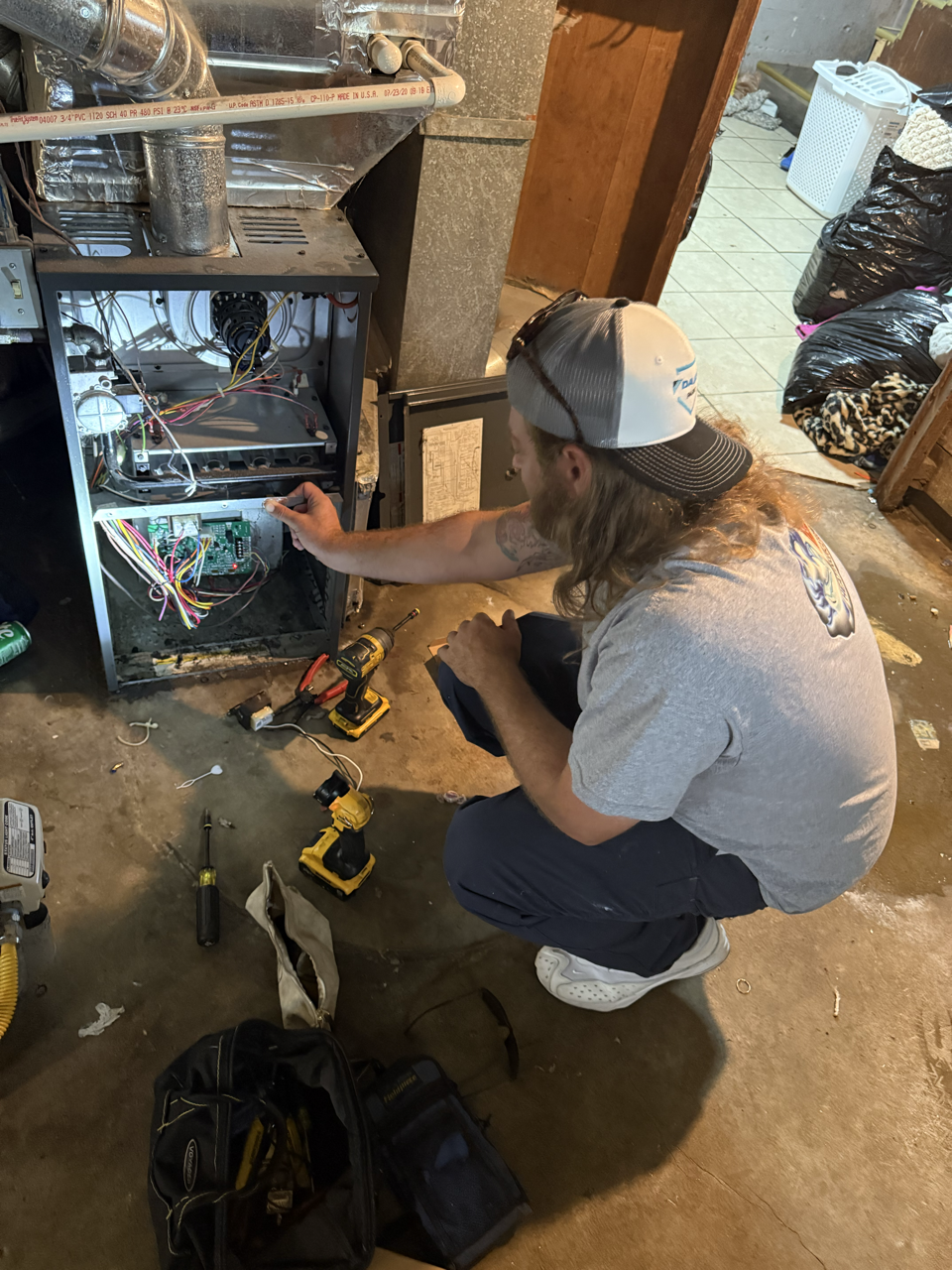
Skipping routine maintenance lets small issues become big energy drains Dirty coils, low refrigerant, or worn electrical parts reduce efficiency and increase operating costs Regular maintenance keeps components working smoothly, stabilizes energy use, and extends equipment life.
Deferred maintenance increases runtime and wear, driving up both utility and repair bills Routine service catches problems early and uncovers safety issues—like failing electrical connections or blocked condensate drains—before they cause costly downtime.
Think of maintenance as preventive care: scheduled inspections reduce emergency repairs and make energy use more predictable A modest annual investment often lowers lifetime costs and helps homeowners and building managers plan ahead.
How Can Regular HVAC Maintenance Improve Efficiency and Cut Costs?
Regular HVAC maintenance keeps systems near peak performance—catching minor problems early, preventing surprise breakdowns, stabilizing energy use, and protecting warranties.
Keep a simple maintenance log (filter changes, tune-up dates, and service notes) to support decisions about repairs, parts, and upgrade timing, and to compare before-and-after energy use.
During service visits, ask the technician to explain observations in plain language and show measurements where possible so you understand what “normal” looks like for your system.
Which Maintenance Tasks Save the Most Energy?
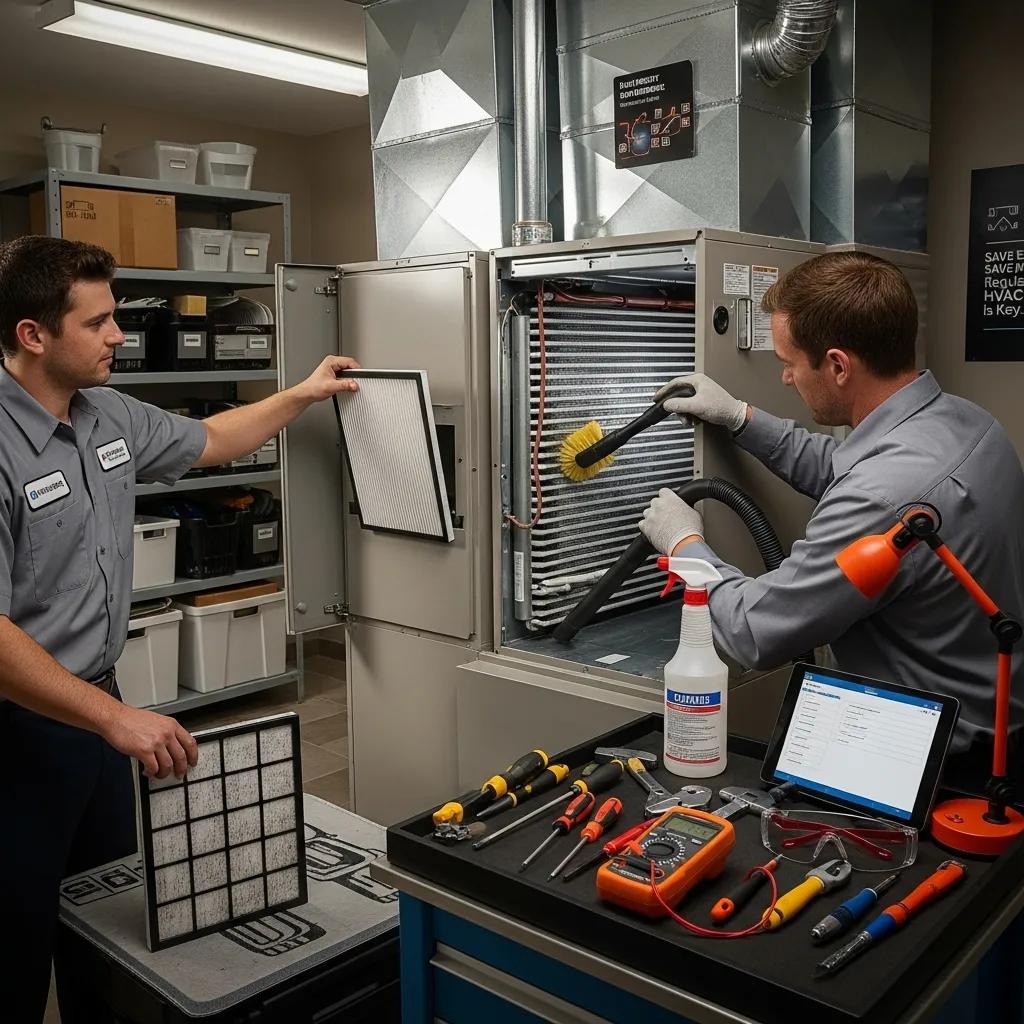
The most effective routine tasks include:
• Changing Air Filters: Fresh filters restore airflow so the system doesn’t need to run as long to reach setpoints.
• Cleaning Coils: Clean evaporator and condenser coils allow efficient heat transfer; dirty coils force longer runtimes.
• Checking Refrigerant Levels: Proper refrigerant charge lets the system heat or cool correctly; low charge raises operating costs.
Combine DIY checks (filter replacement, clearing debris around outdoor units) with an annual professional tune-up for gauges, electrical inspections, and refrigerant testing Watch for reduced airflow, frosting on coils, standing moisture in drain pans, or unusually long cycles.
For DIY filter changes, turn off power first, follow filter orientation, and pick the right MERV rating—higher MERV traps more particles but can restrict airflow if the system isn’t designed for it.
Other helpful tasks: clean blower assemblies, check belt tension where applicable, lubricate accessible bearings, and verify condensate drain flow to keep mechanical resistance low and maintain designed airflow.
How Much Do Duct Cleaning and Filter Changes Affect Energy Use?
Cleaning ducts and replacing filters restores airflow and reduces system strain Efficiency gains depend on duct condition; improvements up to about 15% are common Regular filter changes remain one of the simplest ways to control energy use.
Sealing ducts is critical to capture the largest energy savings.
When considering duct cleaning, focus on visible contamination, animal intrusion, or indoor air quality complaints
Targeted cleaning of accessible runs combined with sealing and insulation usually gives longer-lasting results than a one-time whole-system clean.
Document visible debris, odors, or worsening allergies when the system runs When comparing contractors, ask for a clear scope: which sections will be cleaned, what access is required, and whether sealing or insulation is recommended afterward.
What Are the Benefits of Upgrading to Energy-Efficient HVAC Equipment?
Upgrading to energy-efficient HVAC equipment lowers bills, improves comfort, and reduces environmental impact High-efficiency systems deliver the same heating and cooling while using less energy.
Replacement decisions should weigh upfront cost, expected energy savings, and the remaining life of current equipment Phased replacements or choosing higher-efficiency models at end-of-life often balance comfort and value.
Pair equipment replacement with duct sealing, insulation improvements, and thermostat upgrades so the new equipment can reach its rated efficiency Consider placement, noise, and service access, and ensure installation follows manufacturer guidance and local codes.
How Do High-Efficiency AC Units and Furnaces Reduce Costs?
Modern ACs and furnaces use improved designs and smarter controls to run more efficiently Units with higher SEER and AFUE ratings use less energy for the same comfort Check our savings and promotions to reduce upfront expense.
High-efficiency systems often include better fans, variable-speed compressors or motors, and smarter controls that reduce cycling and improve part-load performance.
Ask for manufacturer documentation and have a qualified contractor perform a heat-load calculation so equipment size and features match the building’s needs A high-efficiency unit on leaky ducts won’t deliver rated savings—plan projects so improvements reinforce each other.
Why Choose a Heat Pump for Year-Round Savings?
Heat pumps move heat instead of creating it, making them efficient for both heating and cooling In mild to moderate climates they often use less energy than separate systems.
Modern heat pumps use multi-stage or variable-speed operation to match output to demand When evaluating one, consider duct compatibility, insulation and sealing, and whether controls or zoning are needed to capture full efficiency benefits In colder climates, choose cold-climate models and discuss backup heating strategies.
If you’re replacing both heating and cooling, a heat pump can simplify maintenance and controls—coordinate integration with your contractor so systems work together without conflicts.
How Can Smart Thermostats and Controls Help Cut Energy Use?
Smart thermostats and advanced controls provide precise temperature management and scheduling so systems run only when needed They learn household patterns and cut wasted runtime when no one is home.
Confirm compatibility with humidifiers, ventilators, and multi-stage systems
testimonials
hear what our satisfied clients have to say
What an amazing company to work with. Timely and clear communication, fair prices, professionalism and honesty are all clear values for these guys. Appreciate the quick service and repair. They had us back up and running in no time at all. 3D is my new go-to!
Michael C.
Had Josh’s crew come out and did a complete change over the outdoor unit and the air handler in 6hrs. I thought it would have taken a couple of days but they knocked it out of the park. They also came back and ran a couple ducts for me. Thank you guys! Hope I don’t need y’all for a long time, but I’ll definitely send friends and family your way.
Jeff B.
When I was informed by a large company that I needed a New furnace, I found a small local company for a second opinion. I went with 3D Heating and Cooling. They came out promptly for a FREE second opinion, and quickly made the diagnosis. Not only did I Not need a New Furnace, they were able to fix my issue on the spot!
Leslie C.
Josh and his team were extremely responsive and quick when our AC suddenly went out. The 3D team presented multiple paths forward and was able to get our AC back up the next day. We are very appreciative of their service!
Sam L.
We had our compressor go out on us earlier in the week. We came across 3D heating and Cooling and got a response within minutes of reaching out to them even though it was after 10pm. After meeting with Zack and going over our options, he had two of his installers, Juwan and Bryant, out the same day. They were very knowledgeable and managed to complete the installation in about 2 hours. Overall very impressed with the company and every employee we had the pleasure of interacting with.
Nicholas H.
Had a new ac put on my house they did wonderful fairly priced and even went above and beyond and replace some old duct work I will def use them again thank you Josh
Jeff J.
Everything was so easy and professional. I signed the agreement one day and they did the job next day ! And I can't say enough about the polite young men that installed my unit. Thank you 3D .
Judy G.
Customer service is top notch! Josh and Zach have great communication with customers and do what they say they are going to do. They texted and called to keep me updated on the status of service. Fast turnaround for service as well! I have a new heating and air company that I know I can depend on! I highly recommend 3X Heating and Cooling for any a/c or heating needs!
Nancy B.
Zach was out to take a look at my 40 year old system within 2.5 hours of me reaching out yesterday, we discussed solutions last night, and he had my new unit installed by 5PM today.
All this while the inside of my house was 90 degrees during this more than week long heat wave. Couldn't be more thankful for the quick response and get it done mentality.
I'll recommend him and the team to all of my real estate clients going forward.
Weston F.
I give 3D a 5 star rating. Josh was the tech who repaired my AC. This guy is so polite, courteous, knowledgeable, friendly. You couldn't ask for a nicer person. He didn't give up until the unit was up and running. I would recommend 3D to anyone. Great job Josh.


.svg)


.avif)