

.svg)


.avif)



5 min read
What Does a Musty Smell from My AC Vents Mean?
Noticing a Gym-Sock Odor When Your AC Kicks On This August?
August in Kentucky signals a noticeable shift in weather, and if you are wondering, "What Does a Musty Smell from My AC Vents Mean?" our team at 3D Heating and Cooling wants you to know you are certainly not alone. As we transition through late-summer (August) humidity fluctuations and the back-to-school season, our technicians frequently field calls from homeowners who suddenly detect a foul, gym-sock-like odor blasting through their registers the moment the thermostat calls for cooling. In our experience, this distinct stench is more than just a temporary nuisance; it is a clear indicator of a biological issue brewing inside your ductwork and air handler.
When our customers notice this specific smell, they are faced with an immediate decision: determining whether their system just needs a simple filter swap or if it requires a professional biological treatment before the cooling season comes to a close. Ignoring the odor allows the underlying issue to spread, potentially impacting your family's respiratory comfort.
If you are concerned about the air circulating through your home, exploring professional indoor air quality solutions and scheduling routine AC maintenance is the most effective way to restore a fresh, healthy environment.
Defining 'Dirty Sock Syndrome': The Science Behind the Stink
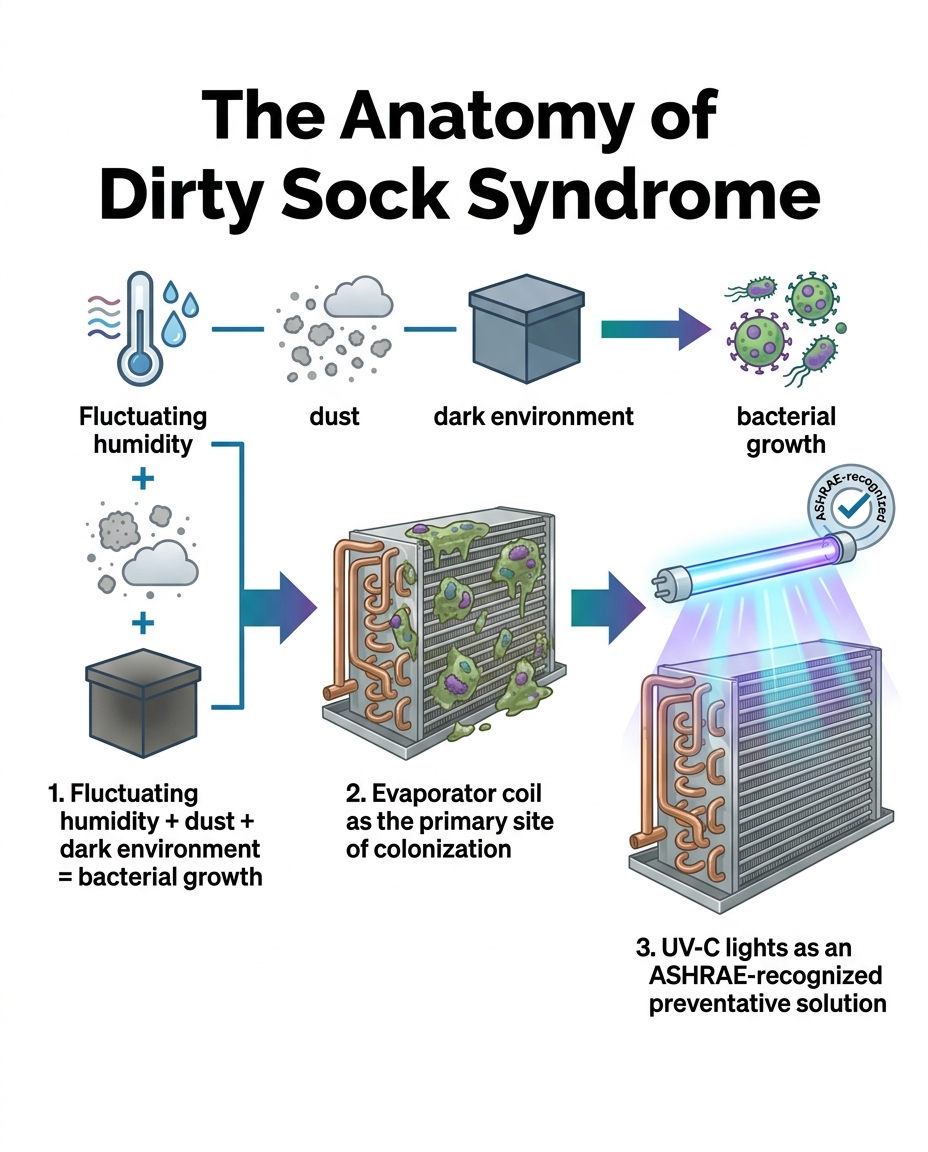
The short answer our experts give is: "Dirty sock syndrome" is the HVAC industry term for active bacterial and microbial growth on your air conditioner's indoor evaporator coil. When household dust bypasses your filter and mixes with trapped moisture in a dark environment, it creates the perfect incubator for odor-causing bacteria.
We always remind homeowners that this is not simply a matter of stagnant air sitting in your ductwork. The smell is the byproduct of an active biological process. As your cooling system runs constantly throughout the summer, the internal components remain perpetually damp. When late-summer (August) humidity fluctuations prevent the system from fully drying out between cycles, these microbes colonize the metal surfaces of your equipment, releasing volatile organic compounds (VOCs) that smell remarkably like unwashed athletic wear.
The Role of the Evaporator Coil in Odor Generation
To understand why this happens, you have to look at the primary job of the evaporator coil. Located inside your air handler or furnace plenum, the evaporator coil is filled with freezing-cold refrigerant. As warm, humid indoor air blows across these chilled metal fins, two things happen: heat is extracted from the air, and moisture condenses on the cold metal, much like water droplets forming on a glass of iced tea on a hot day.
Under normal conditions, this condensation drips down into a drain pan and flows safely out of your home. However, the fins on an evaporator coil are spaced incredibly close together to maximize surface area. If drainage is slow, or if a microscopic layer of dust has coated the aluminum fins, the moisture lingers. This lingering moisture, combined with the complete darkness inside the HVAC cabinet, provides everything microbes need to thrive.

How Local Climate Swings Fuel Bacterial Growth on AC Coils
The humid subtropical climate of our region plays a massive role in how your air conditioner manages moisture. In our years of servicing Taylorsville KY, we've seen how the transition from intense mid-summer heat to the shifting dew points of late summer creates a unique stress test for your HVAC system's condensate management.
During the peak heat of July, your air conditioner likely runs in long, continuous cycles. These long cycles are excellent for dehumidification because they give the system plenty of time to pull moisture out of the air and flush it down the drain line. But as we move into late August, our technicians notice a distinct shift in system performance. The temperatures may drop slightly, but the humidity remains stubbornly high.
Because the air is not as hot, your thermostat reaches its target temperature faster, causing the air conditioner to run in shorter cycles. These short cycles cool the house but fail to run long enough to properly dehumidify the air. Consequently, the evaporator coil gets wet, the system shuts off, and the coil sits in a dark, warm, humid cabinet without the airflow needed to dry it out. This exact environmental shift in Taylorsville KY is the primary catalyst that our team sees turning a clean coil into a breeding ground for dirty sock syndrome.
Comparing Seasonal Coil Conditions
• Peak Summer (July) — System Cycling: Long, continuous — Coil Condition: Actively draining — Bacterial Risk: Low to Moderate
• Late Summer (August) — System Cycling: Short, frequent — Coil Condition: Damp and stagnant — Bacterial Risk: High
• Fall Transition — System Cycling: Minimal cooling — Coil Condition: Drying out — Bacterial Risk: Odor becomes highly noticeable upon startup
Can a Clogged Air Filter Cause a Musty Smell?
One of the most common assumptions our technicians hear from homeowners when they detect a foul odor is that the air filter simply needs to be replaced. While a severely dirty filter can harbor some trapped odors, we rarely find it to be the root cause of a strong, pervasive "dirty sock" smell filling the entire house.
The problem: A clogged filter restricts airflow, which causes the evaporator coil to drop in temperature. More importantly, when a filter is overloaded with dirt, pet dander, and debris, the system begins pulling air through any microscopic gaps it can find around the filter frame.
The cause: This bypassed dust travels directly to the damp evaporator coil. Dust is organic material, and when it sticks to the wet aluminum fins during late-summer (August) humidity fluctuations, it acts as a food source for microbial life. The filter itself isn't generating the intense smell; the filter's failure to protect the coil is what allowed the biological growth to take hold.
The solution: Changing the filter is always a good first step in any HVAC troubleshooting process. However, if the bacteria has already colonized the coil, a fresh filter will not neutralize the odor. If you replace your filter and the gym-sock smell persists after 24 hours, you have moved past a surface-level maintenance issue and require professional diagnostic help from our team to safely clean the internal components.
The Hidden Dangers of DIY Coil Cleaning
When faced with a smelly air conditioner, some homeowners are tempted to open the HVAC cabinet and attempt to clean the coil themselves. Over the years, our team has seen firsthand the expensive equipment damage and safety hazards that arise from this highly risky approach.
The evaporator coil is housed within sensitive cabinetry that also contains high-voltage electrical components, blower motors, and delicate sensors. Accessing this area safely requires professional training. More importantly, the aluminum fins on the coil are incredibly thin—often thinner than a piece of paper. We frequently encounter coils that have been permanently ruined because a well-meaning homeowner brushed them with a standard household brush, instantly crushing the fins and restricting airflow.
Furthermore, generic store-bought cleaning sprays are notoriously problematic. Many of these over-the-counter foaming cleaners contain harsh, acidic chemicals that can strip the protective coating off the aluminum, leading to rapid corrosion and eventual refrigerant leaks. Even worse, these generic sprays frequently fail to penetrate deep enough into the coil block to fully neutralize the biological growth, meaning the smell will return within weeks.
For homeowners in Taylorsville KY, relying on professional methods for cleaning your AC coils is the only way to ensure the delicate components remain intact. Attempting DIY repairs on internal, sealed components can also void your manufacturer's warranty, leaving you entirely responsible for the cost of a replacement coil if something goes wrong.
Advanced IAQ Solutions: Professional Neutralization and UV-C Lights
Because dirty sock syndrome is an active biological issue, eliminating it requires more than just wiping down a surface. As your local authority on indoor air quality, 3D Heating and Cooling utilizes advanced, professional-grade treatments to safely neutralize the bacteria without compromising the integrity of your equipment.
When late-summer (August) humidity fluctuations trigger this foul odor, our technicians employ a multi-step approach to eradicate the source:
1. Professional Biological Neutralization: We use specialized, non-corrosive enzymatic cleaners designed specifically for HVAC applications. These cleaners safely break down the biological film on a molecular level, washing away the bacteria without etching the aluminum fins or damaging the surrounding drain pan.
2. Condensate System Flushing: The bacteria often spread down into the condensate drain line. Our team flushes and clears the entire drainage system to ensure no standing water remains to feed a new colony of microbes.
3. UV-C Light Installation: For a long-term, proactive solution, we highly recommend installing a UV-C germicidal light directly inside the coil cabinet. Recognized by ASHRAE (The American Society of Heating, Refrigerating and Air-Conditioning Engineers) for its effectiveness, UV-C technology shines continuously on the coil surface. The ultraviolet light penetrates the cellular walls of bacteria and mold, disrupting their DNA and preventing them from reproducing.
By combining thorough physical cleaning with proactive UV-C technology, our comprehensive air conditioning services can permanently restore fresh, clean airflow to your home, ensuring that the musty smells do not return next season.
What to Expect During a Professional AC Diagnostic
If you have never had a professional address a biological odor in your HVAC system, our process is straightforward, thorough, and designed to uncover any hidden secondary issues contributing to the problem. A comprehensive system check ensures we treat the root cause, not just the symptom.
When a 3D Heating and Cooling technician arrives at your home in Taylorsville KY, we follow a strict diagnostic protocol:
• Visual Inspection of the Plenum: Our technician will safely open the indoor air handler to visually inspect the condition of the evaporator coil, looking for visible microbial growth, heavy dust accumulation, and signs of corrosion.
• Drainage Assessment: We check the primary and secondary condensate drain pans for standing water, algae growth, or blockages that might be elevating the humidity inside the cabinet.
• Airflow and Refrigerant Check: Sometimes, a coil stays wet because the system is low on refrigerant or suffering from poor airflow, causing the coil to freeze and thaw repeatedly.
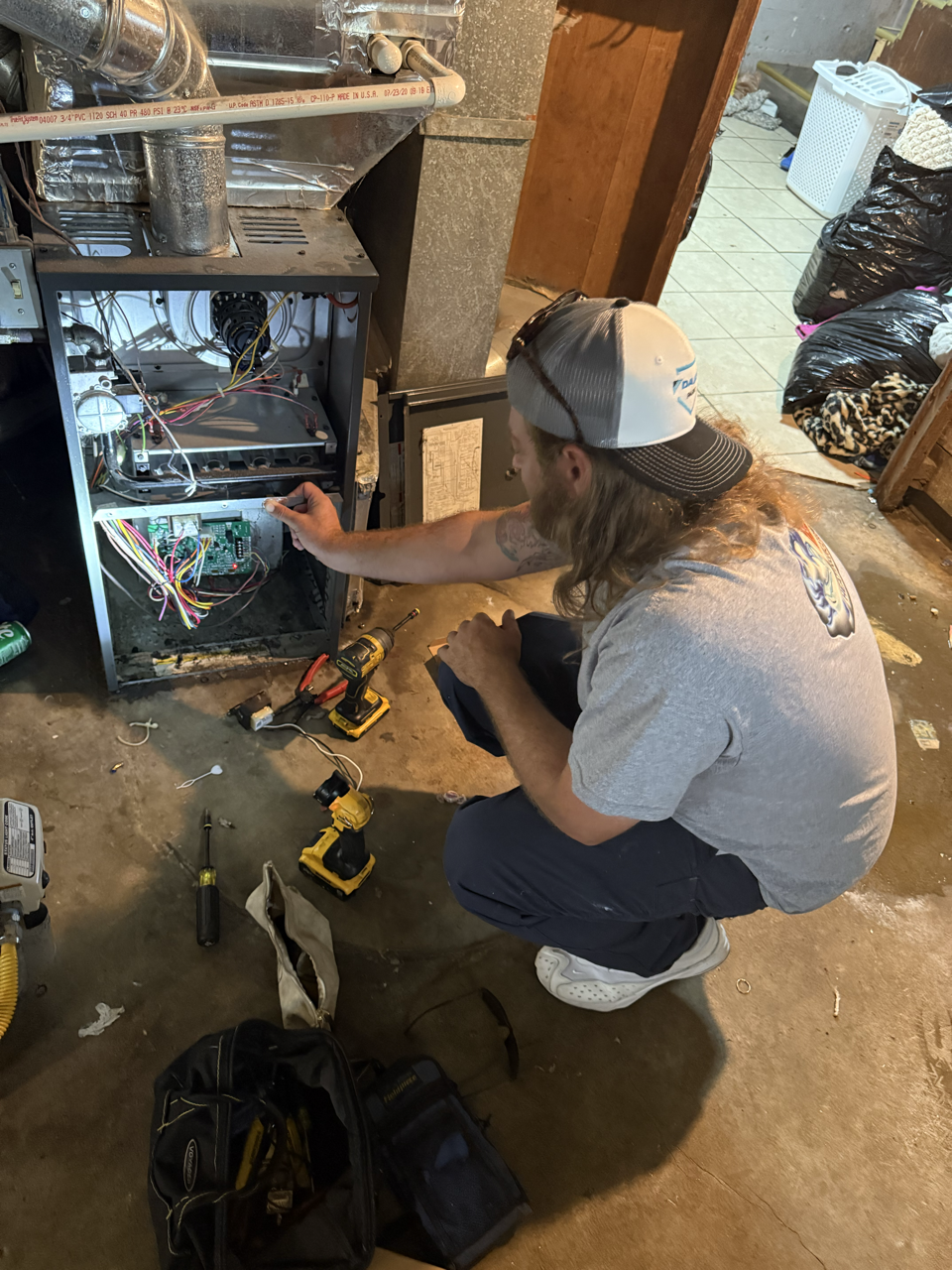
Real-world diagnostics often uncover compounding issues. For example, one local homeowner reached out to our team during a recent late-summer heatwave when their AC started having issues and emitting strange odors. Our thorough inspection revealed that the system not only had a dirty, failing coil but also a unit leak that was compromising its efficiency. Because our technician performed a full diagnostic, we were able to quickly diagnose and fix both issues on the same day, ensuring the AC system was fully repaired and running properly before the kids went back to school.
If you are experiencing similar issues, relying on professional Louisville HVAC services guarantees that every component is evaluated, cleaned, and restored to factory specifications.
Frequently Asked Questions About Musty AC Odors
Why does my AC smell like dirty socks?
Your AC smells like dirty socks because of bacterial and microbial growth on the indoor evaporator coil. When dust mixes with the condensation that naturally forms on the chilled metal fins, it creates an ideal food source and environment for microbes. As these bacteria multiply, they release volatile organic compounds that smell exactly like unwashed gym clothes.
Is a musty smelling AC dangerous?
A musty smelling AC is generally not an immediate emergency, but our team warns that it can negatively impact your indoor air quality and trigger respiratory irritation. The presence of the smell confirms that biological growth is actively occurring inside your ductwork and air handler. For individuals with allergies, asthma, or compromised immune systems, circulating these spores and bacteria throughout the house can cause significant discomfort.
How do I get rid of the musty smell in my air conditioner?
To permanently get rid of the musty smell, you must eliminate the bacteria at the source by having a professional clean the evaporator coil with specialized enzymatic treatments. Simply changing the air filter or spraying household deodorizers into the vents will only mask the problem temporarily. For long-term prevention, we recommend installing a UV-C germicidal light inside the coil cabinet to continuously neutralize new biological growth.
Can a dirty filter cause a musty smell?
A dirty filter can harbor minor odors, but we rarely find it to be the direct cause of a strong "dirty sock" smell. However, a clogged filter is often the catalyst for the problem. When a filter is overloaded, dust bypasses the media and coats the wet evaporator coil, providing the exact nutrients bacteria need to thrive during late-summer (August) humidity fluctuations.
How long does it take a professional to neutralize biological growth on an AC coil?
A professional coil cleaning and biological neutralization by our technicians typically takes between one and two hours to complete. We safely access the sealed coil cabinet, apply the non-corrosive foaming treatments, allow the enzymes to break down the biological film, and thoroughly flush the condensate drainage system to ensure no residue is left behind.
Will running the fan help clear out a musty AC smell?
Running the fan alone will not clear out a musty AC smell; in fact, we find it often makes the odor more noticeable throughout the house. Because the bacteria are physically attached to the evaporator coil, blowing air continuously across the contaminated surface simply distributes the foul-smelling volatile organic compounds into every room faster. The biological growth must be physically neutralized to stop the odor.
Safeguard Your Indoor Air Quality Before Fall Arrives
As the weather shifts in Taylorsville KY, it is crucial to address biological growth before the cooling season completely ends. Allowing bacteria to sit dormant on your evaporator coil throughout the winter guarantees the smell will return—often worse—the next time the system is engaged. Prioritizing your home's indoor air quality ensures your family breathes clean, fresh air year-round. Do not let dirty sock syndrome dictate your comfort; talk to our local experts at 3D Heating and Cooling today and schedule a comprehensive AC diagnostic to safely eliminate the odor at its source.
Financing

Now Offering Financing Options with Affordable Monthly Payments
where we operate
Service Areas
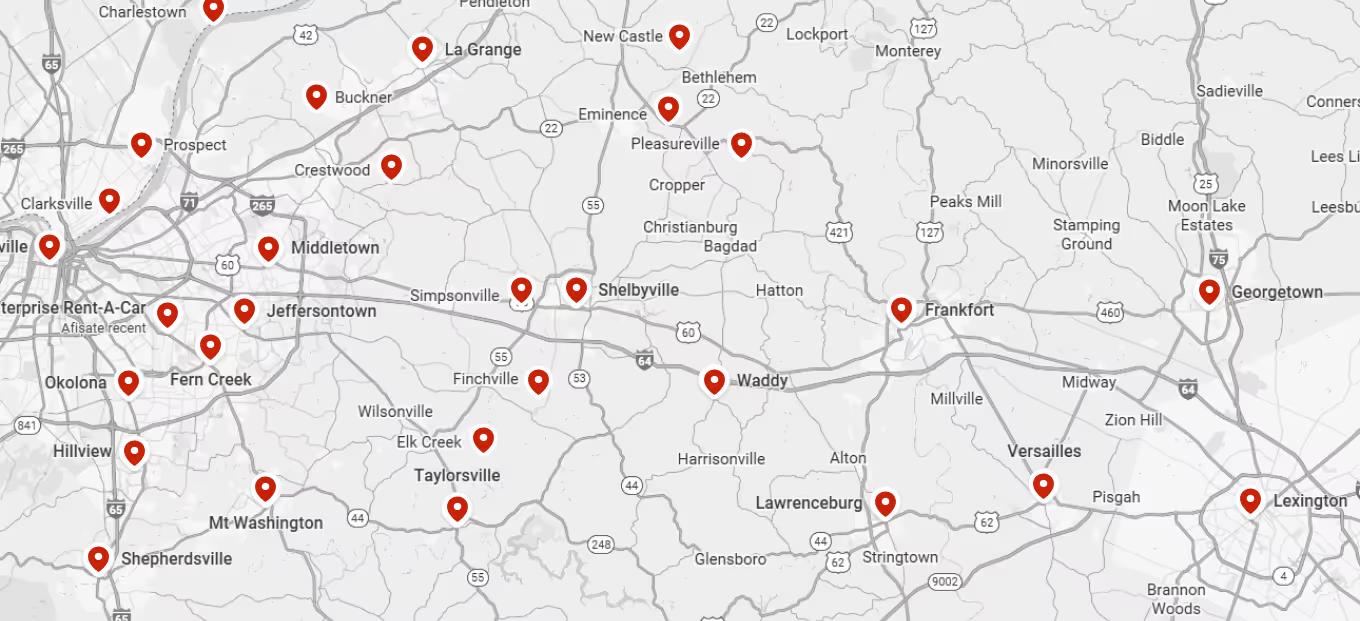
Proudly serving Spencer county, Jefferson county, Bullitt county, and the surrounding areas
Short Heading Goes Here
Sed iaculis aenean sit sed risus arcu vitae integer elit.

