
.svg)


.avif)



5 min read
How North Saint Matthews Homes Benefit from 24/7 Emergency HVAC Services
The Late-Summer Heatwave Dilemma: Wait Until Morning or Call for Help?
The thermostat reads 82 degrees at 9:00 PM, your cooling unit is running nonstop, and the indoor humidity is climbing by minute. When considering how North Saint Matthews homes benefit from 24/7 emergency HVAC services, the reality often hits during a sweltering late-August heatwave. A sudden cooling failure forces an immediate decision: endure the stifling heat until normal business hours resume, or make a late-night service call to resolve the issue immediately.
At 3D Heating and Cooling, we constantly remind our customers that in aging properties, this decision is rarely just about temporary discomfort. An unaddressed breakdown often introduces immediate threats to the home's interior, ranging from severe moisture accumulation to active water leaks. True emergency readiness requires having a reliable professional on speed dial year-round to protect your property. Whether you need immediate cooling relief from our team to prevent water damage today, or you are establishing a relationship for reliable 24-hour furnace repair in the dead of winter, a stabilized HVAC system is the primary defense for your home's structural integrity.
Why Mid-20th Century Architecture Faces Unique Climate Vulnerabilities
Historical housing data indicates that a significant portion of properties in the local area were built during the mid-20th century. While our technicians appreciate the incredible charm and solid foundational framing of these classic structures, we know firsthand that their original architectural designs were rarely optimized for modern, high-efficiency climate control systems.
The Challenge of Retrofitted Ductwork
Our installation crews frequently encounter older properties that rely on retrofitted ductwork squeezed into tight crawlspaces, narrow wall cavities, and unconditioned attics. These aging distribution networks often struggle to handle the intense airflow and drainage demands of modern equipment. When you combine older, restrictive ductwork with the severe August late-summer wear and tear that accumulates after months of continuous operation, we see these aging systems pushed past their breaking point time and time again. Restrictive airflow stresses the blower motor, disrupts the refrigerant cycle, and drastically increases the likelihood of a catastrophic failure right when the equipment is needed most.
Kentucky's Subtropical Climate Factor
The hot-humid subtropical climate of Saint Matthews, KY creates a unique hazard for older homes. As local HVAC professionals, we see how quickly a house loses its primary dehumidification source when a cooling system fails in late summer. Within hours, indoor humidity levels can spike dramatically. Because North Saint Matthews older homes often feature original lath-and-plaster walls, aging drywall, and porous hardwood floors, these building materials are highly sensitive to rapid indoor temperature and humidity shifts. As the air becomes saturated, condensation forms on interior surfaces, causing wood to swell, paint to peel, and hidden mold spores to activate within wall cavities. What begins as a mechanical failure rapidly evolves into a structural vulnerability.
Signs Your AC Failure is a Property Damage Risk
Recognizing the difference between a minor malfunction and a critical threat is vital for protecting your property. When evaluating a late-night breakdown, our experts recommend looking for these critical warning signs that elevate a standard failure into a structural risk requiring immediate air conditioning services:
• Water pooling around the indoor air handler: Active leaks spreading across the floor or dripping through ceilings indicate a severe drainage failure that will quickly ruin subflooring and drywall.
• Ice buildup on the evaporator coils: Frost or solid ice on the indoor coils or outdoor refrigerant lines points to a frozen system that will release gallons of water when it eventually thaws.
• Sudden, severe indoor humidity spikes: Rapid condensation forming on windows, walls, and metal fixtures means the system has completely lost its ability to manage latent heat, threatening older building materials.
• Electrical burning odors: Acrid, plastic-like smells or the unusual, repeated tripping of the circuit breaker suggest an electrical short or an overheating motor, posing an immediate fire hazard.
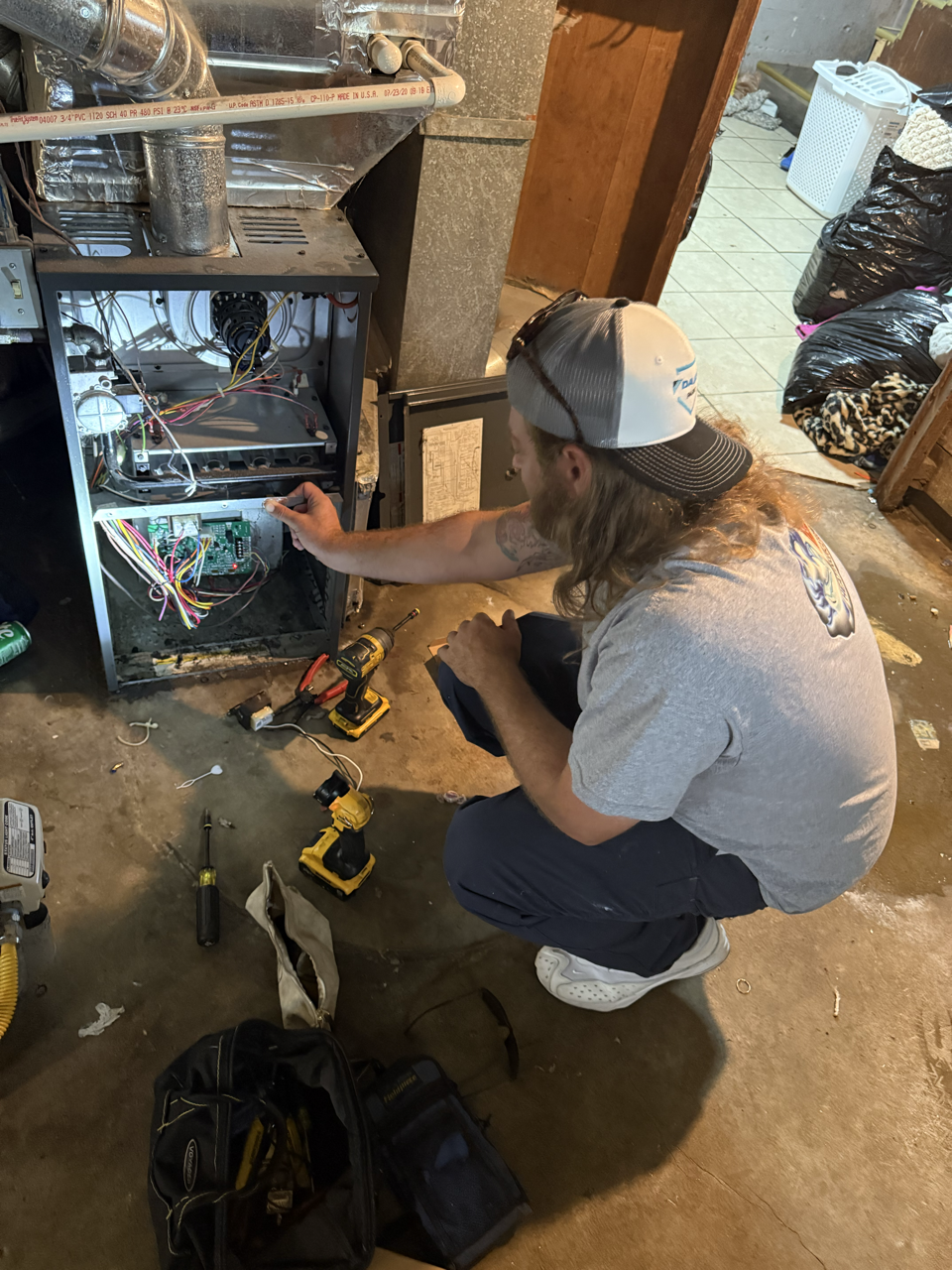
Addressing these symptoms early prevents cascading damage. Recently, our emergency response team helped a local homeowner who experienced a faulty coil that led to a significant unit leak earlier in the cooling season. One of our technicians diagnosed and fixed both the damaged coil and the resulting leak on the same day. Because our intervention was immediate, the AC system was fully repaired and running well before the water could seep into the surrounding floorboards, saving the property from expensive secondary restoration work.
The Hidden Danger of Thawing Evaporator Coils Overnight
One of the most deceptive threats our technicians see in North Saint Matthews older homes occurs when a system freezes and subsequently thaws. Homeowners often assume that turning off a frozen unit and letting it rest overnight is a safe, conservative approach. Unfortunately, the physics of a rapidly thawing system present a massive water damage risk.
The Science Behind Frozen Coils
Evaporator coils freeze due to two primary culprits: severe airflow restrictions (such as a heavily clogged filter or collapsed retrofitted duct) or low refrigerant levels caused by a leak. By late August, our maintenance teams find that cumulative summer wear and tear often leaves filters packed with dust and drain lines partially obstructed. When the warm indoor air cannot pass freely over the chilled coils, the temperature of the coil drops below freezing. The natural moisture in the air then freezes directly onto the metal, creating a thick block of solid ice inside your air handler.
The Rapid Thaw Hazard
Kentucky's high relative humidity increases the overall volume of condensation the system must manage. When a massive block of ice forms, it traps a significant amount of water. If the system is shut down in a hot attic or a warm utility closet, that ice thaws rapidly. Aging, retrofitted condensate drain lines—which our crews often find narrowed by late-summer algae growth and debris—cannot handle this sudden deluge.
The drain pan quickly overflows. The path of this overflowing water is unforgiving. If the air handler is located in an attic, the water will pool directly onto the ceiling drywall, eventually causing the plaster to sag, stain, and collapse into the living space below. If the unit is in a closet, the water will run under baseboards and seep into hardwood subfloors, leading to warping and rot. Leaving a frozen coil to thaw unmonitored overnight is a gamble that we have seen result in extensive property damage far too many times.
Differentiating Between Temporary Discomfort and a True Emergency
Before picking up the phone in the middle of the night, we recommend evaluating your specific situation. Understanding the difference between a minor inconvenience and a structural threat ensures you make an informed decision regarding a true 24-hour HVAC emergency.
Assessing the Threat Level
A standard comfort issue typically involves the system blowing slightly warm air, or a mild temperature increase inside the home, but without any physical presence of moisture, strange odors, or electrical hazards. In these cases, the equipment is underperforming, but it is not actively destroying the house.
Conversely, a structural threat involves active leaks, rapid moisture accumulation, or electrical burning smells. The age of the home plays a massive role in this evaluation. Newer homes with modern insulation and tight thermal envelopes might hold their interior temperature and block out humidity for 12 to 24 hours after a failure. However, in our years of servicing North Saint Matthews older homes, we've found they tend to lose their thermal envelope much faster. The lack of modern vapor barriers means that once the AC stops dehumidifying, the heavy August air penetrates the living space almost immediately.
• Comfort Issue — Symptoms & Indicators: Mild indoor temperature increase, system running constantly but safely, no visible water, normal breaker operation. — Action Required: Turn off the system to prevent motor burnout, use fans, and schedule standard next-day service.
• Property Damage Risk — Symptoms & Indicators: Pooling water around the unit, solid ice on coils, rapid condensation on walls, electrical burning smells. — Action Required: Shut off power at the breaker immediately and call for 24/7 emergency intervention to mitigate damage.
• Health & Safety Hazard — Symptoms & Indicators: Sparks, smoke, continuous breaker tripping, or vulnerable individuals (elderly/infants) in extreme indoor heat. — Action Required: Evacuate the immediate area if smoke is present, leave the breaker off, and dispatch emergency services.

Mitigating Water Issues with Rapid Local Response
When dealing with a leaking or failing unit in a vulnerable property, time is the single most critical factor. Water damage does not operate on a standard business schedule. The longer moisture sits on drywall, insulation, or wood flooring, the deeper it penetrates and the more expensive the subsequent repairs become.
Stopping Secondary Damage in its Tracks
A fast, local dispatch drastically reduces the window for water to seep into subflooring or ceilings. Addressing the root cause immediately prevents a simple clogged drain line from turning into a major home restoration project. Our professional intervention ensures that the system is safely shut down, the electrical components are isolated from the water, and the underlying mechanical failure is stabilized before the damage spreads.
In another instance, our 3D Heating and Cooling rapid response team was called out to a local home facing severe basement flooding that threatened to destroy their entire climate control setup. Because they had access to our immediate professional support, we were able to replace the damaged HVAC system right away, securing the home against further climate-related deterioration. This level of readiness highlights why working with a dedicated local provider matters. Having access to our 24/7 emergency availability and rapid local response times ensures that homeowners are never left stranded during extreme weather events. When August late-summer wear and tear finally catches up with an aging system, a rapid response from an experienced team is the best insurance policy against devastating secondary property damage.
Frequently Asked Questions
What constitutes a true AC emergency in an older home?
Our technicians define a true emergency as any failure that threatens the structural integrity of the home or the safety of its occupants. In older properties, this typically includes active water leaks, frozen coils that are beginning to thaw, electrical burning smells, or a complete loss of cooling during a severe heatwave that could harm vulnerable family members. If the failure is actively causing secondary damage, immediate professional intervention is required.
Can a broken AC cause water damage to my ceiling?
Yes, in our service calls, we see attic-mounted air handlers as a leading cause of ceiling water damage. If the condensate drain line clogs or the evaporator coil freezes and rapidly thaws, the primary drain pan can quickly overflow. Without an operational secondary drain or an automatic float switch, that water will soak directly into the attic floor and ceiling drywall below.
Why is my AC freezing up in late summer?
Our team typically sees late-summer freezing as the result of cumulative seasonal wear, specifically restricted airflow or low refrigerant. Months of continuous operation can leave air filters packed with dust and debris, preventing warm air from passing over the coils. Without that warm air, the coils drop below freezing, turning normal condensation into a solid block of ice.
Should I turn off my AC if it's leaking water?
We strongly advise that you immediately turn off the AC at the thermostat and the electrical breaker if you notice an active water leak. Continuing to run the system will only generate more condensation, worsening the overflow and increasing the risk of electrical shorts. Once the power is off, contact our emergency technicians to clear the blockage and inspect the unit.
How long can an older house go without AC in the summer before humidity causes damage?
We've observed that older homes can begin experiencing humidity-related issues within just 12 to 24 hours of an AC failure during peak summer heat. Because many mid-century homes lack modern vapor barriers, the heavy outdoor moisture quickly permeates the living space, causing wood to swell and creating an environment where mold can begin developing rapidly.
Are emergency HVAC services available on weekends in North Saint Matthews?
Yes, our comprehensive emergency services at 3D Heating and Cooling are available 24/7, including weekends and holidays, to protect local properties from extreme weather events. Because HVAC systems frequently fail under the heavy strain of weekend heatwaves, our rapid response teams remain on standby to diagnose issues, stabilize equipment, and prevent secondary water damage at any hour.
Protect Your Home from Late-Summer Breakdowns
Don't let a sudden late-August cooling failure threaten the structural integrity of your property with unexpected water damage. Having clear criteria on what constitutes a true HVAC emergency in older homes empowers you to act quickly. If you suspect your system is failing, reach out to our team to secure immediate 24-hour furnace repair and cooling intervention to keep your property safe and dry.
Financing

Now Offering Financing Options with Affordable Monthly Payments
where we operate
Service Areas
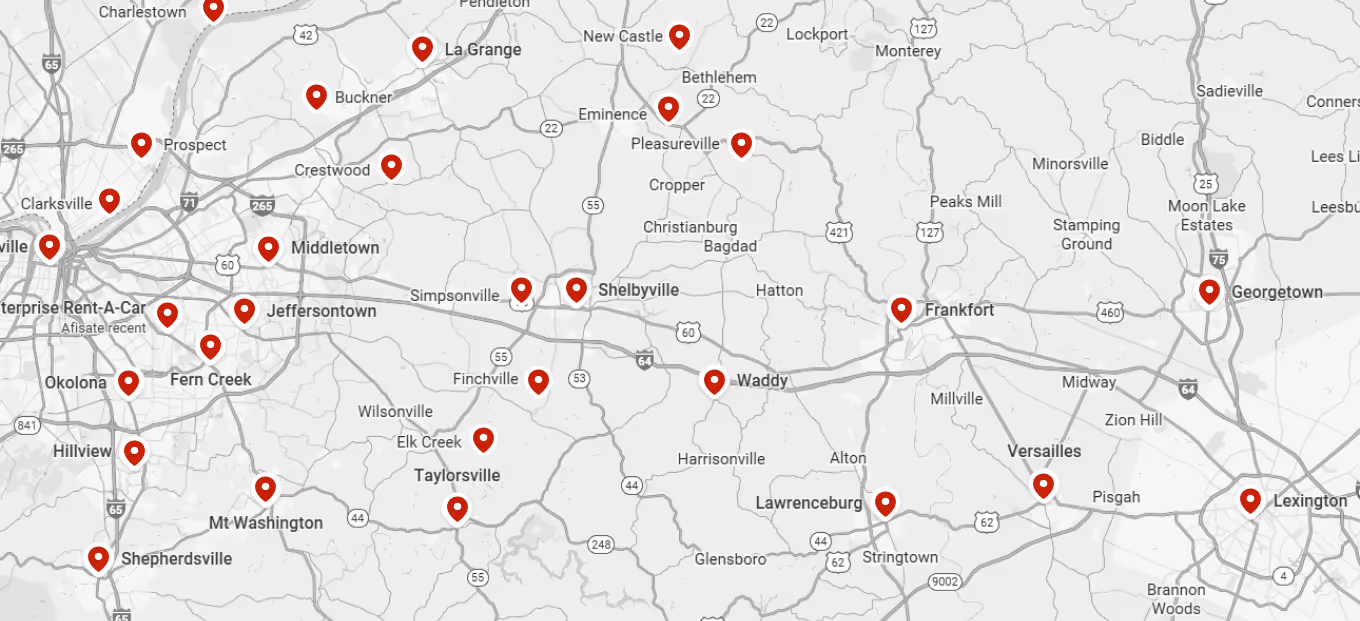
Proudly serving Spencer county, Jefferson county, Bullitt county, and the surrounding areas
Short Heading Goes Here
Sed iaculis aenean sit sed risus arcu vitae integer elit.

