



5 min read
3D Heating and Cooling Reviews: Trusted Heating Options Comparisons for Homeowners
Facing a Failing Heater: The Pre-Winter Dilemma
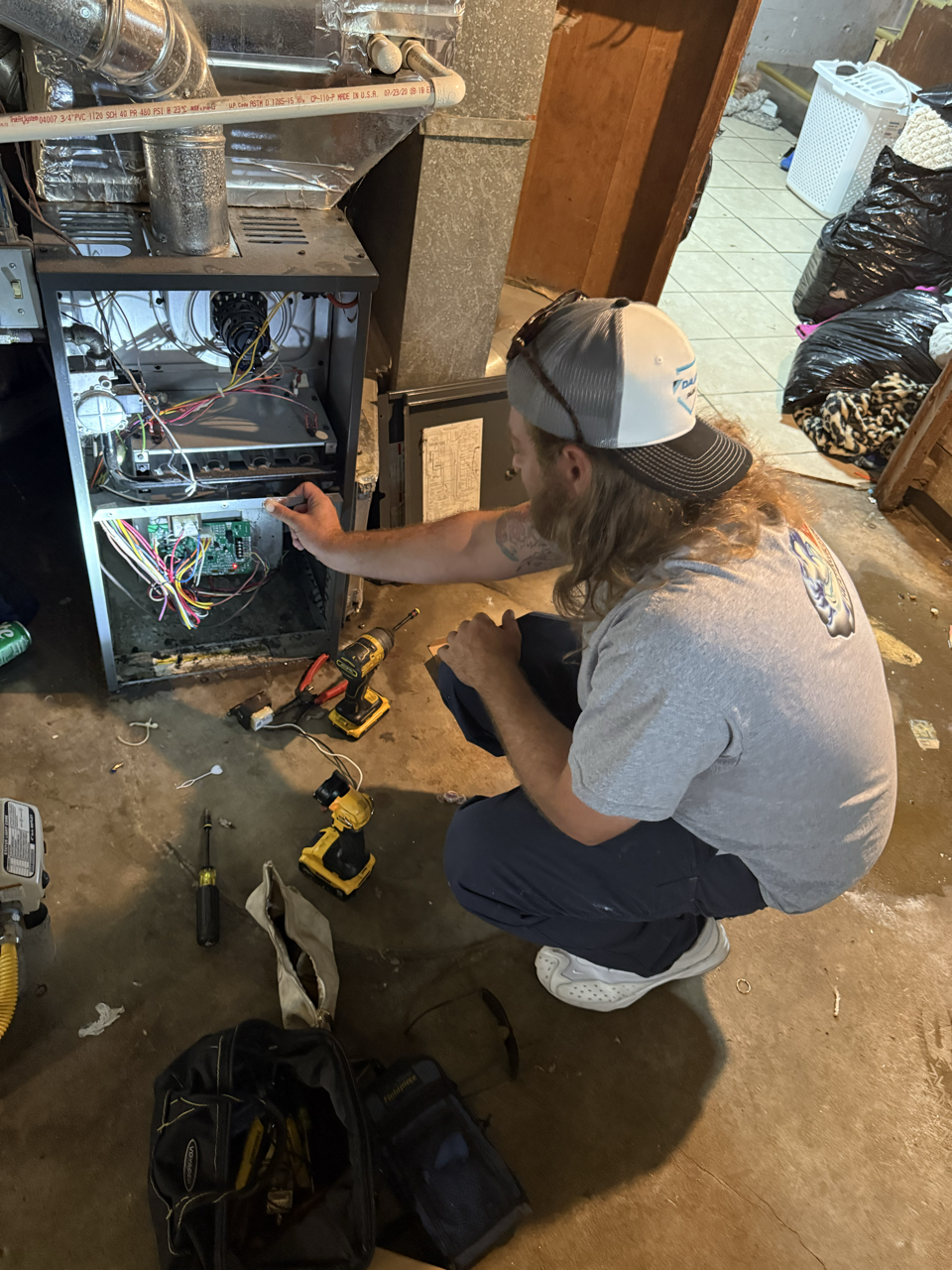
That strange, rhythmic clanking from your furnace isn't going away on its own, and the chill creeping into your living room means you need reliable options comparisons for homeowners before the real cold sets in. In our years serving Taylorsville, our team at 3D Heating and Cooling has seen firsthand how quickly the window for proactive replacement narrows when a heating system struggles late in the year. You are suddenly forced to make a major decision about your home's infrastructure, and guessing is simply not an option. We always remind our customers that November pre-winter preparation is critical in Kentucky, as waiting for a total system failure during a December freeze often leads to emergency service calls and rushed decisions.
To make an informed, confident choice about your next heating system, reading authentic 3D Heating and Cooling reviews provides invaluable insight into how different units perform for your neighbors. Whether you are leaning toward upgrading to a highly efficient modern heat pump or sticking with the proven power of a traditional gas furnace, evaluating your home's specific thermal needs requires local expertise. When you rely on our professional heating services, we ensure your new system is sized and calibrated correctly, preventing the expensive long-term consequences of installing the wrong type of equipment.
Understanding Spencer County's Fluctuating Winter Climate
Generic national efficiency ratings look great on a manufacturer's brochure, but as our technicians know, they do not always translate perfectly to the realities of local weather. Taylorsville and surrounding Spencer County experience a highly specific, fluctuating winter climate that aggressively tests residential heating equipment. We often see mild, comfortable fall days immediately followed by sharp, freezing winter nights. This rapid temperature swing demands a heating system that is both flexible enough to provide gentle warmth on a 50-degree afternoon and powerful enough to run continuously when the thermometer drops below freezing.
How temperature swings impact your equipment:
• Defrost cycles: Heat pumps must occasionally run a defrost cycle to melt ice off the outdoor coil during freezing rain or heavy frost. A system that struggles with this cycle will leave your home cold.
• Continuous run times: When temperatures plummet, furnaces must run for extended periods. Undersized units will run constantly without ever reaching your thermostat setting, causing excessive wear and tear.
• Short-cycling: Conversely, oversized units will turn on and off rapidly during mild weather, wasting energy and failing to properly dehumidify the air.
Because Taylorsville deals with hot, humid summers and freezing winters, the choice between a year-round heat pump and a dedicated winter gas furnace is a uniquely impactful decision here. A system that handles humidity well in July must also survive ice in January. This is exactly why consulting experts who are deeply familiar with local service areas is so important. As local professionals who understand regional climate data, we ensure your chosen system actually performs efficiently when the worst winter weather hits.
Heat Pumps: Versatile Efficiency for Kentucky Homes
Modern cold-climate heat pumps have fundamentally changed how homeowners approach winter comfort. Unlike older models that struggled when temperatures dropped, today's advanced heat pumps maintain high efficiency even in sub-freezing conditions. Instead of burning fuel to generate heat, these systems use electricity and specialized refrigerants to absorb ambient heat from the outside air and transfer it inside your home. Because moving heat requires significantly less energy than creating it, a heat pump can dramatically lower your monthly energy consumption.
The standout advantage of this technology is its dual-benefit nature. A heat pump acts as a high-performance air conditioner during the summer, reversing its operation to pull heat out of your home. When winter arrives in Taylorsville and surrounding Spencer County, the cycle reverses again to provide consistent, gentle warmth. Efficiency is measured by the Heating Seasonal Performance Factor (HSPF2). A higher HSPF2 rating means the unit uses less electricity to deliver the same amount of heat, directly impacting your daily comfort and utility costs. Of course, maximizing this technology's lifespan requires precise setup. Professional heat pump installation and repair ensures the system's refrigerant charge and airflow are perfectly balanced for your specific ductwork.
Real-world performance in severe weather is where quality installation shines. During a heavy winter snow storm last season, our team helped one local homeowner who needed a completely new heat pump installed immediately. We arrived promptly, maintained a clean workspace despite the severe weather, and successfully installed the new unit, providing informative and punctual service that restored the home's comfort quickly.
When a Heat Pump Makes the Most Sense
• Year-round climate control: Ideal for homeowners looking to upgrade both their heating and cooling capabilities with a single, highly efficient unit.
• Mild weather performance: Highly effective and incredibly cheap to operate during the region's milder fall and early winter days.
• Energy transition goals: Perfect for homes looking to reduce their reliance on fossil fuels and transition to fully electric, energy-efficient operation.
Gas Furnaces: Consistent Warmth During Deep Freezes
While heat pumps offer incredible efficiency, traditional gas furnaces remain the undisputed champions of raw heating power during extreme cold. When the temperature plummets well below freezing and stays there for days, a gas furnace provides reliable, consistent warmth without relying on ambient outdoor heat. These systems operate through combustion, burning natural gas or propane in a sealed heat exchanger, and using a powerful blower motor to distribute that intense heat throughout your home.
Furnace efficiency is measured by Annual Fuel Utilization Efficiency (AFUE). This percentage indicates exactly how much of the fuel is converted directly into usable heat versus how much escapes as exhaust. A modern high-efficiency furnace with an AFUE rating of 95% means that nearly every drop of fuel is successfully converted into warmth for your living space. During November pre-winter preparation, evaluating your current furnace's AFUE rating often reveals that older units are wasting a significant portion of their fuel, driving up operational costs.
The peace of mind that comes from having a dedicated, high-power heating source during holiday season cold snaps cannot be overstated. Modern gas furnaces are engineered for continuous run times and rapid heating capabilities. If you turn the thermostat down while you are away at work, a gas furnace can quickly recover and heat a cold house much faster than a heat pump typically can. This rapid recovery was crucial for one homeowner who called us after experiencing a total failure of their 27-year-old heating system on the evening of Thanksgiving. Our technicians came out immediately during the holiday, walked the family through every option with transparent guidance, and replaced the aging system with quality work and a wonderful attitude.
Why Some Homes Still Prefer Gas
• Faster recovery times: Gas furnaces can raise the indoor temperature by several degrees in a matter of minutes, quickly warming a cold house.
• Higher output temperatures: The air coming out of your vents is significantly hotter with a gas furnace, which many homeowners prefer for immediate comfort.
• Proven longevity: With straightforward maintenance requirements and fewer moving parts than a dual-season heat pump, a well-maintained gas furnace can offer exceptional longevity.

Evaluating Local Trust: What Real Customer Experiences Reveal
The most advanced, high-efficiency heating equipment on the market will still fail prematurely if it is not installed by a reliable, highly rated team. The precision required to set up gas manifolds, calibrate blower speeds, and dial in refrigerant charges is exact. Even a minor miscalculation during installation can reduce a system's efficiency by up to 30%, costing you heavily over the lifespan of the unit. This is why homeowners must look beyond the equipment brand and closely evaluate the contractor performing the work.
When reviewing contractor feedback, you should look for consistent mentions of punctuality, transparency, and technical skill. A team that arrives on time, clearly explains the problem without technical jargon, and provides upfront options is a team that respects your home. Reading authentic experiences helps you understand why homeowners trust our team for winter troubleshooting and complex system replacements. At 3D Heating and Cooling, our proven local track record and highly rated customer satisfaction in the Taylorsville area serve as the ultimate proof of reliability.
Local expertise ensures that your system is sized and calibrated specifically for Taylorsville and surrounding Spencer County weather patterns. A contractor unfamiliar with our specific humidity levels and freeze-thaw cycles might recommend a generic setup that struggles to keep you comfortable. By choosing a deeply rooted local team, you guarantee that your heating system is designed for the exact climate it will operate in.
Efficiency Ratings and Long-Term Financial Considerations: Options Comparisons for Homeowners
Upgrading your heating system is a long-term investment in your home's infrastructure. While the initial installation is a significant factor, the long-term energy consumption of the unit will dictate its true cost over the next 15 to 20 years. When we sit down to provide options comparisons for homeowners, evaluating the non-pricing financial factors is critical to our process. High-efficiency heat pumps generally consume less raw energy than gas furnaces over a full winter season, but the local cost of electricity versus natural gas will ultimately determine your monthly utility bills.
To help offset the investment of upgrading to high-efficiency equipment, various incentives are often available. Generic federal tax credits may apply to qualifying high-efficiency heat pump installations, rewarding homeowners who transition to energy-saving technology. Additionally, you should always check with your local utility providers, as they frequently offer energy rebates and incentive programs for upgrading from older, inefficient systems to modern, high-AFUE furnaces or high-HSPF2 heat pumps. These programs change frequently, so verifying current availability with a tax professional or your utility company is a smart step during your November pre-winter preparation.
Comparing the Long-Term Factors:
• Primary Efficiency Metric — Modern Heat Pump: HSPF2 (Heating Seasonal Performance Factor) — High-Efficiency Gas Furnace: AFUE (Annual Fuel Utilization Efficiency)
• Operational Method — Modern Heat Pump: Transfers ambient heat via electricity — High-Efficiency Gas Furnace: Generates heat via combustion
• Best Climate Application — Modern Heat Pump: Excellent for mild to moderate cold; handles summer cooling — High-Efficiency Gas Furnace: Superior for prolonged, extreme deep freezes
• Long-Term Energy Profile — Modern Heat Pump: Highly efficient; lowers overall carbon footprint — High-Efficiency Gas Furnace: Reliable, powerful performance; dependent on gas prices
Ultimately, proper installation directly impacts the system's ability to achieve these advertised efficiency ratings. A poorly installed 98% AFUE furnace will perform worse than a perfectly installed 80% AFUE furnace. Securing professional installation guarantees you actually receive the long-term financial benefits you are investing in.
Frequently Asked Questions
Is a heat pump better than a gas furnace in Kentucky?
When our customers ask this, the short answer is that it depends entirely on your home's specific layout and your comfort preferences. Heat pumps are incredibly efficient during Kentucky's mild fall and early winter days, offering the added benefit of summer cooling in one unit. However, gas furnaces provide faster, hotter heat that many homeowners prefer during severe deep freezes. A professional evaluation of your ductwork and insulation is required to determine which system is objectively better for your property.
At what temperature does a heat pump lose efficiency?
In our experience, older heat pumps typically began losing significant efficiency around 35°F, but modern technology has changed this dramatically. Today's cold-climate heat pumps can maintain high operational efficiency even when temperatures drop down to 5°F or lower. While they do work harder in extreme cold, advanced variable-speed compressors allow them to extract ambient heat long after older models would have switched to expensive emergency strip heating.
Should I replace my furnace with a heat pump?
We often recommend that if your current air conditioner is also nearing the end of its lifespan, replacing your furnace with a heat pump is an excellent, cost-effective strategy to upgrade both systems at once. Heat pumps provide year-round climate control, making them a highly versatile choice. However, if you already have a brand-new air conditioner, replacing a failing furnace with a new, high-efficiency gas furnace might make more logistical sense.
What is the difference between a heat pump and a gas furnace?
The fundamental difference lies in how they create warmth for your home. A gas furnace generates heat by burning a fuel source (natural gas or propane) inside a heat exchanger. A heat pump does not burn fuel; instead, it uses electricity and refrigerant to absorb existing heat from the outdoor air and move it inside. This mechanical difference means heat pumps are generally more energy-efficient, while furnaces produce hotter air at the register.
Which heating system is more reliable in freezing weather?
Gas furnaces are traditionally viewed as the most reliable option during prolonged, extreme freezing weather because their heating capacity is not dependent on outdoor air temperatures. They can quickly recover the temperature in a cold house regardless of how harsh the weather is outside. While modern heat pumps are highly capable in freezing weather, a gas furnace offers unmatched, consistent heating power during the absolute coldest days of the year.
How long does a pre-winter heating system replacement typically take?
When you hire 3D Heating and Cooling, a standard heating system replacement usually takes our professional crew one full day to complete. This timeline includes safely removing and disposing of the old unit, installing the new equipment, connecting it to your existing ductwork, and thoroughly testing the system. Complex installations that require ductwork modifications or upgrading gas lines may extend into a second day, but our technicians will always outline the timeline before work begins.
Will a dual-fuel heating system work well for my home?
A dual-fuel system, which pairs an electric heat pump with a gas furnace, is often the perfect solution for fluctuating winter climates. The heat pump handles the heating duties during mild weather to maximize energy efficiency, and the system automatically switches to the gas furnace when temperatures drop to freezing. This hybrid approach guarantees you get the most cost-effective heating during the fall and the most powerful heating during winter storms.
Making Your Final Heating Decision
Navigating a heating replacement doesn't have to be overwhelming when you have the right information. By relying on our team at 3D Heating and Cooling for trusted options comparisons for homeowners, you can confidently choose the system that aligns with your property's demands. Schedule your evaluation with us today to ensure you have a clear, regionally-accurate plan in place, guaranteeing your family stays warm, comfortable, and protected all winter long.
Financing

Now Offering Financing Options with Affordable Monthly Payments
where we operate
Service Areas
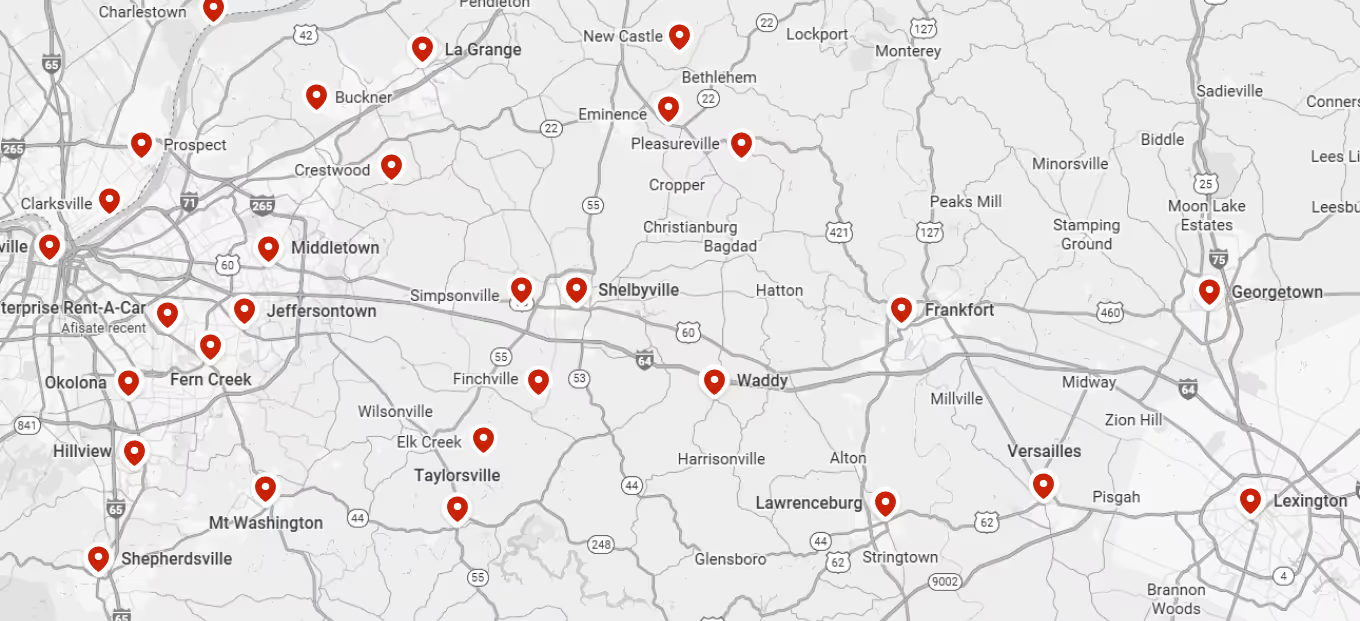
Proudly serving Spencer county, Jefferson county, Bullitt county, and the surrounding areas
Short Heading Goes Here
Sed iaculis aenean sit sed risus arcu vitae integer elit.

