



5 min read
Why We Recommend MERV 11 Over MERV 13 For Older Kentucky Homes This Winter
The Myth of the 'Best' Winter Furnace Filter
When weighing MERV 11 vs MERV 13 for winter, many homeowners assume the higher number is automatically the superior choice. Upgrading to the highest rating printed on the packaging seems like the best way to protect your family from seasonal allergens. However, buying the most aggressive filter on the hardware store shelf does not guarantee a warmer or healthier home. In fact, installing a highly restrictive filter can choke older furnace blowers, leading to severe system strain just as temperatures begin to drop.
As we face November pre-winter heating loads, finding the exact balance between capturing airborne allergens and maintaining safe airflow for heating efficiency is critical. A filter that blocks dust effectively but starves your furnace of air will ultimately leave your living space cold and put your equipment at risk of a breakdown. With late fall weather rapidly approaching, this is the crucial window to choose the right filter before your furnace is forced to run continuously to combat the chill. Discovering the right indoor air quality solutions means understanding your specific HVAC system's mechanical limits before peak cold arrives.
Understanding Static Pressure and Winter Heating Demands
To understand why a higher filter rating isn't always better, we have to look at the mechanics of airflow. The core issue revolves around static pressure. In accessible terms, static pressure is the physical resistance your furnace blower must overcome to push conditioned air through your home's ductwork. Every component in your HVAC system—from the turns in the ducts to the registers in your floor—adds to this resistance. The air filter is one of the most significant sources of static pressure. When that resistance becomes too high, the blower motor has to work exponentially harder to circulate the same amount of air.
In our experience servicing aging ductwork and older furnace setups unique to older Taylorsville, KY homes, we frequently see systems that were never designed to handle the intense static pressure created by modern, ultra-dense filters. Airflow is just as important as heat generation; if the furnace creates heat but the blower cannot push it through the house, your comfort will suffer.
The Role of the PSC Blower Motor
Many older homes still rely on Permanent Split Capacitor (PSC) blower motors. These motors operate at a fixed speed. When a restrictive filter blocks the return air, a PSC motor cannot ramp up its power to compensate. Instead, it continues to spin at its set speed, struggling against the blockage, consuming more energy, and running significantly hotter.
• Fixed Output: PSC motors deliver a specific amount of force. They cannot adjust to changing static pressure conditions.
• Energy Waste: When fighting a dense filter, these motors draw more electricity while delivering less heated air to your rooms.
• Premature Wear: The constant strain of pulling air through a dense barrier accelerates the wear and tear on the motor's internal components.
Why Cold Snaps Exacerbate Airflow Issues
During a mild autumn, a restrictive filter might go unnoticed because the furnace only runs in short bursts. However, winter cold snaps change the equation entirely. When temperatures plummet, furnaces run longer, more frequent cycles to maintain the thermostat setting. Sustained operation with restricted airflow compounds heat buildup inside the system. The blower motor doesn't get a chance to cool down between cycles, turning a minor airflow restriction into a major mechanical hazard.
MERV 11: The Ideal Balance for Winter Air Quality
For the vast majority of residential systems, MERV 11 provides the sweet spot. It offers excellent filtration capabilities without crossing the threshold into dangerous airflow restriction. This rating is highly effective at trapping the most common household irritants that circulate during the months when windows remain tightly shut.
When comparing MERV 8 and MERV 11, the jump to an 11 represents a significant upgrade in indoor air quality. It captures finer particles without demanding the extreme blower power required by top-tier hospital-grade filters. As homes seal up against November pre-winter heating loads, maintaining this balance ensures you breathe clean air without accidentally sabotaging your heating equipment.
Particle Capture Efficiency
MERV 11 filters are engineered to capture up to 85% of particles sized between 3.0 and 10.0 microns. To put that in perspective, this includes the most stubborn winter allergens that trigger asthma and allergy symptoms indoors.
• Pet Dander: Effectively traps the microscopic flakes of skin shed by cats, dogs, and other pets.
• Dust Mites: Captures dust mite debris, a primary cause of winter indoor allergies.
• Mold Spores: Traps airborne mold spores before they can circulate through the ductwork.
• Auto Emissions and Smog: Filters out finer particulate matter that makes its way indoors from outside traffic.
This level of filtration is usually more than enough for standard residential needs, providing a noticeably cleaner environment without the drawbacks of denser media.
Maintaining Safe Airflow Rates
The primary advantage of MERV 11 is its structural design. The pleats are woven tightly enough to catch debris but remain porous enough to allow older blowers to operate within safe static pressure limits. This safe airflow rate directly links to consistent room-to-room temperatures. When the blower can move air freely, the heated air reaches the furthest bedrooms in the house, eliminating cold spots and ensuring the system operates exactly as the manufacturer intended.
MERV 13: When Superior Filtration Becomes a Liability
MERV 13 filters are undeniably excellent at cleaning the air. They capture up to 90% of particles as small as 1.0 to 3.0 microns, including some bacteria and virus carriers. However, achieving this level of microscopic filtration requires a dense, tightly woven filter media. In an older HVAC system, this dense weave acts like a brick wall against incoming airflow. Unless your system was specifically designed or modified for high-efficiency filtration—such as modern variable-speed ECM blowers—installing a MERV 13 filter is often a hazard for older furnaces.
Kentucky's specific winter heating demands require sustained, heavy furnace operation. During a deep freeze, your furnace must run continuously to keep the house habitable. These continuous cycles turn MERV 13 airflow restrictions into a primary cause of winter breakdowns in older Taylorsville, KY homes. Before you find yourself needing emergency residential furnace repair on a freezing night, it is vital to understand the hidden costs of over-filtering.
The Hidden Cost of High Static Pressure
A furnace must breathe in as much air as it breathes out. When a dense MERV 13 filter starves the furnace of return air, the entire system is thrown out of balance.
The compounding dirt effect: A brand-new MERV 13 filter already operates at the absolute maximum static pressure limit for most standard furnaces. Once that filter begins doing its job and collecting dust, the resistance increases exponentially. Within just a few weeks of heavy winter use, a slightly dirty MERV 13 filter restricts airflow so severely that the blower motor is essentially suffocating.
Overheating and Heat Exchanger Stress
The most severe consequence of starved airflow is overheating. Your furnace generates a massive amount of thermal energy inside the heat exchanger. The blower's job is to push cool return air over this metal component, extracting the heat and carrying it into your home. When airflow drops due to a restrictive filter, the heat is not extracted fast enough.
The heat exchanger begins to bake in its own trapped heat. Over time, the repeated expansion and contraction from overheating causes the metal to fatigue and crack. A cracked heat exchanger is not just a financial risk that often requires full system replacement; it is a severe safety hazard that can allow carbon monoxide to leak into the living space.
Side-by-Side Comparison: MERV 11 vs MERV 13 for Winter
To make an informed decision for your home as we enter the November pre-winter heating loads, it helps to look at the data side-by-side. The table below outlines the core differences between these two ratings and how they interact with standard residential heating systems.
• Particle Capture Size — MERV 11: Up to 85% of 3.0 - 10.0 microns — MERV 13: Up to 90% of 1.0 - 3.0 microns
• Airflow Resistance — MERV 11: Moderate (Safe for most systems) — MERV 13: High (Acts as a barrier)
• System Compatibility — MERV 11: Excellent for older PSC motors — MERV 13: Requires modern variable-speed blowers
• Overheating Risk — MERV 11: Low — MERV 13: High in older furnaces
• Replacement Frequency — MERV 11: Every 60-90 days — MERV 13: Every 30-60 days (clogs faster)

Warning Signs Your Filter is Choking Your Furnace
If you have recently installed a high-efficiency filter, or if you suspect your current filter is too dense for your equipment, your furnace will usually give you warning signs. Recognizing these symptoms early in older Taylorsville, KY homes can prevent a catastrophic failure mid-season. Ignoring these indicators often leads to sudden system lockouts on the coldest nights of the year, leaving you scrambling for emergency heating services.
Short Cycling During Cold Weather
Short cycling occurs when the furnace turns on, runs for a brief period (often just a few minutes), and then abruptly shuts off before the home reaches the temperature set on the thermostat.
1. The High-Limit Switch: When airflow is restricted by a dense filter, the internal temperature of the furnace skyrockets.
2. The Safety Shutdown: A safety device called the high-limit switch detects this dangerous heat buildup and immediately shuts down the burners to prevent a fire.
3. The Cycle Repeats: The furnace cools down, tries to run again, overheats, and shuts off again. This prevents the home from ever truly warming up and destroys energy efficiency.
Unusual Furnace Noises and Weak Airflow
Your ears and hands are excellent diagnostic tools for airflow issues.
• Test the Registers: Hold your hand over a supply vent while the blower is running. If the airflow feels weak, sluggish, or barely noticeable, the filter is likely restricting the intake.
• Listen to the Return Grille: A high-pitched whistling sound at the return vent usually indicates that the blower is pulling a vacuum, desperately trying to suck air through a clogged or overly dense filter media.
• Listen to the Furnace: A strained, loud humming or vibrating sound from the furnace cabinet often means the blower motor is working against immense static pressure and is at risk of burning out.
Frequently Asked Questions About Winter Air Filters
Is MERV 13 too restrictive for older furnaces?
Yes, in most cases, MERV 13 is too restrictive for older furnaces equipped with standard PSC blower motors. The dense filter media creates high static pressure that these older motors cannot overcome. This lack of airflow leads to poor heating performance, increased energy consumption, and a high risk of overheating the heat exchanger.
Why is my furnace short cycling in winter?
Short cycling in winter is frequently caused by restricted airflow triggering the furnace's high-limit safety switch. When a filter is too dense or too dirty, the heat generated by the burners cannot be pushed into the home fast enough. The furnace overheats, shuts itself down for safety, and then restarts once it cools, repeating the cycle without ever warming the house.
Which MERV rating is best for winter heating?
For standard residential systems, MERV 11 is widely recommended as the best balance for winter heating. It provides excellent indoor air quality by capturing up to 85% of common allergens like pet dander and dust mites. Most importantly, it allows enough air to pass through to keep the furnace operating safely and efficiently during long winter heating cycles.
Can a MERV 13 filter permanently damage my HVAC system?
Yes, using a MERV 13 filter in a system not designed for it can cause permanent damage. The severe airflow restriction forces the blower motor to overwork, leading to premature motor failure. Furthermore, the trapped heat can cause the metal heat exchanger to crack, which is a dangerous and costly repair that often necessitates replacing the entire furnace.
How often should I replace a MERV 11 filter during peak winter months?
During peak winter months when the furnace runs continuously, a MERV 11 filter should be replaced every 60 to 90 days. However, if you have multiple pets, a dusty home environment, or notice weak airflow at your vents, you may need to check and replace it as frequently as every 30 to 45 days to protect your blower motor.
Protect Your Furnace and Your Air Quality This Winter
Balancing germ defense and furnace safety is paramount as we head into the coldest months of the year. While it is tempting to reach for the highest filtration number available, the reality is that MERV 11 provides the optimal balance of indoor air quality and system safety for most aging systems. Protecting your older blower from unnecessary static pressure saves you from accidental, mid-winter furnace breakdowns.
If you are unsure whether your current filter is choking your system, or if you have noticed signs of short cycling, proactive professional maintenance is the safest next step. A technician can verify your system's static pressure and overall health. Schedule your routine HVAC maintenance today to ensure your equipment is prepared to handle the winter workload safely and efficiently. Making the right choice between MERV 11 vs MERV 13 for winter will keep your air clean and your home consistently comfortable all season long.
Financing

Now Offering Financing Options with Affordable Monthly Payments
where we operate
Service Areas
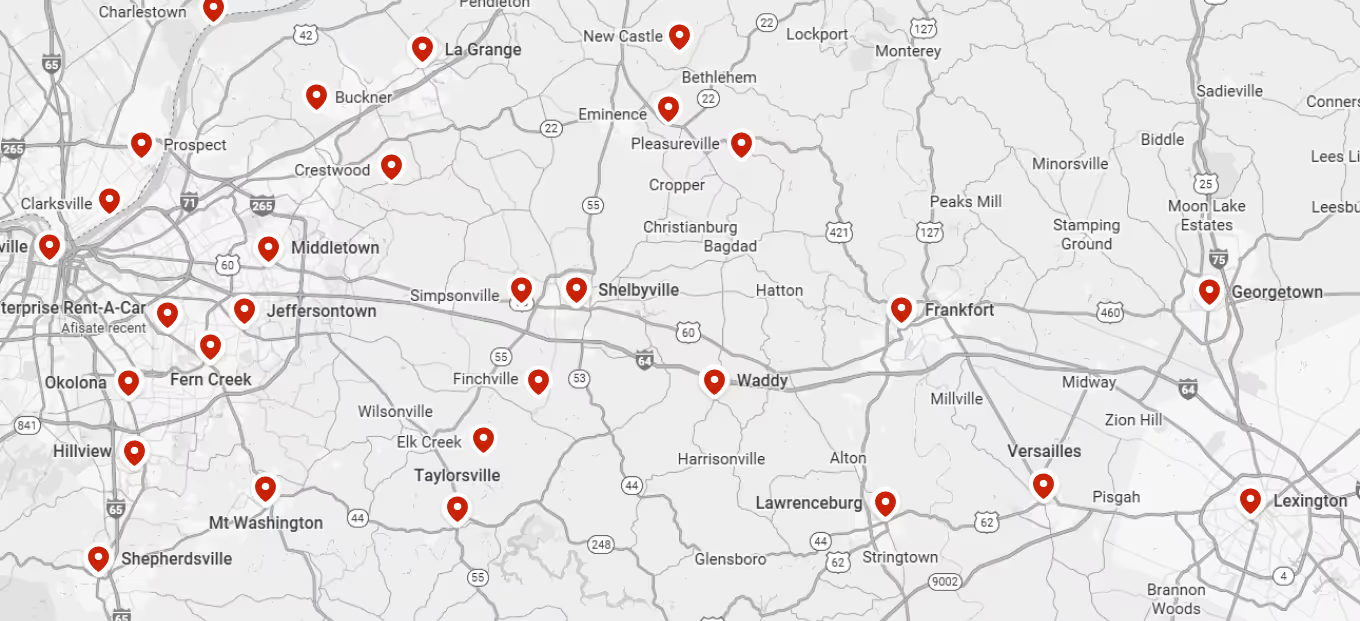
Proudly serving Spencer county, Jefferson county, Bullitt county, and the surrounding areas
Short Heading Goes Here
Sed iaculis aenean sit sed risus arcu vitae integer elit.

