
.svg)


.avif)


5 min read
Why Your AC Runs Non-Stop During Taylorsville's July Heatwaves (And When to Worry)
Is It Normal for Your AC to Run Constantly in Extreme Heat?
Is your cooling system actually broken, or are you just wondering why your AC runs non-stop during Taylorsville's July heatwaves? When the temperature outside climbs well past 90 degrees, it is incredibly common to hear your unit running for hours without a single break. At 3D Heating and Cooling, we notice the immediate reaction for most homeowners is panic. You sit in your living room listening to the constant hum of the compressor, watching the thermostat hover a degree or two above your preferred setting, and you start bracing yourself for a massive energy bill or a catastrophic system failure.
It is easy to assume the worst when the air outside is sweltering and your indoor vents never seem to stop blowing. You might worry that a vital component has snapped or that the motor is burning itself out. However, as our technicians often remind customers, a cooling system that runs constantly during severe weather is not always a sign of mechanical failure. In fact, in many cases we see across the region, it is simply doing exactly what it was engineered to do.
The Line Between Weather Strain and Mechanical Failure
The primary decision point you face during a heatwave is determining whether this continuous operation is just weather-induced strain or a true breakdown. Every piece of machinery has an upper limit. When the outdoor temperature pushes against that limit, the equipment has to work overtime to keep your living space habitable. Understanding how your HVAC system handles this extreme heat is the key to maintaining your peace of mind.
During the worst July heatwaves in Kentucky, your air conditioner is fighting a relentless battle against heat transfer. The sun is beating down on your roof, hot air is pressing against your windows, and your attic is likely trapping heat. Your system runs non-stop because the heat is entering your home just as fast as the air conditioner can remove it. Before you rush to turn the system off or assume it is broken, we recommend looking at the actual science of how these units are sized for our local climate.
Understanding HVAC Design Temperature Limits in Kentucky
To understand why your system operates the way it does, you have to look at how engineers determine the right size for a residential air conditioner. Cooling systems are not sized based on the absolute hottest day of the decade. Instead, they are sized using historical weather data to find a balance between efficiency and comfort. When you call us for professional air conditioning services, a qualified technician from our team will always look at these specific regional metrics before recommending a unit.
The Science of the ASHRAE 1% Design Limit
The American Society of Heating, Refrigerating and Air-Conditioning Engineers (ASHRAE) sets the standards for how HVAC systems are designed. They use a metric called the 1% cooling design temperature. This number represents the outdoor temperature that is exceeded only 1% of the total hours in a year (about 88 hours). For our region, that design temperature typically sits around 91 to 93 degrees Fahrenheit.
What does this mean for your home? It means your air conditioner is perfectly sized to handle temperatures up to about 93 degrees while still cycling on and off normally. When the outdoor temperature spikes to 96 or 98 degrees during a severe summer stretch, the heat load simply exceeds the system's maximum capacity. When a system reaches its capacity limit, the AC runs non-stop just to hold the line.
Why Bigger Isn't Always Better
Our technicians are frequently asked why installers do not just put in a massive, oversized unit that can easily handle a 100-degree day without breaking a sweat. The answer comes down to daily efficiency and moisture control. If your system was large enough to cycle on and off normally during a 98-degree heatwave, it would be drastically oversized for the other 99% of the year.
An oversized system cools the air too quickly on a normal 85-degree day and shuts off before it has a chance to properly dehumidify the house. This leads to a cold but clammy indoor environment, higher energy bills from constant starting and stopping, and premature wear on the compressor. Therefore, when your properly sized system runs continuously on the hottest day of the year, our team wants you to rest assured that this is intended behavior, not a design flaw.
The Hidden Factor: How Humidity Forces Longer Run Cycles
Temperature is only half of the equation when it comes to indoor comfort. The other critical factor is humidity, and it plays a massive role in how long your equipment needs to run. Kentucky's subtropical summer climate brings heavy, moisture-laden air that completely alters normal AC operation cycles.
Sensible Heat vs. Latent Heat
To understand the impact of humidity, you have to differentiate between two types of heat:
• Sensible heat: This is the heat you can feel and measure with a standard thermometer. When the temperature drops from 78 to 72 degrees, you are feeling a reduction in sensible heat.
• Latent heat: This is the heat energy trapped in airborne moisture. High humidity holds a tremendous amount of latent heat, which makes the air feel sticky, heavy, and warmer than the actual temperature reading.
Your air conditioner functions as a giant dehumidifier. As warm indoor air blows across the freezing cold evaporator coil, the moisture in the air condenses into water droplets and drains away outside. However, the system must remove a significant amount of this latent heat (moisture) before it can effectively lower the sensible heat (temperature).
The Benefits of a Long Run Cycle
During July heatwaves in Kentucky, the relative humidity can be oppressive. When your system kicks on, it spends the first 10 to 15 minutes just wringing the excess water out of the air. If the system were to shut off quickly, it would leave that moisture behind, resulting in a damp, uncomfortable home that promotes mold growth and poor air quality.
By running continuously, your air conditioner is actively managing the indoor environment. It pulls gallons of water out of your air every single day. If you are struggling with persistent moisture issues even when the system is running, it may be time to have us look into dedicated indoor air quality solutions to help manage the latent heat load.
Late-Summer Strain: Why August Makes Peak Heatwaves Feel Worse
As the summer drags on into August, you might notice that a 95-degree day feels much harder on your system than a 95-degree day in early June. This is not your imagination. The reality is that accumulated wear and tear from peak July usage significantly impacts system efficiency as the season progresses.
The Accumulation of Summer Wear
By the time late summer arrives, your air conditioner has already logged hundreds of hours of intense labor. The AC runs non-stop for weeks on end, and our repair crews see firsthand how this continuous operation takes a toll on the mechanical components. Belts stretch slightly, motors run hotter, and capacitors endure constant electrical stress. More importantly, the system's ability to breathe becomes compromised.
The Impact of Dust and Debris
The outdoor unit, known as the condenser, is responsible for releasing all the heat that was absorbed from inside your home. It does this by pulling massive amounts of outdoor air through its metal fins. Over the course of the summer, those fins act like a giant filter for your neighborhood.
By August, our maintenance technicians routinely find condenser coils coated in a thin layer of:
• Grass clippings: Thrown against the unit by lawnmowers every weekend.
• Pollen and dust: Baked onto the metal by the relentless summer sun.
• Cottonwood and seeds: Stuck deep between the aluminum fins, blocking critical airflow.
This layer of grime acts as an insulating blanket. It traps the heat inside the unit, forcing the compressor to work much harder and longer to achieve the same cooling effect. This drop in efficiency is exactly why we stress that routine upkeep and preventative AC maintenance are necessary to keep the system running smoothly through the end of the season.
Diagnostic Checklist: Normal Peak-Load Operation vs. System Failure
Knowing the theory behind design temperatures and humidity is helpful, but when you are sweating in your living room, you need practical answers from professionals who know your equipment.
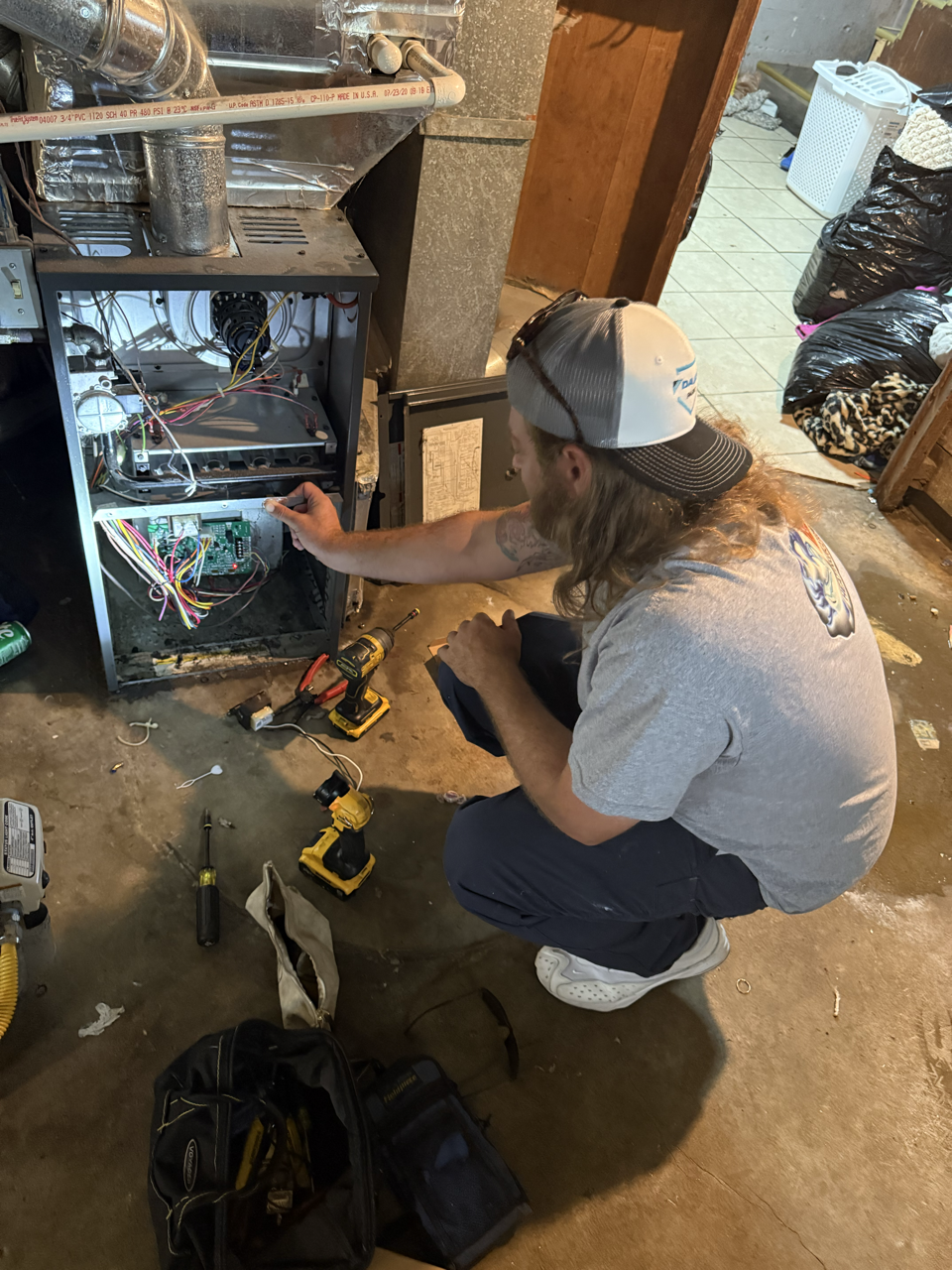
Just recently, a local homeowner reached out to our 3D Heating and Cooling team during an unseasonably warm stretch when their system started having issues keeping up. One of our technicians found a faulty coil and a unit leak, diagnosing and fixing both problems on the same day so the system was fully repaired before the late-summer heat truly hit. Catching these mechanical failures early is crucial, but you also want to avoid paying for an emergency service call if your system is simply maxed out by the weather. For us, demonstrating honest, local expertise means actively advising you when NOT to call for service.
What to Check Before You Call
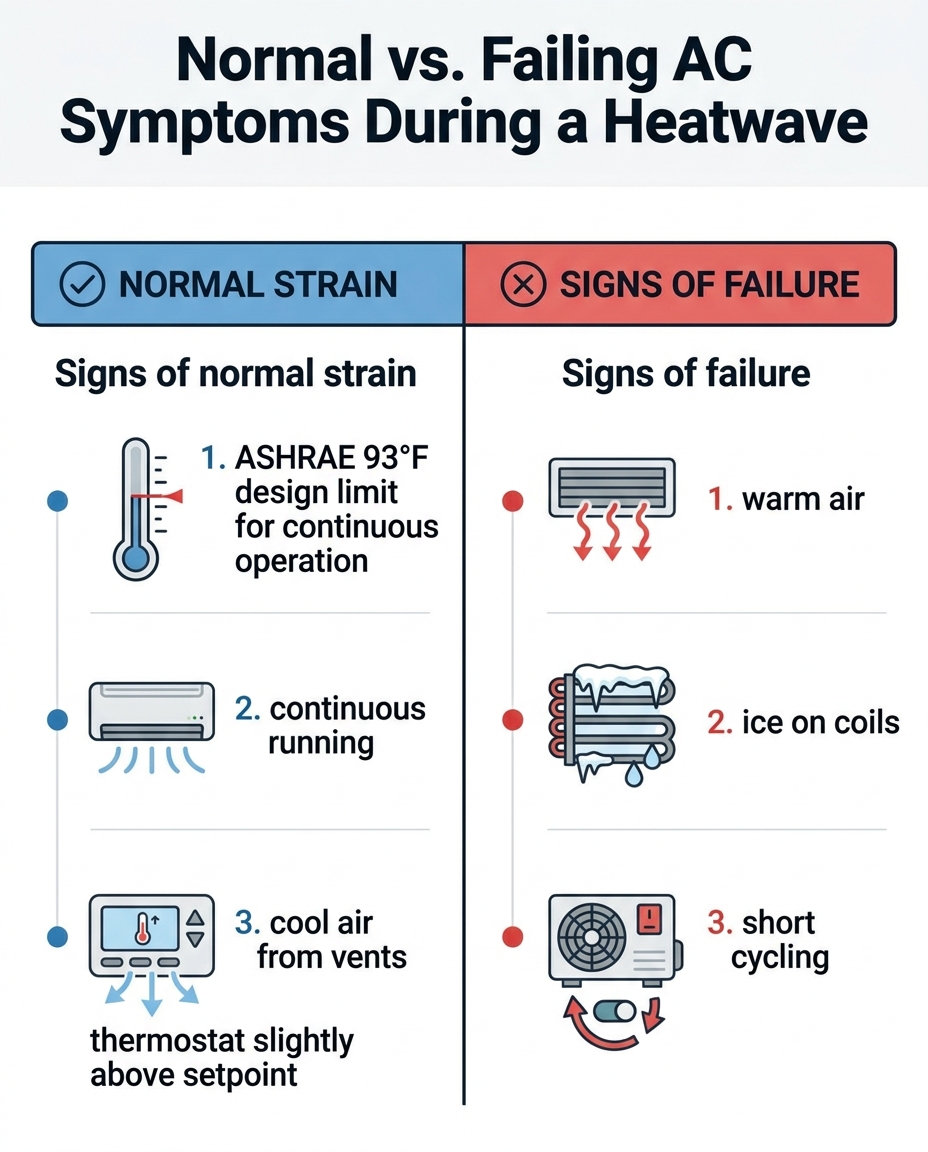
Use the following comparison to evaluate your system during July heatwaves in Kentucky. If your symptoms align with the "Normal Operation" column, your best course of action is to leave the system alone, keep your blinds closed, and wait for the sun to go down.
• Air from Vents — Normal Peak-Load Operation: Blowing noticeably cool air, even if it feels weak. — Potential System Failure (Call for Service): Blowing lukewarm or completely warm room-temperature air.
• Thermostat Reading — Normal Peak-Load Operation: Stuck 1-3 degrees above your setpoint during late afternoon. — Potential System Failure (Call for Service): Rising steadily throughout the day, completely ignoring the setpoint.
• Run Cycle — Normal Peak-Load Operation: Running continuously for hours until the sun sets. — Potential System Failure (Call for Service): Short cycling (turning on for 3 minutes, shutting off, repeating).
• System Noises — Normal Peak-Load Operation: A steady, unbroken hum from the outdoor compressor. — Potential System Failure (Call for Service): Grinding, screeching, or loud banging noises from the equipment.
• Coil Condition — Normal Peak-Load Operation: Indoor and outdoor coils are wet with condensation. — Potential System Failure (Call for Service): Thick white ice forming on the indoor coils or outdoor refrigerant lines.
The quick fix: If you notice your system is struggling, the very first thing we tell customers to do is check your indoor air filter. A severely clogged filter restricts airflow so badly that it mimics the symptoms of a major mechanical failure, including freezing coils and weak airflow.

Frequently Asked Questions About Continuous AC Operation
Even with a checklist, it is normal to have specific questions about how your equipment is behaving. When the AC runs non-stop, it goes against everything you have been taught about saving energy and preserving your appliances. Here are the clear, direct answers to the most common questions our team fields from homeowners during extreme heat events.
Is it normal for AC to run constantly in extreme heat?
Yes, it is completely normal for your AC to run constantly when outdoor temperatures exceed its design limits (typically 91-93°F in this region). Continuous operation under these conditions means the system is maximizing its cooling capacity to fight off the immense heat load. As long as the air coming from your vents is cool and the indoor temperature is not rapidly rising, the constant running is a sign that the system is doing its job exactly as intended.
How long should an AC run before shutting off?
During mild weather, a healthy cooling cycle lasts about 15 to 20 minutes before shutting off. This gives the system enough time to cool the air and remove excess humidity without wasting energy. However, during extreme heatwaves, it may not shut off at all until the sun goes down and ambient temperatures drop. The run time stretches out because the heat entering the home matches the cooling output of the equipment.
Why is my AC running but not cooling the house?
If your AC is running but blowing warm air, you likely have a mechanical issue such as low refrigerant, a failed compressor, or a severely dirty filter restricting airflow. This is a situation that requires professional intervention. On the other hand, if the air is cool but the house simply isn't reaching the set temperature on the thermostat, the heat load is simply exceeding the unit's capacity. In that scenario, the system is cooling, but it cannot overcome the extreme weather outside.
Will my AC break if it runs all day?
Modern air conditioners are engineered for continuous operation and will not break simply from running all day. The internal motors and compressors are designed to handle long, unbroken cycles. However, running constantly with restricted airflow (like a dirty filter or blocked condenser) can cause the system to freeze up or overheat. As long as the system is clean and well-maintained, long run times will not inherently damage the machinery.
At what outdoor temperature does an AC lose efficiency?
Most standard air conditioners begin to lose noticeable efficiency when outdoor temperatures climb above 95 degrees Fahrenheit. Because air conditioners work by transferring indoor heat to the outside air, the process becomes much harder when the outside air is already boiling hot. The hotter it gets outside, the harder the compressor has to work to reject the heat, which naturally decreases the overall efficiency of the cooling cycle. If your system fails entirely during these peaks, it may be a true 24-hour HVAC emergency.
Get Expert Help for True Air Conditioning Emergencies
Understanding why your cooling system behaves the way it does is the best way to stay calm when the weather turns brutal. While it is completely normal for your system to run non-stop during the worst July heatwaves in Kentucky, you should never ignore clear signs of a mechanical breakdown. If your system is blowing warm air, making terrible grinding noises, or freezing over with ice, waiting will only make the problem worse.
If you have run through our diagnostic checklist and suspect a genuine failure, do not hesitate to reach out. The team at 3D Heating and Cooling is ready to help you differentiate between a healthy AC doing its best against 95-degree heat and a unit that desperately needs repair. Schedule an inspection with us today to restore your comfort and get your home back to the cool, relaxing environment you deserve.
Financing

Now Offering Financing Options with Affordable Monthly Payments
where we operate
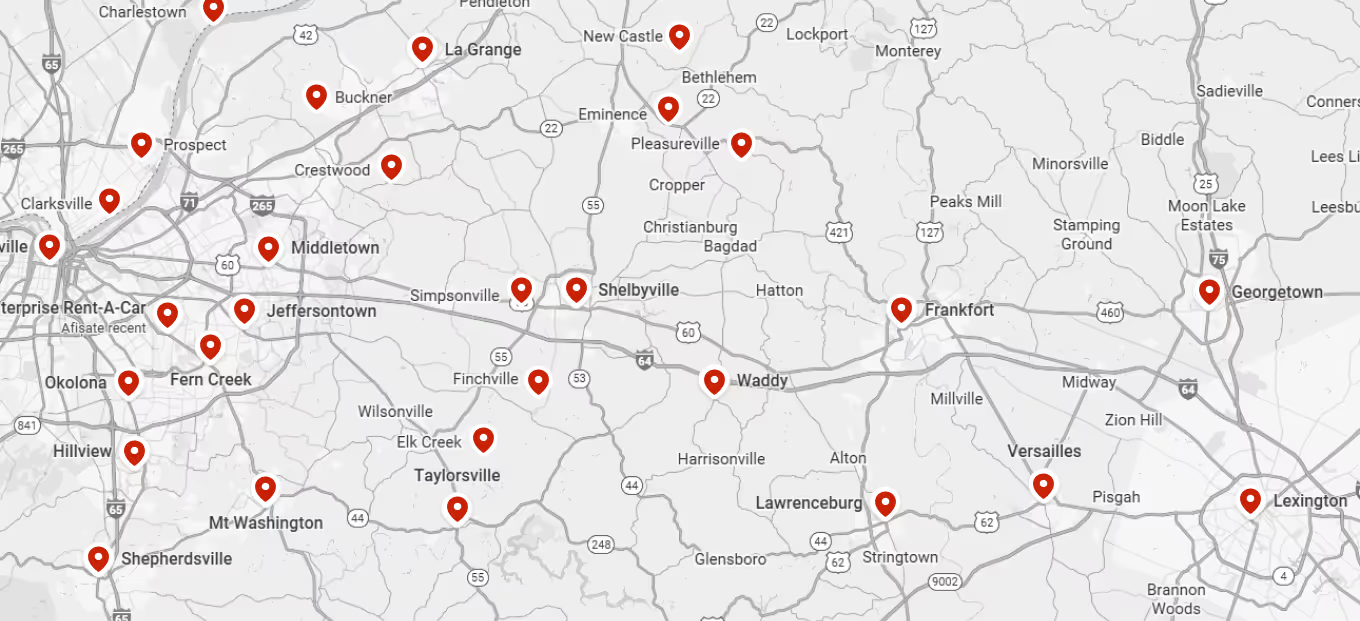
Service Areas
Proudly serving Spencer county, Jefferson county, Bullitt county, and the surrounding areas
Short Heading Goes Here
Sed iaculis aenean sit sed risus arcu vitae integer elit.