
.svg)


.avif)



5 min read
Decoding Strange Buzzing Noises from Your Outdoor AC Unit After Months of Heavy Use
When Your Cooling System Starts Buzzing After a Long, Hot Summer
The thermostat is set to 70 degrees, but the air coming out of your vents feels lukewarm. You walk outside to check the equipment, and instead of the usual smooth hum of the fan, you hear an aggressive, vibrating rattle. Decoding Strange Buzzing Noises from Your Outdoor AC Unit After Months of Heavy Use is a critical step in preventing a complete system failure as August / late-summer wear-and-tear takes its toll. A sudden buzzing noise from the outdoor unit after months of continuous operation is a clear sign of cumulative system fatigue. Homeowners face an immediate decision: determine if the sound is a critical electrical hazard requiring an emergency shutdown, or a mechanical vibration that can wait for a scheduled checkup. Ignoring the noise can lead to severe compressor damage during the final stretch of the cooling season.
Whether you are looking for comprehensive HVAC system services or targeted air conditioning repair and maintenance, understanding what these noises mean helps you make the right call. The outdoor cabinet houses the most expensive components of your cooling system, and early intervention is the best way to protect that investment.
The Cumulative Toll of Summer Cooling
Your air conditioner does not operate in a vacuum. Every time the system cycles on, it draws a massive surge of electricity to jump-start the compressor and the condenser fan motor. By the time late summer arrives, the system has performed this high-stress startup sequence thousands of times. This repetitive thermal and electrical stress weakens components, making them highly susceptible to failure just as the weather reaches its absolute peak. What starts as a faint hum in June can easily escalate into a violent buzz by late August.
Why the Late-Summer Heat Pushes AC Components to Their Limit
Air conditioning systems endure peak cumulative cooling loads by the time late summer arrives. Continuous cycling causes immense stress on both high-voltage electrical components and moving mechanical parts. The sustained effort to remove latent heat from the air forces longer cooling cycles, maximizing wear and tear on the entire system.
The Impact of High Humidity in Taylorsville KY
To understand why systems break down in late summer, you have to look at the local climate. In Taylorsville KY, sustained high summer humidity forces your air conditioner to work double duty. An air conditioner does not just lower the temperature; it also acts as a massive dehumidifier, pulling latent heat (moisture) out of your indoor air. When humidity levels remain high for weeks on end, the system is forced into significantly longer cooling cycles just to make the house feel comfortable.
These extended cycles mean the electrical relays, capacitors, and motors have very little time to cool down between runs. Heat is the natural enemy of electrical components. When the ambient outdoor temperature remains high, the internal components inside the metal cabinet bake in the heat. Over months of heavy use, this relentless thermal stress degrades the insulation on wires, weakens the chemical composition inside capacitors, and warps metal contact points, setting the stage for sudden end-of-season buzzing noises.
Electrical Buzzing vs. Mechanical Rattling: Identifying the Sound
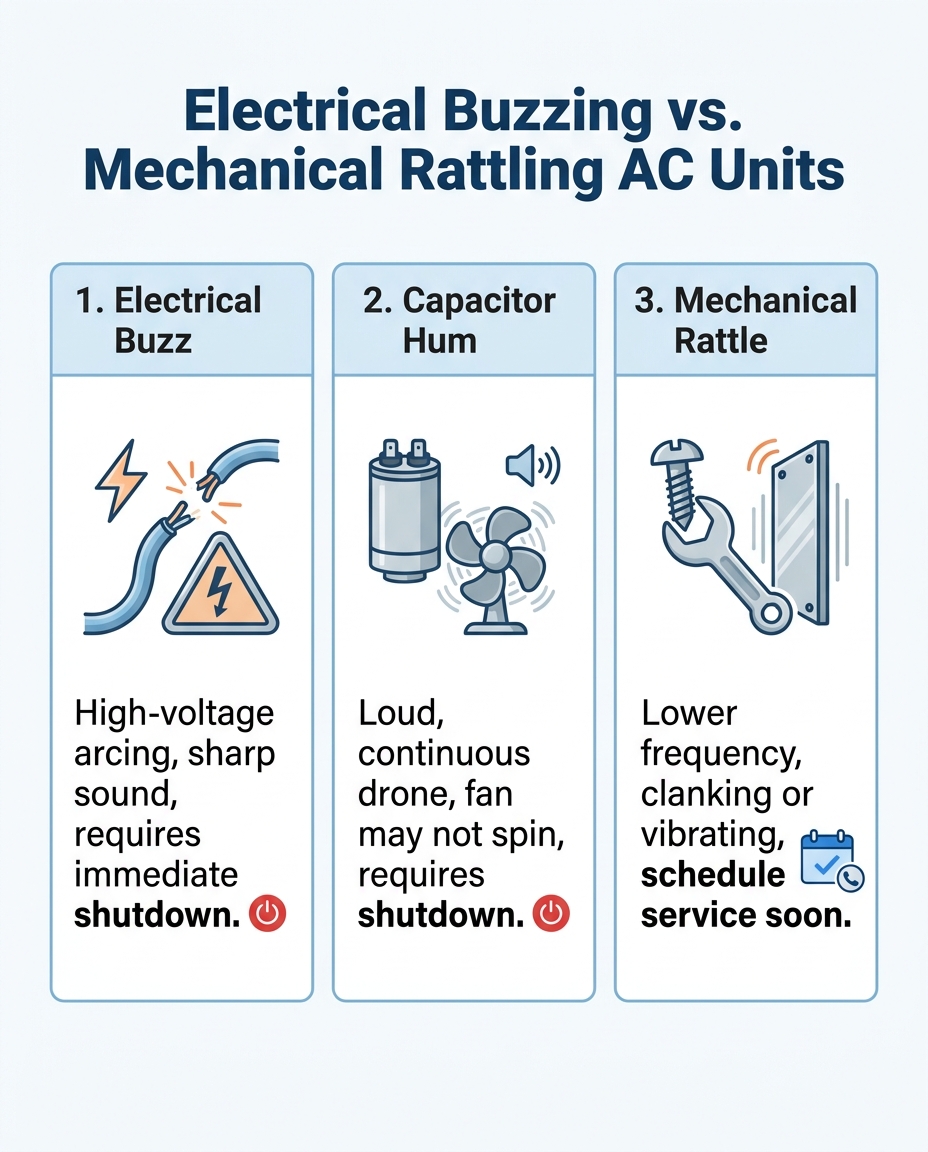
Correctly identifying the sound's characteristic is the first step in determining the severity of the issue. Electrical buzzing typically sounds like a sharp, high-voltage arcing or a loud, continuous hum. Mechanical noises, on the other hand, present as lower-frequency rattling, vibrating, or clanking that may change pitch as the fan spins.
• Sharp, crackling buzz (like a bug zapper) — Likely Category: Electrical — Common Culprit: Failing contactor relay — Urgency Level: High - Shut down immediately
• Loud, continuous drone or hum (fan not spinning) — Likely Category: Electrical — Common Culprit: Failed capacitor / stuck motor — Urgency Level: High - Shut down immediately
• Low-frequency rattle or clank — Likely Category: Mechanical — Common Culprit: Loose cabinet panel or fan blade — Urgency Level: Moderate - Schedule service soon
• High-pitched squeal transitioning to a buzz — Likely Category: Mechanical — Common Culprit: Failing fan motor bearings — Urgency Level: Moderate - Monitor and schedule service
Listening closely to the rhythm and pitch of the noise can save you from a catastrophic breakdown. If you hear a sharp electrical crackle, the system is actively misfiring high voltage. If you hear a low rattle that stops when you press your hand firmly against the metal cabinet, you are likely dealing with a simple mechanical vibration. Knowing the difference is crucial when you are weighing the costs of repairing vs. replacing an aging AC unit, as electrical failures often carry a higher risk of secondary compressor damage.

The High-Voltage Hazard: Failing Contactors
The contactor is an electrical relay that handles high voltage to start the compressor and the outdoor fan motor. Think of it as a heavy-duty drawbridge for electricity. When your thermostat calls for cooling, a low-voltage signal pulls the contactor bridge closed, allowing a massive surge of high-voltage electricity to flow into the compressor.
The Mechanics of Arcing and Pitting
Months of continuous cycling cause pitting and wear on the contact plates. Every time that bridge closes, a tiny electrical arc jumps the gap just before the metal plates touch. Over the course of a long cooling season, this repetitive arcing literally burns and pits the metal surface. By August / late-summer wear-and-tear, the metal plates may become so uneven and charred that they can no longer make a clean connection.
When this happens, the electricity struggles to cross the gap, creating a distinct, sharp electrical buzz. It sounds very similar to a loud fluorescent light fixture or a bug zapper. The contactor is rapidly vibrating as it attempts to hold the electrical connection closed. If left running in this state, the uneven voltage can severely damage the compressor motor.
Strict Safety Warning for Homeowners
Never attempt to inspect or replace a contactor yourself. Homeowners must never open the electrical panel to inspect a buzzing contactor due to extreme high-voltage hazards. The outdoor unit holds enough raw electrical current to cause fatal injury, even when the thermostat is turned off. Only a licensed professional with specialized insulated tools should ever open the service panel to test or replace a failing contactor.
Capacitor Failure: The Struggle to Start
Capacitors store energy to give the fan motor and compressor the boost they need to start. Your air conditioner requires significantly more energy to start up than it does to keep running. The dual-run capacitor acts like a massive battery, storing up a precise electrical charge and delivering it in a split-second jolt to overcome the inertia of the heavy compressor and fan blades.
How Heat Destroys Capacitors
Sustained high ambient heat degrades a capacitor's ability to hold a charge effectively. Inside the metal casing of a capacitor, thin layers of conductive material are suspended in a dialectic fluid. When exposed to the relentless summer heat in Taylorsville KY, this fluid can begin to break down or even boil. The capacitor casing will often bulge or swell at the top, losing its precise microfarad rating.
When a capacitor fails, the motor struggles to start, resulting in a loud, continuous hum or buzz from the outdoor unit. You will often notice that the system is humming loudly, but the fan blades are completely stationary. The motor is receiving power, but it lacks the necessary torque to begin spinning. This condition is known as "locked rotor," and it generates an immense amount of heat very quickly. If you need professional assistance diagnosing a locked rotor, reaching out for Bardstown KY AC services can prevent further damage to the system.
Mechanical Vibrations: Loose Components and Debris
Not every buzzing noise is an electrical emergency. Months of heavy operation can loosen fan motors, unbalanced blades, or cabinet panels. As the system runs day in and day out, the natural vibration of the compressor and fan can cause screws and bolts to slowly back out.
Common Mechanical Culprits
1. Loose Cabinet Panels: The metal access panels on the outside of the unit can vibrate aggressively against the frame if a single screw is missing or loose. This creates a loud, buzzing rattle that often stops if you press your hand against the panel.
2. Unbalanced Fan Blades: Debris trapped in the outdoor unit can rub against moving parts, creating a buzzing or rattling noise. Small twigs, acorns, or heavy layers of dirt can throw the fan blade off balance, causing the entire motor assembly to vibrate violently.
3. Failing Motor Bearings: The bearings inside the fan motor can lose their lubrication after months of continuous operation. This usually starts as a squeal or a grind, but can quickly transition into a heavy mechanical buzz as the motor struggles to turn.
4. Frozen Evaporator Coils: Frozen evaporator coils can also cause the compressor to hum unusually loud, mimicking an electrical issue. When airflow is restricted indoors, refrigerant returns to the outdoor unit too cold, causing the compressor to labor and vibrate heavily.
While mechanical vibrations are generally less dangerous than electrical arcing, they still require attention. An unbalanced fan blade can eventually tear the motor mount completely off the frame, turning a minor August / late-summer wear-and-tear issue into a major repair bill.
The Decision Matrix: When to Shut Down Immediately
The Problem: You hear a loud buzzing noise from the outdoor unit and are unsure if it is safe to let the system keep running.
The Cause: The noise could be a harmless vibrating panel, or it could be a failing contactor actively burning up your compressor.
The Solution: Follow a strict decision matrix to protect your equipment. If the sound is a sharp electrical buzz or a loud hum with the fan not spinning, shut off the unit at the thermostat immediately to prevent catastrophic compressor damage. A humming compressor with a dead fan will overheat in a matter of minutes, potentially destroying the internal windings.
When to Monitor vs. When to Act
If the sound is a mechanical rattle and the system is still cooling effectively, it may be monitored for a short period, but service should be scheduled promptly. Go outside and visually inspect the unit without opening any panels. Are there sticks stuck in the top grate? Is a side panel visibly vibrating? If you can identify a clear, external mechanical cause, the system is likely safe to run temporarily.
However, when in doubt, turning off the system is the safest way to protect the equipment and the home. The cost of spending one warm afternoon without air conditioning is vastly lower than the cost of replacing a ruined compressor because an electrical issue was ignored during peak August / late-summer wear-and-tear.
Transparent Diagnostics for End-of-Season Breakdowns
Professional technicians safely test failing contactors and capacitors using specialized meters. Because high voltage is inherently dangerous, professionals use multimeters to test the microfarad readings of capacitors and check the voltage drop across contactor plates. This precise testing removes the guesswork from the repair process.
Protecting Your Comfort and Your Wallet
Expert diagnostics clearly identify whether a buzzing noise is a simple mechanical fix or a serious electrical hazard. Thorough explanations of the issue help homeowners make informed decisions without unnecessary upselling. One local homeowner experienced a similar situation last fall when general HVAC issues started affecting their comfort. A technician arrived quickly, diagnosed the underlying problems, and clearly explained the available solutions without pushing unnecessary upgrades. After the work was completed, the system ran perfectly, and the homeowner even noticed a decrease in their energy bills.
This level of transparent diagnostic care ensures that you only pay for the repairs you actually need. By enrolling in a preventative maintenance plan, you can catch these signs of wear and tear before they escalate into end-of-season breakdowns. Routine checks in Taylorsville KY help ensure that contactors are clean, capacitors are fully charged, and mechanical components are tightly secured long before the heavy summer heat arrives.
Frequently Asked Questions
Why is my outside AC unit buzzing but not turning on?
A buzzing unit that fails to start usually points to a failed capacitor or a stuck compressor. The loud hum is the sound of the motor receiving electrical power but lacking the rotational force to begin spinning. This condition causes the motor to draw excessive amperage and overheat rapidly. You should turn off the system immediately at the thermostat to prevent permanent damage to the compressor.
Is it safe to run AC if it's buzzing?
It is generally not safe to run an air conditioner if it is making a new, loud buzzing noise. If the sound is a sharp electrical crackle or a heavy hum with no fan movement, running the system can destroy the compressor or create an electrical fire hazard. The only exception is if you can clearly identify the noise as a simple mechanical vibration, such as a loose exterior cabinet panel.
What does a bad AC contactor sound like?
A failing AC contactor typically produces a sharp, crackling buzz or a rapid clicking noise. This sound is caused by high-voltage electricity arcing across worn, pitted metal plates that can no longer make a solid connection. It often sounds similar to a loud bug zapper or a failing fluorescent light ballast.
Can a loose part cause an AC to buzz?
Yes, loose parts are a very common cause of mechanical buzzing. As the system vibrates during normal operation, screws securing the metal cabinet panels, fan guard, or motor mounts can slowly back out. This causes the metal components to rattle aggressively against each other, creating a loud, low-frequency buzzing sound.
How does continuous summer humidity affect AC electrical components?
High humidity forces the air conditioner to run much longer cycles to remove moisture from the indoor air. These extended run times prevent the outdoor electrical components, like contactors and capacitors, from cooling down between cycles. The sustained heat exposure degrades electrical insulation and weakens capacitors, leading to premature failure and sudden buzzing noises by late summer.
Protect Your System from Late-Summer Failure
Ignoring a strange buzzing noise from your outdoor unit is never a safe bet. Whether it is a failing high-voltage contactor or a loose fan motor, identifying the problem early saves your compressor from catastrophic failure. Schedule a professional diagnostic today to ensure your system finishes the cooling season safely and efficiently.
Financing

Now Offering Financing Options with Affordable Monthly Payments
where we operate
Service Areas
Proudly serving Spencer county, Jefferson county, Bullitt county, and the surrounding areas

Short Heading Goes Here
Sed iaculis aenean sit sed risus arcu vitae integer elit.