
.svg)


.avif)


5 min read
Furnace Short Cycling Troubleshooting: Safe Checks for Fall Heating Startups
Navigating Your Fall Heating Startup: Is Your System Behaving Normally?
The mid-fall October heating startup is a necessary milestone for any homeowner, often determining whether your system is ready for the long winter ahead. Here at 3D Heating and Cooling, we know that when you combine the first real chill of the season with a furnace that has sat dormant for months, you might encounter unexpected behaviors. If you are searching for reliable home maintenance tips and troubleshooting, the very first step is simply observing your equipment when it kicks on. From strange odors filling the hallway to a system that abruptly shuts down before the house gets warm, these initial symptoms dictate your next move.
For comprehensive support, explore our heating services or reach out for 24-hour furnace repair if your system is struggling.
It is entirely normal to feel a bit of anxiety when you turn the thermostat to "Heat" for the first time in months. The furnace fires up, the blower motor engages, and suddenly, you might notice a distinct burning smell or hear the system shut down just a minute later. Understanding the difference between harmless seasonal quirks and actual mechanical failures is the key to protecting your home.
A furnace that turns off too quickly is experiencing a specific mechanical symptom known as short cycling. This is not a quirk that will resolve itself over time. Instead, it is your heating system's built-in self-preservation mechanism activating to prevent a more catastrophic failure. By learning how to identify this behavior early, you can perform safe, non-invasive checks and know exactly when it is time to call our professionals before the deep winter freeze arrives.
Identifying Normal Startup Smells vs. Mechanical Short Cycling
In our experience serving residents in Taylorsville and surrounding Spencer County, we see firsthand that rapid autumn temperature fluctuations make a reliable heating system non-negotiable. When the temperature drops 30 degrees overnight, you need to know immediately if the smell coming from your vents is a harmless byproduct of summer or a sign of a failing system.
During the warmer months, dust, pet dander, and airborne particles settle on your furnace's internal components, specifically the heat exchanger. When the burners ignite for the first time in the fall, this thin layer of accumulated debris burns off. This process creates a noticeable, dusty burning odor that typically dissipates within the first hour of operation. While alarming, our technicians always assure customers that this is a standard part of the seasonal transition.
Short cycling, however, is an entirely different issue. If your furnace ignites, runs for 30 to 60 seconds, and then abruptly shuts down long before the thermostat reaches its target temperature, you have a mechanical problem. The system will often repeat this rapid on-and-off loop continuously. To help you distinguish between these two common scenarios, review the comparison below.
• Duration of Event — Normal Dust Burn-Off: Lasts 30 to 60 minutes during the very first startup of the season. — Mechanical Short Cycling: Continuous, rapid on-and-off loops lasting only 30 to 90 seconds per cycle.
• Odor Profile — Normal Dust Burn-Off: Smells like dusty, singed hair or warm dirt. Fades quickly. — Mechanical Short Cycling: Often no smell, or a sharp electrical/ozone odor if motors are overheating.
• Temperature Impact — Normal Dust Burn-Off: The house successfully reaches the target temperature set on the thermostat. — Mechanical Short Cycling: The house remains cold because the system shuts down before warming the space.
• Recommended Action — Normal Dust Burn-Off: Open a few windows to ventilate the home while the dust clears. — Mechanical Short Cycling: Turn off the system, perform safe airflow checks, and schedule 24-hour furnace repair if needed.
Recognizing the difference early in the season saves you from enduring a freezing night when winter temperatures finally plummet.
What Causes a Furnace to Short Cycle?
To troubleshoot effectively during your mid-fall October heating startup, you must understand why a furnace short cycles in the first place. Modern heating systems are complex machines equipped with multiple safety sensors. These sensors are designed to monitor temperatures, gas flow, and exhaust venting. When a sensor detects an unsafe condition, it forces the system to shut down immediately. Short cycling is therefore a symptom of an underlying fault, not the primary problem itself.
The Role of the High Limit Switch
The most common reason a furnace shuts down prematurely is overheating. Inside your unit is a component called the high limit switch. This sensor monitors the internal temperature of the heat exchanger. If the system cannot push hot air out into your home fast enough, the internal temperature spikes to dangerous levels. To prevent the heat exchanger from cracking or starting a fire, the high limit switch trips and cuts power to the burners. Once the unit cools down, it tries to start again, creating the short cycling loop.
Airflow Restrictions
The leading trigger for an overheated furnace is severely restricted airflow. Your heating system needs to breathe. It pulls cool air from your home, heats it, and pushes it back out. If anything blocks that circulation, the heat remains trapped inside the furnace cabinet. This is almost always the culprit when a high limit switch trips repeatedly.
Sensor Failures and Sizing Issues
Beyond airflow, other mechanical issues can force a rapid shutdown. A dirty or failing flame sensor will shut off the gas valve within seconds if it cannot detect a steady flame, preventing raw gas from flooding your basement. Additionally, if a furnace is improperly sized—meaning it is too large for the square footage of the home—it will heat the immediate space too quickly and shut down before the rest of the house warms up. Allowing any of these conditions to persist places severe mechanical stress on the entire system.
Safe DIY Step 1: Inspecting and Replacing Your Air Filter
When our team at 3D Heating and Cooling receives panic calls about short cycling from homeowners in Taylorsville and surrounding Spencer County, the very first thing we ask them to check is the air filter. A clogged, severely dirty air filter is the number one cause of restricted airflow, furnace overheating, and subsequent short cycling.
When a filter is packed with months of dust, pet hair, and pollen, the blower motor has to work twice as hard to pull air through it. Because less air is moving over the heat exchanger, the internal temperature skyrockets, tripping the safety mechanisms we discussed earlier. Fortunately, this is the easiest and safest troubleshooting step a homeowner can perform.
1. Locate the filter compartment: Turn off the power to your furnace at the thermostat and the breaker. Locate the filter slot, which is usually found where the return air duct connects to the main furnace cabinet.
2. Remove and inspect the filter: Slide the current filter out. Hold it up to a light source. If you cannot see any light shining through the media, the filter is completely blocked and must be discarded.
3. Select the correct replacement: Check the measurements printed on the side of the old filter (e.g., 16x20x1). Avoid overly restrictive filters with extremely high MERV ratings unless your system was specifically designed for them, as these can also restrict airflow and mimic a clogged filter.
4. Install the new filter correctly: Look for the airflow arrows printed on the frame of the new filter. These arrows must point toward the furnace and away from the return duct. Slide the new filter firmly into place.
Making filter replacement a regular habit—typically every 30 to 90 days depending on your household—is the foundation of any good routine HVAC maintenance plan. It protects your equipment from unnecessary overheating and keeps your utility bills manageable.
Safe DIY Step 2: Verifying Thermostat Settings and Airflow Vents
If replacing the air filter does not resolve the short cycling during your mid-fall October heating startup, there are a few more non-invasive checks our technicians recommend performing before calling an expert. Sometimes, the furnace itself is perfectly fine, but the signals it receives from the thermostat or the air pressure within the house are throwing off its operation.
Proper airflow is not just about the filter; it is about the entire duct network breathing freely. When vents are blocked, static pressure builds up inside the ductwork, causing the blower motor to strain and the heat exchanger to overheat. Walk through your home and verify the following items:
• Check the thermostat mode: Ensure the thermostat is firmly set to "Heat" and the fan setting is on "Auto" rather than "On." If the fan is set to "On," it will blow continuously even when the burners are off, which can feel like a short cycle to some homeowners.
• Assess the thermostat location: Is your thermostat sitting in direct sunlight, or is it located near a heat-generating appliance like a lamp, television, or oven? "Ghost readings" can cause the thermostat to think the room is warm, prompting it to shut the furnace down prematurely.
• Open all supply registers: Walk through every room and ensure the supply vents (where warm air comes out) are fully open. Closing vents in unused rooms does not save energy; it actually increases pressure in the ductwork and forces the system to work harder.
• Unblock return grilles: Locate your large return air grilles (often found on walls or in hallways) and ensure they are not blocked by heavy furniture, rugs, or curtains. The system must be able to pull air in easily.
If you have completed these airflow checks and the system continues to shut down, you have exhausted the safest home remedies. For more detailed guidance on what to look for, reviewing resources on troubleshooting your furnace when it fails can provide additional context.

The Danger Zone: Internal Faults That Require a Licensed Professional
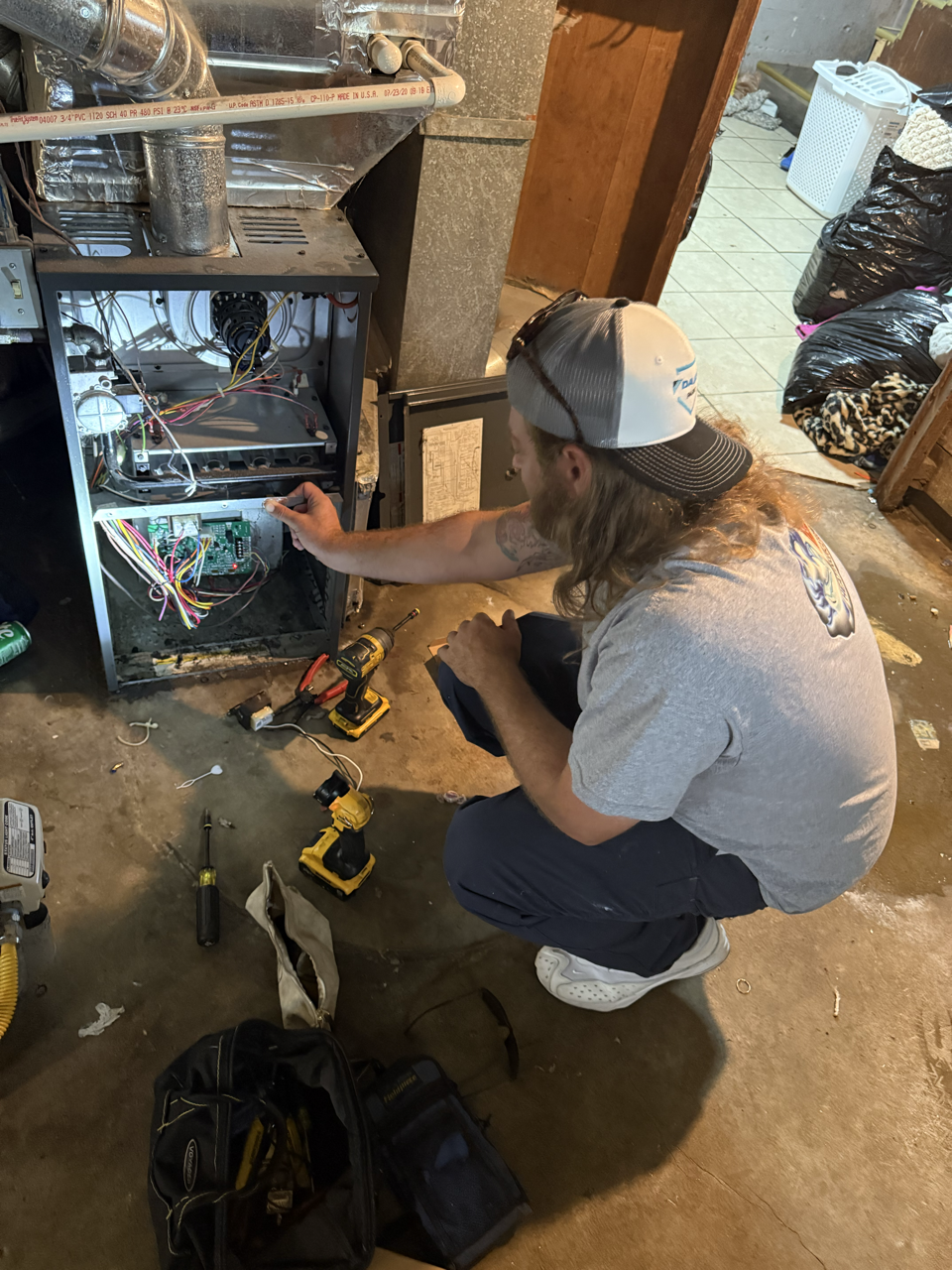
Once you have confirmed that your air filter is clean and your household vents are completely unobstructed, you have reached the boundary of safe, DIY troubleshooting. If the short cycling persists, the root cause lies within the internal, highly sensitive components of the furnace. We always stress to homeowners in Taylorsville and surrounding Spencer County that opening the furnace cabinet to tamper with these parts poses severe safety hazards.
The Flame Sensor Risk
One of the most frequent internal causes of short cycling is a dirty or coated flame sensor. This small metal rod sits directly in the path of the burner flames. If it becomes coated in carbon buildup, it cannot detect the flame. As a safety measure, it shuts the gas valve off within three to four seconds to prevent unburned gas from filling your home. While generic online advice often suggests cleaning this sensor with steel wool or sandpaper, doing so without a license is extremely risky. The sensor is delicate, and improper handling can misalign the burners, damage the gas valve, or create a severe fire hazard.
Electrical and Gas Hazards
Similarly, a faulty high limit switch or a malfunctioning control board can cause relentless short cycling. These components are tied directly into high-voltage electrical lines and the main gas supply. Attempting to bypass a safety switch, force a reset on a locked-out system, or test electrical terminals without proper training can result in electrical shocks, permanent system destruction, or lethal gas leaks.
When basic airflow checks do not resolve the issue, it is time to step back. The advantage of working with our dedicated team at 3D Heating and Cooling is our 24/7 emergency availability, ensuring that when basic DIY troubleshooting fails, you have immediate, safe heating restoration just a phone call away.
The Hidden Costs of Ignoring a Short Cycling Furnace
Allowing a furnace to short cycle for days or weeks is one of the most damaging things you can do to your HVAC system. In our years of diagnosing winter breakdowns, we frequently see homeowners notice mid-fall October heating startup issues but choose to ignore them because the house eventually gets somewhat warm. This delay carries significant hidden costs.
The Problem: A furnace is designed to run in long, steady cycles to distribute heat evenly. When it short cycles, it starts and stops constantly. The highest amount of energy consumption and mechanical wear occurs during the ignition and startup phase.
The Cause: This constant on-and-off rapid firing places immense thermal stress on the heat exchanger. The metal expands and contracts violently without proper cooling time. Simultaneously, the electrical components, such as the blower motor and the starting capacitor, are forced to engage repeatedly, causing them to overheat and burn out prematurely.
The Solution: Professional diagnosis is an investment in your safety and the longevity of your equipment. A technician can identify whether a simple sensor replacement is needed or if the unit is suffering from severe airflow restrictions. If the short cycling is caused by a severely oversized unit or a cracked heat exchanger—which poses a deadly carbon monoxide risk—the most cost-effective and safe solution may be a full furnace replacement. Qualifying heat pump or high-efficiency furnace installations may even be eligible for federal tax credits or local utility incentives. Catching the symptom early prevents a minor repair bill from turning into a total system failure.
Ensuring a Safe, Warm Winter for Your Home
As the temperatures drop across Taylorsville and surrounding Spencer County, your heating system becomes the most vital appliance in your home. While a brief burning smell during the first startup is usually just harmless dust, persistent short cycling is a clear and urgent call for help from your furnace.
Proactively addressing these issues in the fall prevents freezing emergencies in the dead of winter. By keeping your air filters clean and ensuring your vents are open, you give your furnace the airflow it needs to operate safely. However, when those safe DIY checks are exhausted, never hesitate to reach out to our local experts at 3D Heating and Cooling for a thorough, professional inspection. Keeping your family safe and warm is always worth the call.
Frequently Asked Questions
What causes a furnace to short cycle?
A furnace short cycles when a built-in safety sensor detects a fault and forces the system to shut down prematurely. The most common causes include restricted airflow from a clogged filter, a dirty flame sensor that cannot detect the burners, or a faulty high limit switch that trips due to overheating. It can also occur if the furnace is improperly sized for the square footage of the home.
Can a dirty filter cause short cycling?
Yes, a severely dirty air filter is the leading cause of furnace short cycling. When the filter is clogged with dust and debris, it chokes off the airflow returning to the furnace. This lack of air causes the internal heat exchanger to overheat rapidly, which trips the safety limit switch and shuts the system down.
Is it dangerous if my furnace short cycles?
Yes, allowing a furnace to continually short cycle can be dangerous over time. The constant rapid heating and cooling places severe stress on the metal heat exchanger, which can eventually crack. A cracked heat exchanger allows deadly carbon monoxide gases to leak into the living spaces of your home.
How do I fix a short cycling furnace safely?
The safest way for a homeowner to fix a short cycling furnace is to turn off the power and replace the air filter with a clean one. You should also walk through your home and ensure all supply and return air vents are fully open and unblocked by furniture. If these airflow checks do not solve the problem, you must call a licensed professional.
Why does my furnace turn on for 30 seconds then shut off?
If your furnace shuts off after only 30 seconds, it is usually due to a dirty or failing flame sensor. The sensor's job is to verify that the gas has successfully ignited. If it is coated in carbon and cannot detect the flame, it shuts the gas valve off immediately to prevent raw gas from filling the home.
How can I tell if my flame sensor is causing my furnace to short cycle?
You can usually suspect a flame sensor issue if the furnace ignites, the flames burn strong for just a few seconds, and then the system completely shuts down with a click. However, because the flame sensor is a delicate component tied directly to the gas valve, you should never attempt to remove or clean it yourself without professional training.
Financing

Now Offering Financing Options with Affordable Monthly Payments
where we operate
Service Areas
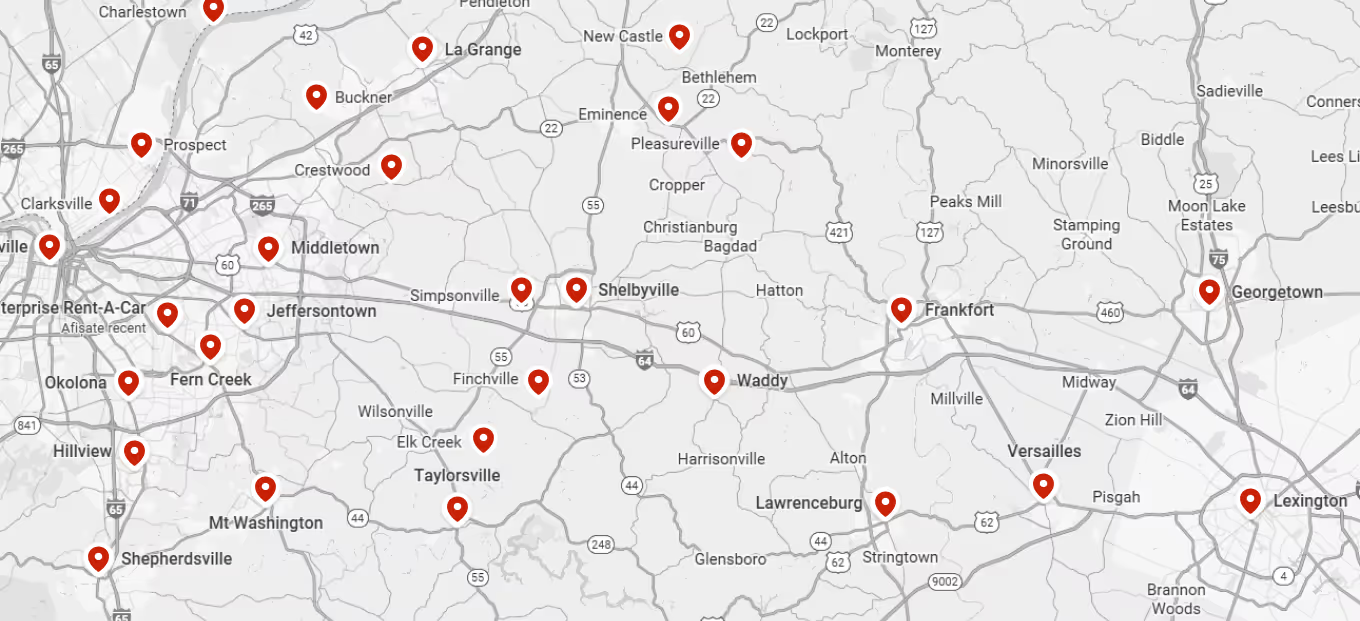
Proudly serving Spencer county, Jefferson county, Bullitt county, and the surrounding areas
Short Heading Goes Here
Sed iaculis aenean sit sed risus arcu vitae integer elit.

