

.svg)


.avif)


5 min read
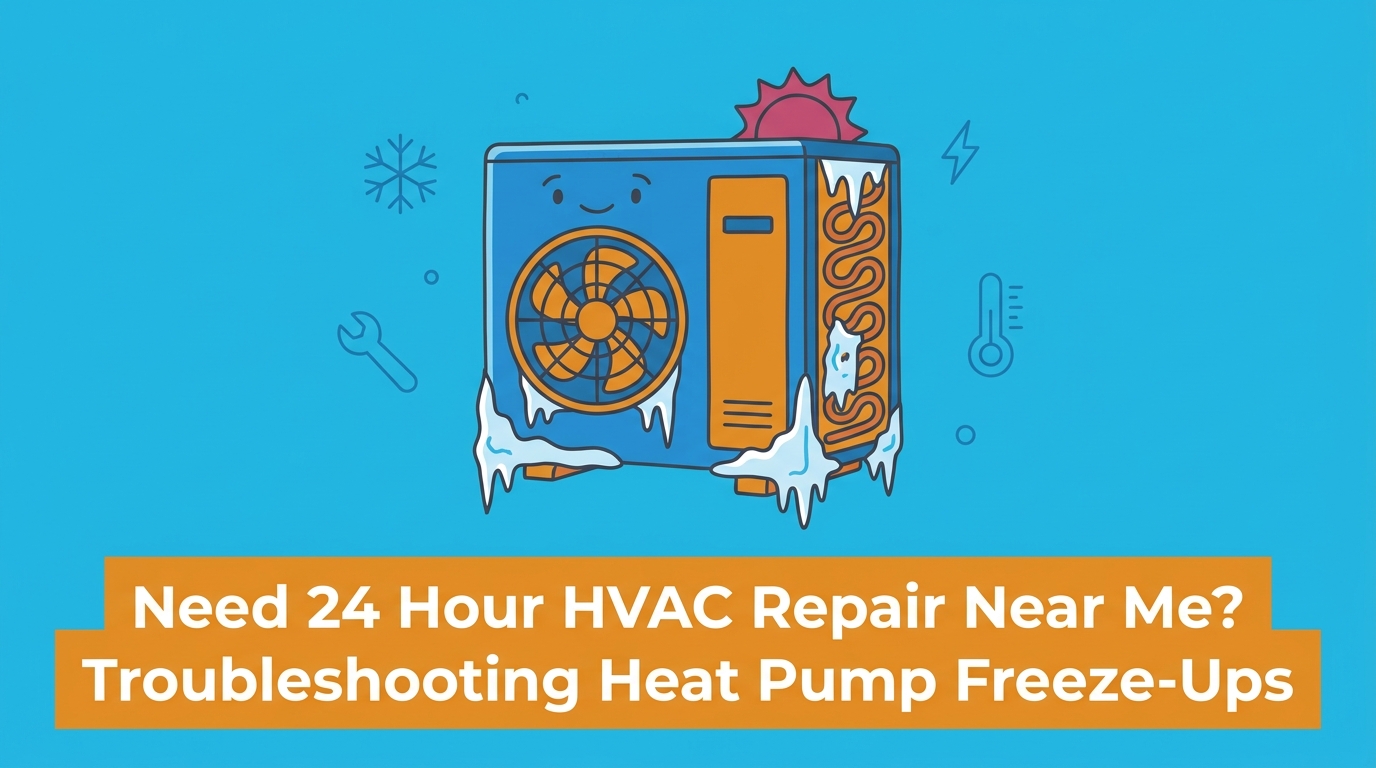
Need 24 Hour HVAC Repair Near Me? Troubleshooting Heat Pump Freeze-Ups
Is Your Heat Pump Frozen Solid? When to Call for Emergency Repair
If you are looking for home maintenance tips and troubleshooting, few things cause as much immediate panic as walking outside during an early summer heatwave to find your heat pump encased in a solid block of ice. Is the system actually broken, or is it just running a normal cycle? Making this distinction is the critical first step before you decide to call for emergency repairs. A heat pump operates by extracting thermal energy from the air. While a light layer of frost is an expected part of the heating process in colder months, finding a thick, impenetrable block of ice on your outdoor unit or indoor coils during a warm Taylorsville summer points to a severe mechanical failure.
Before you assume the worst and start looking to schedule heating services or AC repairs, it is important to understand how your system operates under extreme temperature swings. Extreme weather places immense strain on HVAC equipment, forcing components to work harder to maintain indoor comfort. In our years of providing HVAC solutions at 3D Heating and Cooling, our team typically sees that learning how to safely evaluate your unit helps homeowners avoid unnecessary panic, protect compressors from catastrophic damage, and know exactly when to bring in a professional technician.
How a Heat Pump Defrost Cycle Actually Works
To understand why ice forms on your system, you need to understand the mechanics of a standard defrost cycle—and why it shouldn't be happening during summer cooling. Heat pumps are designed with built-in mechanisms to melt away light frost in the winter before it becomes a problem.
The Role of the Reversing Valve
When frost accumulates on the outdoor unit during winter, the system's defrost control board initiates a specialized cycle. The reversing valve temporarily shifts the unit into cooling mode to melt the frost. However, as our technicians frequently remind customers, this cycle is inactive during summer cooling. If your unit is freezing up in June, the reversing valve might be stuck, or you are dealing with severely restricted airflow and refrigerant issues.
Timing and Temperature Sensors
A standard heat pump defrost cycle operates for anywhere from 5 to 15 minutes during cold weather. Depending on the manufacturer's settings, this cycle typically initiates every 30, 60, or 90 minutes of active compressor run time. Central Kentucky's rapid shifts in temperature and humidity force heat pumps to work continuously. But during early summer, these temperature sensors shouldn't be triggering frost protocols outside at all.
When the Cycle Fails
If the defrost control board malfunctions, the reversing valve gets stuck during a seasonal transition, or the temperature sensors fail to read the outdoor conditions accurately, the system gets confused. Without vital functions operating correctly, light condensation continues to build, layer upon layer, until the entire unit is choked by solid ice. Understanding this mechanical process helps clarify why a frozen unit in the summer is a symptom of an underlying component failure rather than just a reaction to the weather.
Visual Checklist: Normal Frost vs. Critical Ice Accumulation
Diagnosing your heat pump starts with a careful visual inspection. Knowing the difference between standard winter operation and a mechanical failure during your summer cooling start-up can save your compressor from permanent damage.
• Coating Thickness — Normal Frost (Standard Winter Operation): A light, even, white coating that looks like powdered sugar. — Abnormal Ice (Critical Failure): Thick, solid, clear or opaque ice that completely buries the coils.
• Coil Visibility — Normal Frost (Standard Winter Operation): You can still clearly see the shape of the aluminum fins beneath the frost. — Abnormal Ice (Critical Failure): The ice bridges across the fins, forming a smooth, impenetrable block.
• Fan Operation — Normal Frost (Standard Winter Operation): The top fan blades are completely clear of ice and spin freely. — Abnormal Ice (Critical Failure): Ice encases the fan grille or blades, preventing the fan from turning.
• Duration — Normal Frost (Standard Winter Operation): The frost melts away entirely within 10 to 15 minutes. — Abnormal Ice (Critical Failure): The ice remains for hours and continues to grow thicker over time.
• Airflow — Normal Frost (Standard Winter Operation): Air pulls freely through the sides of the outdoor cabinet. — Abnormal Ice (Critical Failure): The ice block completely chokes off all airflow into the unit.
If your visual inspection reveals solid ice blocks bridging the outdoor coil fins or encasing the fan blades, you are looking at a mechanical failure. This level of abnormal ice indicates issues such as a faulty sensor, a bad reversing valve, or critically low refrigerant levels. When you observe these signs, professional diagnosis is required immediately.


Safe Troubleshooting Steps to Take While Waiting for a Technician
If you have determined that your system is experiencing a critical failure, your immediate priority is to protect the equipment from further damage. At 3D Heating and Cooling, we cannot stress this enough: taking the wrong action can destroy the compressor. Follow these precise steps to secure your system while you wait for a professional to arrive.
1. Turn off the HVAC system at the thermostat immediately: Do not let a frozen system continue to run. Switch the thermostat from "Cool" (or "Heat") to "Off." Running a system that is encased in ice forces the compressor to pump refrigerant against extreme pressure limits. This will quickly lead to a burned-out compressor.
2. Turn the fan to "On" or switch to auxiliary heat: If you are dealing with a summer freeze-up, switch the thermostat fan setting from "Auto" to "On." This blows warm indoor air over the frozen indoor coils to help thaw them. If this happens during winter, you can switch to "Emergency Heat" to bypass the outdoor unit entirely.
3. Check and replace dirty indoor air filters: Restricted airflow is a primary cause of system freezing. If the indoor air handler cannot pull enough air across the interior coils, the refrigerant temperatures drop drastically, exacerbating the freezing process outdoors and indoors. A clogged filter is the most common culprit we see.
4. Inspect the circuit breakers: Check your home's main electrical panel. If the breaker dedicated to the outdoor unit has tripped, the system cannot operate correctly. If it is tripped, you can attempt to reset it once. If it trips again immediately, leave it off—this indicates a serious electrical short.
5. Wait for expert help: Once the system is powered down and the filter is checked, your job is done. Much like troubleshooting your furnace when it fails, the safest approach is to secure the equipment and let a trained technician handle the internal diagnostics.
The Hidden Dangers of DIY Ice Removal
When a home is losing its air conditioning during an early summer heatwave, the instinct to take matters into your own hands is strong. However, attempting to remove ice from a heat pump without professional training almost always leads to catastrophic system damage.
Never use sharp objects to chip away ice. Homeowners frequently attempt to use screwdrivers, ice picks, knives, or hammers to break the ice off the outdoor unit. The aluminum fins and copper refrigerant tubes inside the heat pump are incredibly fragile. A single slip of a screwdriver will puncture the pressurized refrigerant coil. If this happens, all the refrigerant will instantly vent into the atmosphere. A punctured coil usually cannot be repaired and typically requires a total system replacement.
Do not pour hot water over a frozen unit. Another common mistake is boiling water and pouring it over the frozen coils. Even if you're trying to quickly thaw a summer freeze-up, the rapid temperature shift can expand and crack the delicate copper fittings at the bottom of the compressor. The only safe way to thaw a unit is to let the ambient air do it after the system is turned off, or to wait for a technician who has the proper tools to safely initiate a manual thaw.
Summer Cooling Start-Ups: When Indoor Coils Freeze
While an outdoor unit encased in ice is often associated with winter, freezing is heavily prevalent during the warmer months. In fact, our 3D Heating and Cooling technicians see a massive spike in frozen coils during early summer cooling start-ups. Heat pumps and air conditioners are equally susceptible to freezing during vacation prep season, though the location of the ice often changes.
During early summer cooling start-ups, the freezing problem typically shifts from the outdoor unit to the indoor air handler. Taylorsville's hot, humid summers create a massive moisture load inside the home. As warm, humid air passes over the freezing-cold indoor evaporator coils, condensation forms rapidly. If the airflow is restricted—usually due to a severely clogged air filter, blocked return vents, or a failing indoor blower motor—that condensation will freeze before it can drip into the drain pan.
This summer freezing mirrors the exact same system restriction issues seen during colder months. A frozen indoor coil will block all airflow, causing the system to blow warm air or no air at all, even as the outdoor compressor continues to run. If you notice ice forming on the copper lines near your indoor unit during the summer, the exact same safe shutdown procedures apply. Turn the system off immediately at the thermostat to prevent compressor damage and check your air filter. High humidity combined with low airflow is a recipe for a frozen coil, regardless of the season.
Recognizing a True HVAC Emergency
Knowing when to stop troubleshooting and call for professional help is vital. Not every strange noise requires a midnight service call, but certain symptoms demand immediate attention to prevent total system failure.
Continuous Running Without Heating or Cooling
If your thermostat is set to 70 degrees but the indoor temperature continues to rise during an early summer heatwave, and the system is running constantly, you have an emergency. Continuous operation without temperature change means the system has lost its ability to transfer heat, likely due to a frozen coil or a total loss of refrigerant.
Solid Ice Blocks That Will Not Melt
As established in the visual checklist, a light frost is normal in winter. However, if the unit is encased in a thick, solid block of ice that remains for hours and bridges the metal fins during the summer, a critical component has failed. Running the system in this state forces the compressor to work against extreme pressure limits, risking catastrophic failure.
Strange Noises from a Struggling Compressor
If you hear loud grinding, screeching, or violent vibrating coming from the outdoor unit, shut the system down immediately. These sounds indicate that the compressor is struggling to pump liquid refrigerant (which cannot be compressed) or that the fan blades are striking built-up ice. These definitive signs mean it is time to secure the unit and contact a professional for 24-hour heat pump repair in Lexington or your local area.
Frequently Asked Questions About Heat Pump Icing and Emergency Repair
What is considered an HVAC emergency?
An HVAC emergency is any situation where a system failure poses a threat to your property or safety, or risks catastrophic damage to the equipment itself. This includes a total loss of cooling during extreme summer temperatures, electrical burning smells, continuous tripping of circuit breakers, or solid ice encasing the outdoor or indoor unit that does not clear. If you experience these symptoms, immediate professional intervention is required.
Why is my heat pump covered in ice?
A heat pump covered in ice is usually suffering from restricted airflow, low refrigerant, or a failure in the defrost cycle (during winter). While normal winter operation causes a light, temporary frost on the outdoor coils, a solid block of ice is caused by failing components. Indoors, dirty air filters are the most common cause of ice buildup during the summer.
How do I unfreeze my heat pump safely?
The only safe way for a homeowner to unfreeze a heat pump is to turn the system completely off at the thermostat and allow the ambient air to melt the ice (turning the fan to "On" can help thaw indoor coils). Never use sharp objects to chip the ice, and avoid pouring hot water on the unit, as this can cause severe damage to the delicate fins and copper coils. A licensed technician can safely thaw the unit using specialized tools.
Should I turn off my HVAC system if it freezes?
Yes, you must immediately turn the system off at the thermostat if you discover it is frozen solid. Leaving a frozen system running forces the compressor to operate under extreme stress and high pressure, which can rapidly lead to permanent, irreversible compressor failure. Turn the system off and run the fan only, or switch to emergency electric heat if it is winter.
How long does a standard heat pump defrost cycle last?
During cold weather, a standard heat pump defrost cycle typically lasts between 5 and 15 minutes. The cycle is controlled by internal timers and temperature sensors. If the frost does not melt within 15 minutes and continues to accumulate into solid ice, the cycle is failing. Remember, this cycle does not run during summer cooling.
Can high humidity in the summer cause my AC coils to freeze?
Yes, high indoor humidity combined with restricted airflow is the primary cause of indoor evaporator coils freezing during the summer. When warm, moist air hits the freezing cold coils, condensation forms. If a dirty filter blocks the airflow, that condensation freezes solid. In our experience across Taylorsville, dirty filters are the number one culprit for summer freeze-ups.
Get Rapid Expert Help for Your Frozen Heat Pump
Dealing with a frozen HVAC system is stressful, but having a clear visual checklist of normal frost versus abnormal ice is the best way to protect your equipment. When you spot a solid block of ice on your outdoor lines or notice your indoor coils freezing up during a summer heatwave, the safest course of action is to power down the system and rely on exact, safe steps rather than attempting dangerous DIY repairs.
Because these issues threaten the life of your compressor, waiting days for a diagnostic check is not an option. With 24-hour emergency availability and rapid response times, you do not have to risk prolonged discomfort or permanent system damage. A trained technician can quickly identify the failing component, initiate a safe manual thaw, and restore your comfort. If your system is locked up in ice, secure the unit and reach out for 24-hour furnace repair in Louisville and surrounding areas to get your system back online safely.
Financing

Now Offering Financing Options with Affordable Monthly Payments
where we operate
Service Areas
Proudly serving Spencer county, Jefferson county, Bullitt county, and the surrounding areas

Short Heading Goes Here
Sed iaculis aenean sit sed risus arcu vitae integer elit.

