
.svg)


.avif)


5 min read
Preventing System Hazards: Top Home HVAC Safety Tips Every Homeowner Should Know
Hidden Hazards in Your Heating and Cooling Equipment
When searching for the top home HVAC safety tips every homeowner should know, many people overlook the fact that their heating and cooling equipment is essentially a complex intersection of high-voltage electricity, pressurized refrigerant, and active combustion. Your air conditioner and furnace are not simply passive boxes that blow hot or cold air; they are powerful mechanical systems operating under intense physical stress. Most homeowners treat their climate control systems with a "set it and forget it" mentality, only paying attention when the house becomes uncomfortable. However, ignoring the mechanical reality of these units allows hidden hazards to develop silently over time.
The intersection of dangerous components: Inside a standard indoor air handler or furnace cabinet, you will often find a 240-volt electrical connection, a low-voltage control board, a water drainage system, and a natural gas line all situated within inches of one another. When one of these interconnected systems fails, it frequently impacts the others. For example, a simple water drainage issue can quickly escalate into a severe electrical short, or a minor airflow problem can lead to dangerous overheating. Neglecting these systems leads to significant property risks, including electrical fires, severe water damage, and deeply compromised indoor air quality.
The core decision point for any homeowner is learning how to identify emerging problems early and knowing exactly which baseline visual checks are safe to perform versus when to step back from dangerous components. You do not need to be a licensed technician to spot a pooling puddle of water or a strange smell, but you do need to know when those signs indicate a severe hazard. By taking proactive safety measures and partnering with professional HVAC services, you can ensure your equipment operates securely. Monitoring critical metrics, such as baseline carbon monoxide ppm, is a fundamental part of maintaining a secure home environment long before extreme weather forces your system to run at maximum capacity.
Summer Drainage Failures and High-Voltage Electrical Shorts
The problem: During peak cooling season, your air conditioner performs two distinct jobs: it lowers the temperature of the air, and it removes humidity. Warm indoor air is pulled across the freezing cold evaporator coil, causing moisture to condense on the metal fins. In Taylorsville's humid subtropical summer climate, the high moisture content in the air maximizes condensation rates. A residential air conditioning system can easily extract anywhere from 5 to 20 gallons of water from your indoor air every single day. All of this water must safely drain away from the system.
The cause: This massive volume of daily condensation drips into a shallow primary drain pan located just beneath the evaporator coil. From there, it flows outside through a narrow PVC pipe. Because this environment is constantly dark, damp, and cool, it becomes the perfect breeding ground for biological growth. Algae, mold, and household dust combine to form a thick, gelatinous sludge that eventually blocks the PVC drain line entirely. Once the line is clogged, the daily 5 to 20 gallons of water have nowhere to go but over the edges of the drain pan.
The solution: When an overflowing drain pan sits directly above a high-voltage blower motor or a sensitive computerized control board, the immediate danger is severe. Water meeting high-voltage electrical components leads to catastrophic shorts, melted wiring, system destruction, and potential fire risks. Long before the first winter freeze arrives, summer condensation poses one of the most immediate threats to your equipment. The safe homeowner step is to routinely perform a visual inspection of the drip pan for standing water and check the termination point of the PVC drain line outside to ensure water is steadily dripping while the AC is running.
Identifying a Condensate Backup Before It Shorts
Catching a drainage failure early is the best way to prevent an electrical hazard. Look for these warning signs during the heavy cooling months:
• Pooling water: Check for unexplained damp spots, water stains, or pooling water around the base of the indoor unit.
• Strange noises: Listen for bubbling, gurgling, or dripping sounds near the indoor air handler or the PVC drain pipe.
• Electrical warnings: Note if the AC system is repeatedly tripping the circuit breaker, which often indicates water has already reached an electrical component.
• System shutdowns: Modern systems often feature a float switch that automatically cuts power to the unit if water backs up, preventing a flood but signaling a severe clog.
Combating Combustion Risks and Silent Gas Leaks
Transitioning to the combustion side of the HVAC system, the primary hazard centers around the heat exchanger inside a natural gas or propane furnace. The heat exchanger is a series of metal tubes or clamshell-shaped chambers where the actual fire burns. As the burners ignite, they heat the metal walls of the exchanger. Your blower motor then pushes indoor air across the outside of these hot metal walls, warming the air before circulating it through your vents. The critical safety factor is that the breathable indoor air and the toxic combustion exhaust must never mix.
The mechanical failure occurs due to standard thermal expansion. Every time the furnace fires up, the metal heat exchanger expands from the intense heat. When the cycle ends, the metal cools and contracts. Over thousands of heating cycles across the lifespan of the furnace, this constant expansion and contraction stresses the metal, eventually causing microscopic cracks to form. When a heat exchanger cracks, the integrity of the sealed combustion chamber is compromised.
The consequence of a cracked heat exchanger is severe: toxic combustion gases, including carbon monoxide, stop venting safely outdoors through the flue and instead leak directly into the home's circulating airflow. Because carbon monoxide is completely invisible, tasteless, and odorless, you cannot rely on your senses to detect a leak. Upgrading to heating system safety protocols means relying on specialized detection equipment. Standard ceiling alarms only trigger at highly dangerous levels, making low-level monitors that display real-time carbon monoxide ppm the only reliable warning system to alert you to a failing heat exchanger before it becomes lethal.
Airflow Restrictions and Overheating Fire Hazards
The problem: Many homeowners mistakenly believe that the primary purpose of an HVAC air filter is to purify the air they breathe. While high-quality filters do improve indoor air quality, their actual mechanical function is to protect the internal components of the HVAC system—specifically the blower motor and the evaporator coil—from abrasive dust, pet hair, and debris. When filter replacement is neglected, the system suffers from severe airflow restrictions.
The cause: A completely clogged, dirt-caked filter acts like a solid wall, suffocating the system. The blower motor is designed to pull a specific volume of air through the return ducts. When it cannot pull enough air through a blocked filter, the static pressure inside the ductwork skyrockets. The blower motor is forced to work exponentially harder, drawing excessive electrical current to overcome the resistance. This sustained high-amp draw generates immense heat within the motor housing, degrading the wire insulation and creating an electrical fire hazard.
The solution: Beyond the motor itself, restricted airflow causes secondary overheating risks. In the winter, reduced airflow means the heat exchanger gets too hot, triggering internal safety limits or cracking the metal prematurely. In the summer, restricted airflow prevents enough warm house air from reaching the cold evaporator coil, causing the condensation on the coil to freeze solid into a block of ice. To prevent these mechanical failures and integrate proper indoor air quality solutions, adhere to a strict checking schedule. Inspect standard one-inch filters every 30 days, replacing them at least every 90 days, or more frequently if you have multiple pets or high household dust long before the first winter freeze forces your heating system to run continuously.
Maintaining Safe Clearances Around Outdoor Condenser Units
While indoor hazards involve water and combustion, exterior safety hazards revolve around proper heat dissipation and physical damage. The outdoor condenser unit's primary job during the summer is to release the heat that the indoor coil absorbed from your home. It accomplishes this by utilizing a large fan to pull outdoor air through a perimeter of delicate aluminum fins. If this airflow is obstructed, the compressor inside the unit retains that heat, eventually overheating and failing entirely.
Homeowners must actively manage the environment around the outside unit to maintain safe operation. Follow these numbered steps to secure the exterior perimeter:
1. Clear overgrown vegetation: Trim back bushes, tall grass, and low-hanging branches. Plants naturally grow toward the condensation moisture, but leaves pulled into the fan can damage the motor.
2. Remove physical obstructions: Never stack firewood, store garden hoses, or lean patio furniture against the condenser. These block the critical airflow required to cool the high-voltage compressor.
3. Manage storm debris: After heavy winds or storms, inspect the unit for branches or hail damage that may have crushed the delicate aluminum fins, which restricts heat transfer.
4. Monitor for pest activity: As temperatures drop toward the first winter freeze, field mice and rodents seek out the warmth of the outdoor unit's electrical panel. They frequently nest inside and chew through high-voltage wiring, creating severe short circuits and electrocution hazards.
The standard rule for homeowners is to maintain a strict 2-foot clearance zone entirely around the perimeter of the unit, and at least 5 feet of vertical clearance above it. This allows you to safely maintain the area without ever needing to open panels or touch internal electrical components.
Drawing the Line: Visual DIY Checks vs. High-Voltage Diagnostics
Establishing definitive boundaries between what a homeowner can safely inspect and what requires licensed professional intervention is the cornerstone of HVAC safety. Modern heating and cooling systems are highly complex, utilizing sensitive control boards that process micro-volt signals while simultaneously managing 240-volt power loads. Crossing the line from visual inspection into mechanical tinkering can result in severe injury or thousands of dollars in accidental damage.
Safe homeowner territory is strictly limited to external maintenance and environmental management. You are perfectly safe changing air filters, clearing exterior debris from the outdoor condenser, pouring a cup of white vinegar down the PVC condensate drain line to prevent algae buildup, and testing your smoke and gas alarms. These tasks require no tools and do not expose you to live electrical current or pressurized gases.
The strict no-go zones include opening sealed combustion chambers, attempting to repair pressurized copper refrigerant lines, and handling any internal electrical components. One of the most dangerous components in an HVAC system is the dual-run capacitor. Capacitors store massive, lethal high-voltage charges to jump-start the compressor motor. Even when the power to the house is completely shut off, a capacitor retains its stored charge and can deliver a lethal shock if the wrong terminals are touched. This is why understanding your HVAC system means knowing your limits.
• Electrical — Homeowner Safe Zone (DIY): Flipping the primary breaker off/on — Professional Danger Zone (Do Not Touch): Testing capacitors, wiring contactors, replacing boards
• Airflow — Homeowner Safe Zone (DIY): Replacing 1-inch to 4-inch media filters — Professional Danger Zone (Do Not Touch): Adjusting blower motor speeds or altering ductwork
• Drainage — Homeowner Safe Zone (DIY): Pouring vinegar in the access tee — Professional Danger Zone (Do Not Touch): Splicing PVC lines or opening the evaporator coil case
• Combustion — Homeowner Safe Zone (DIY): Checking carbon monoxide ppm monitors — Professional Danger Zone (Do Not Touch): Inspecting heat exchangers or adjusting gas pressure
The golden rule of HVAC safety is absolute: always shut off the primary circuit breaker to the equipment before performing even the most basic visual inspections or filter changes.
When to Shut Down the System Immediately
If you observe any of the following symptoms, shut off the thermostat and flip the breaker immediately. Do not attempt to diagnose these issues yourself:
• Dangerous odors: The smell of burning plastic, electrical ozone, or the distinct rotten egg smell of mercaptan (natural gas).
• Mechanical failure sounds: Loud screeching, violent grinding, or harsh metal-on-metal noises indicating a motor or bearing failure.
• Electrical faults: A circuit breaker that trips repeatedly and refuses to reset, which is a designed safety mechanism preventing a fire.

Professional Oversight as Your Primary Safety Net
To truly protect your home, you must shift your perspective on annual maintenance. It is not merely a "tune-up" to make the air a little colder or the system a little more efficient; it is a comprehensive safety audit. Heating and cooling systems degrade mechanically over time. Wires vibrate loose, metal fatigues, and safety sensors become coated in dust. Without a trained eye assessing these components, minor wear and tear slowly evolves into a major hazard.
During a comprehensive safety audit, professionals perform highly specific tests that homeowners cannot execute. Technicians measure the exact electrical amp draw of the compressor and blower motor to ensure they are not over-consuming power and risking a wire melt. They test the high-limit safety switches inside the furnace to guarantee the system will automatically shut down if it overheats. They use sensitive combustion analyzers to measure gas pressure and inspect the heat exchanger for structural integrity.
Catching a failing capacitor before it bursts, or clearing a slow condensate drain line before it overflows onto a control board, prevents catastrophic electrical or water damage. Consistent professional oversight is the only way to guarantee the system is operating within safe manufacturer specifications. This is why 3D Heating and Cooling is deeply committed to community safety, framing their routine HVAC maintenance plan as a dedicated safety partnership for local homeowners. By scheduling these rigorous safety audits before the heat of summer and again before the first winter freeze, you eliminate the guesswork and secure your home against hidden mechanical threats.
Financing

Now Offering Financing Options with Affordable Monthly Payments
where we operate
Service Areas
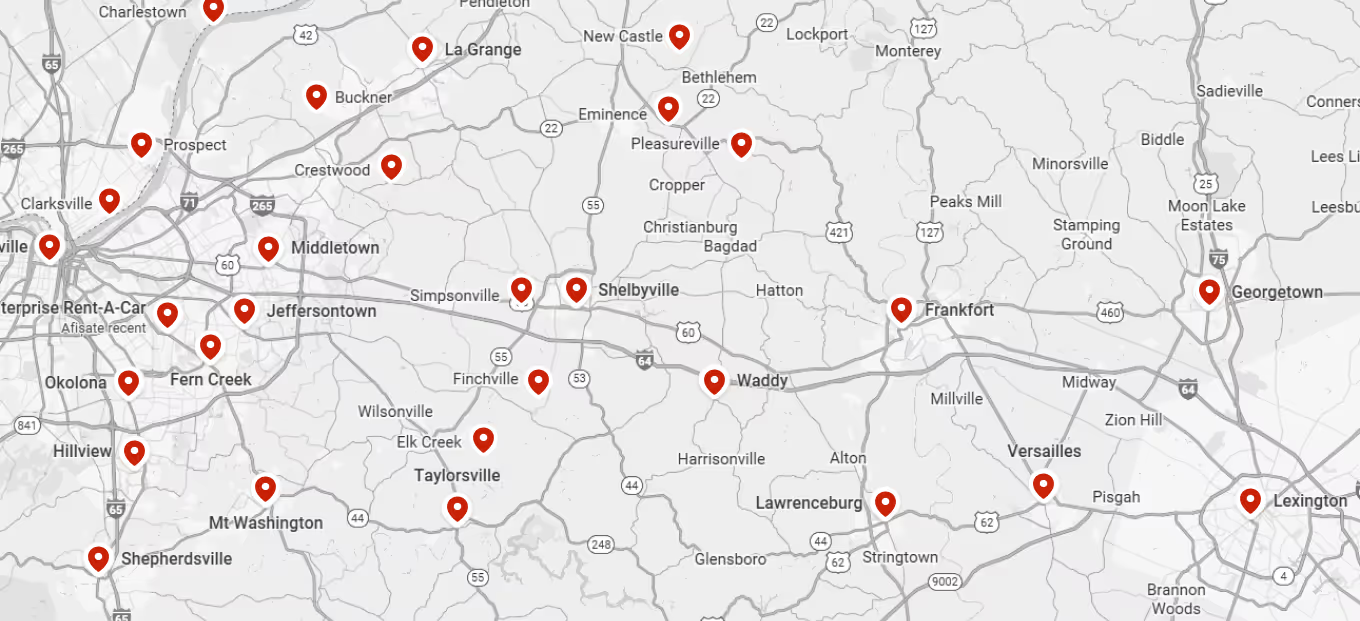
Proudly serving Spencer county, Jefferson county, Bullitt county, and the surrounding areas
Short Heading Goes Here
Sed iaculis aenean sit sed risus arcu vitae integer elit.

