

.svg)


.avif)


5 min read
What Constitutes a True 24-Hour HVAC Emergency in 90-Degree Weather?
Is Your Broken AC a True Emergency or Can It Wait?
Is your air conditioner actually broken, or is it just struggling to keep up with the heat? When the sun goes down but your house stays stubbornly hot, you might be wondering what constitutes a true 24-hour HVAC emergency in 90-degree weather? As a local HVAC team, we know this is an incredibly stressful moment for any homeowner. You are staring at the thermostat, feeling the heavy, stagnant air, and trying to decide whether to call for immediate after-hours help or simply shut the system down until morning.
If you are dealing with a sudden cooling failure, getting the right information about your air conditioning systems can help you make a safe, cost-effective decision.
The reality of facing 90+ degree outside temperatures with a malfunctioning cooling system is daunting. Your first instinct might be to pick up the phone immediately. However, our team typically sees that not every air conditioning malfunction requires a midnight visit from a technician. While certain symptoms are non-negotiable safety hazards that demand instant attention, many common AC issues can actually be paused safely overnight.
Making the right call comes down to understanding the difference between mild discomfort and a genuine threat to your home or family. By learning how to quickly assess the symptoms your system is displaying, you can protect your equipment from further damage, keep your household safe, and potentially save yourself from unnecessary emergency service fees. The key is knowing exactly what to look for, what to smell for, and what to listen for when your system starts acting up.
Assessing the Immediate Safety Risks in Extreme Heat
A lack of cooling crosses the line from an annoying inconvenience into a genuine safety hazard much faster than many people realize. When an air conditioning system fails during July peak summer, the indoor environment changes rapidly. Homes are designed to be tightly sealed for energy efficiency, which is great when the AC is running, but acts like an oven when the system stops.
The Compounding Danger of High Humidity
In our years of serving the region, we've found that 90-degree heat is rarely a dry heat. Kentucky's extreme summer temperatures are frequently paired with humidity levels exceeding 70 percent. This combination rapidly increases the indoor heat index and turns a broken AC into a fast-moving hazard. High humidity limits the human body's ability to cool itself because sweat cannot evaporate effectively into air that is already saturated with moisture. As a result, an indoor temperature of 85 degrees can physically feel and impact the body like it is well over 95 degrees.
Identifying Vulnerable Family Members
While a healthy adult might be able to sweat out a warm night with a few fans, extreme indoor heat poses a severe, immediate risk to vulnerable populations. Heat exhaustion can set in quickly without obvious warning signs. You must factor in who is currently inside the home when deciding if a situation is an emergency:
• Elderly individuals: Older adults often have a reduced ability to regulate body temperature and may not notice they are overheating until it becomes critical.
• Infants and toddlers: Young children have a smaller body mass to surface area ratio, meaning they absorb heat faster than adults and cannot effectively communicate their distress.
• Individuals with medical conditions: Respiratory issues, heart conditions, and certain medications can severely impair the body's heat tolerance.
• Household pets: Dogs and cats cannot sweat like humans; they rely on panting. A hot, stagnant house can quickly lead to heatstroke for furry family members.
If any of these vulnerable individuals are in the home during a cooling failure, the situation automatically escalates toward a true emergency.
Absolute Emergencies: When You Must Call for Service Immediately
Some situations leave no room for debate. If you notice specific electrical or mechanical warning signs, or if the indoor environment becomes dangerous, you need professional intervention right away. For many Taylorsville KY area homes, knowing these definitive go/no-go triggers can prevent a minor component failure from turning into a catastrophic system replacement or a house fire.
We recently had a local homeowner reach out to us when their AC started having issues with a faulty coil and a unit leak. Our team quickly diagnosed and fixed both problems on the same day, preventing the system from suffering a complete breakdown during a critical weather shift. Catching serious issues early is vital. If you encounter any of the following symptoms, you likely need 24-hour emergency heat pump repair or AC service.
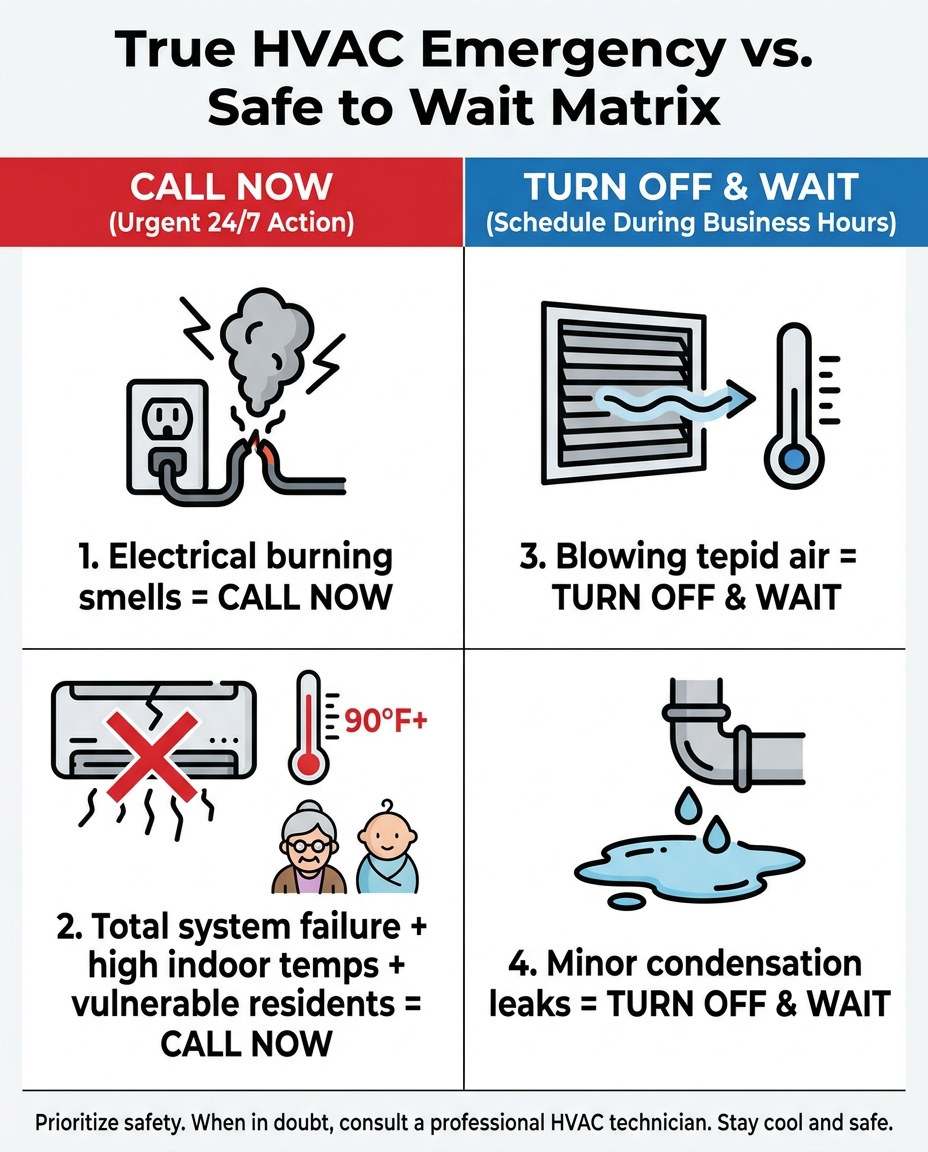
Electrical Burning Smells or Sparking
The symptom: You smell a distinct odor of burning plastic, melting rubber, or a sharp, metallic ozone smell coming from your vents or the outdoor unit.
Why it is an emergency: Electrical odors indicate an immediate fire hazard. This usually means wire insulation is melting, a motor is actively burning out, or a capacitor is failing dangerously. Do not wait to see if the smell goes away. You must immediately cut power to the HVAC system at your main electrical breaker panel and call for emergency service.
Total System Failure with Vulnerable Residents
The symptom: The system is completely dead. No air is blowing from the vents, the outdoor unit is silent, and indoor temperatures are steadily climbing past 80 degrees.
Why it is an emergency: As discussed, a complete lack of ventilation and cooling in extreme heat is a medical hazard for the elderly, infants, and those with compromised health. If you cannot safely relocate these family members to a cool location for the night, you must call for immediate repair.
Severe Mechanical Noises
The symptom: The outdoor compressor is making violent grinding, screeching, or metal-on-metal banging noises.
Why it is an emergency: These sounds typically indicate that the compressor—the heart and most expensive component of your AC—is tearing itself apart. Continuing to run the system will result in catastrophic failure. Turn the thermostat off immediately to stop the damage and call a professional.

Safe to Wait: AC Symptoms That Avoid After-Hours Fees
Not every frightening HVAC symptom requires a midnight rescue. At 3D Heating and Cooling, our team prioritizes honest, transparent assessments that protect your safety while explicitly helping you avoid unnecessary after-hours fees if the repair can safely wait until normal business hours. If you are facing 90+ degree outside temperatures but your family is healthy and can tolerate a warm evening with some fans, several common AC issues are perfectly safe to pause.
The most important thing to remember is that enduring a warm night does not mean you are ignoring the problem. In many cases, turning the system off is the best possible action you can take to protect the equipment while managing emergency AC repair wait times.
Blowing Tepid or Slightly Warm Air
The symptom: The system is running, air is coming out of the vents, but the air is room temperature or slightly warm.
Why it can wait: This is one of the most common summer AC complaints we encounter. It usually indicates a frozen evaporator coil, a clogged air filter, or a slow refrigerant leak. If you leave the system running, the compressor will overwork itself trying to cool the house, which can lead to a burnt-out motor. The absolute best thing you can do is turn the thermostat to "off" and turn the fan setting to "on." This allows warm air to blow over the indoor coil and safely thaw the ice overnight. By morning, the system will be defrosted and ready for a technician to diagnose the root cause.
Minor Condensation Leaks
The symptom: You notice a small puddle of water forming around the base of your indoor air handler or furnace.
Why it can wait: A minor water leak is typically caused by a clogged condensate drain line. While you do not want water damaging your floors or drywall, this is not a mechanical emergency. Turn the air conditioner off to stop the production of condensation, use towels to clean up the existing water, and wait for morning. The system will not suffer further damage while sitting idle.
Thermostat Display Issues
The symptom: The screen on your thermostat is blank or unresponsive, and the AC will not kick on.
Why it can wait: Often, a blank thermostat simply needs fresh batteries. If changing the batteries does not work, it might be a tripped float switch (which shuts the system down to prevent water damage) or a blown low-voltage fuse. While frustrating, it poses no immediate danger to the home. You can safely wait for a scheduled daytime appointment.
Crucial Steps to Protect Your AC System While You Wait
If you have determined that your situation does not require an immediate after-hours dispatch, you still need to take proactive steps to protect your equipment and your home. Leaving a struggling system running during July peak summer is a guaranteed way to turn a minor repair into a major replacement.
If you are waiting for our team or other HVAC services in Louisville or the surrounding areas to arrive the next morning, follow these critical protection steps:
1. Turn the thermostat to the "off" position immediately. This is the single most important step. If your AC is blowing warm air, making strange noises, or freezing up, continuing to demand cooling from the thermostat forces a broken machine to keep working. This causes extreme strain on the compressor and electrical components. Shutting it off prevents secondary damage.
2. Check your electrical panel for tripped breakers. Sometimes, a power surge or a temporary overload will trip the dedicated breaker for your air conditioner. Locate your home's main electrical panel and look for a switch that has moved to the middle position. Turn it fully off, then firmly back on. If it trips again immediately, stop. Do not attempt to reset it a second time, as this indicates a serious electrical short.
3. Maximize indoor airflow. Turn on all ceiling fans, box fans, and oscillating fans to keep the air moving. Moving air evaporates moisture from your skin, making the room feel several degrees cooler than the actual temperature.
4. Block out the sun and trap existing cool air. Close all blinds, curtains, and shades, especially on south- and west-facing windows. Keep exterior doors closed and minimize cooking or using heat-generating appliances like ovens and dryers.
5. Check your air filter. A completely blocked air filter can suffocate the system, leading to frozen coils and system shutdowns. If your filter is caked in gray dust and debris, slide it out. If you have a replacement, install it.
Preventing the Next Emergency Before the Heat Hits
The best way to handle an HVAC emergency is to prevent it from happening in the first place. A pattern we see often in our years of servicing Taylorsville KY area homes is that most midnight breakdowns do not happen out of nowhere; they are the final result of minor, unaddressed issues that compound over time. The transition from mild spring weather to brutal summer heat places immense stress on cooling equipment.
Routine checks catch minor issues before they escalate. A technician can spot a failing capacitor, a frayed wire, or a low refrigerant charge weeks before the system actually stops cooling. Clean filters and properly washed outdoor coils are essential for handling extreme summer loads. When the outdoor condenser coil is blanketed in dirt, pollen, and grass clippings, it cannot release heat effectively. This forces the compressor to run hotter and longer, drastically shortening its lifespan. Upgrading to high-efficiency equipment or heat pumps can also alleviate performance strain, and qualifying installations may even be eligible for federal tax credits or utility incentive programs (always verify current programs with your utility or a tax professional).
• Clogged, dirty air filter — Midnight Consequence: Frozen indoor coil and zero airflow — Proactive Solution: Replace filters every 30-90 days
• Weak, bulging capacitor — Midnight Consequence: System won't start; buzzing noises — Proactive Solution: Annual electrical component testing
• Dirty outdoor condenser coil — Midnight Consequence: Overheated, failed compressor — Proactive Solution: Professional chemical coil cleaning
• Slow refrigerant leak — Midnight Consequence: Blowing warm air; high energy bills — Proactive Solution: Pressure checks and leak sealing
Investing in a comprehensive preventative maintenance plan ensures your system receives this vital ongoing care. Regular tune-ups restore efficiency, improve indoor air quality, and provide the peace of mind that your equipment is prepared to handle whatever the summer weather brings.
Frequently Asked Questions About Summer HVAC Emergencies
What is considered an HVAC emergency?
An HVAC emergency is any situation that poses an immediate safety risk to the home or its occupants. This includes electrical burning smells, visible smoke or sparking from the equipment, or a total loss of cooling during extreme heat waves when vulnerable individuals (like the elderly or infants) are present in the home. Severe mechanical grinding noises that indicate imminent compressor failure also warrant immediate attention to prevent catastrophic equipment destruction.
Can AC wait until morning?
Yes, we frequently advise customers that in many cases, a broken AC can safely wait until normal business hours. If the outside temperatures are manageable, everyone in the home is healthy, and there are no signs of electrical fires or flooding, you can avoid after-hours fees. Simply turn the thermostat to the "off" position to protect the equipment from further damage, set up fans for comfort, and schedule a daytime service call.
Is a leaking AC an emergency?
A minor condensation leak is rarely a true after-hours emergency. While water pooling around your indoor unit can damage flooring and drywall if left unchecked, you can manage the situation temporarily. Turn the AC system off so it stops producing condensation, clean up the standing water with towels, and wait for a technician to clear the clogged drain line during regular hours.
How hot is too hot in a house without AC?
Indoor temperatures exceeding 80 degrees with high humidity can become dangerous quickly. The danger threshold depends heavily on who is in the home. For healthy adults, an 85-degree house is uncomfortable but survivable with hydration and fans. However, for infants, the elderly, or individuals with respiratory and heart conditions, an indoor environment above 80 degrees can lead to heat exhaustion and requires immediate relocation or emergency AC repair.
Should I turn off my AC if it's blowing warm air?
Yes, you should turn the system off immediately if it is blowing warm air. Continuing to run the system will not cool the house and will actively damage the equipment. Blowing warm air usually points to a frozen evaporator coil or a refrigerant issue. Shutting the system down prevents the compressor from overheating and burning out, which is a much more extensive and costly repair.
How long can you safely go without AC in 90 degree heat?
With 90+ degree outside temperatures, an unventilated house can become dangerously hot within just a few hours. The exact time frame depends on your home's insulation, the amount of direct sunlight it receives, and the indoor humidity levels. If you must go without AC, you need to open windows at night, use fans constantly, and stay hydrated. If indoor temps climb past 85 degrees and you cannot cool down, it is time to seek an air-conditioned environment.
Make the Right Call for Your Comfort and Safety
When the heat of July peak summer bears down on your home, a struggling air conditioner is a serious source of stress. However, by understanding the clear differences between a true safety hazard and a repair that can wait, you can navigate the situation with confidence. Always prioritize the safety of your family and the electrical integrity of your home. If you smell burning, hear violent grinding, or have vulnerable family members trapped in climbing temperatures, do not hesitate to seek immediate help.
For all other issues, remember that turning the system off is your best defense against further damage. Use the triage matrix to make an informed decision, and rest assured that professional guidance from our team is ready to restore your home's comfort, whether that means a midnight dispatch or a scheduled morning repair that gives you absolute confidence in your system's reliability.
Financing

Now Offering Financing Options with Affordable Monthly Payments
where we operate
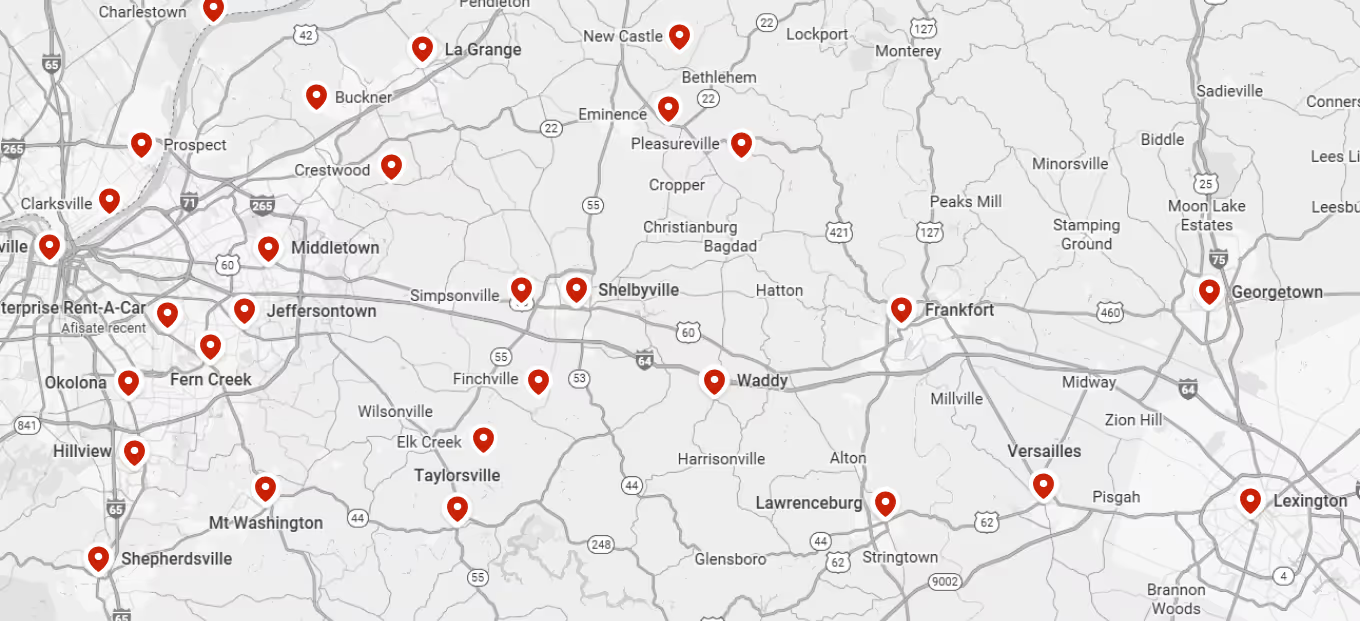
Service Areas
Proudly serving Spencer county, Jefferson county, Bullitt county, and the surrounding areas
Short Heading Goes Here
Sed iaculis aenean sit sed risus arcu vitae integer elit.

