



5 min read
Why In-Duct UV Purifiers Are Essential Ahead of the Winter Cold and Flu Season
Protecting Your Home as the Winter Cold Season Approaches
November is right around the corner, and as the crisp autumn air settles in, you are likely starting to close your windows and seal up drafts to keep your home warm. This is a natural and necessary step to prepare for freezing temperatures. However, while you focus on keeping the heat inside, you might be overlooking a hidden issue: the quality of your indoor air. Adding hvac uv lights for winter cold season readiness is one of the most effective, science-backed ways to protect your household environment. When you weatherize your home, you inadvertently trap stagnant, recirculated air inside. This creates an environment where airborne pathogens can linger, circulate, and multiply without any natural ventilation to clear them out.
The decision you face right now, ahead of the November pre-winter flu season, is whether to proactively install an in-duct UV air purifier to neutralize these biological contaminants before they have a chance to spread through your living spaces. Rather than relying on generic claims about "clean air," it helps to understand the objective, mechanical reality of how these systems work inside your ductwork to actively dismantle viruses and bacteria.
To learn more about optimizing your equipment for the season, explore our complete guide to your HVAC system.
The Unintended Consequence of Sealing Drafts for Winter
When the temperature drops, your first instinct is to block out the cold. You add weatherstripping, lock the windows tightly, and turn on the furnace. While this is great for energy efficiency, it drastically reduces your home's indoor air quality. In fact, the Environmental Protection Agency (EPA) notes that indoor air can be two to five times more polluted than outdoor air. During the warmer months, you open doors and windows, allowing fresh breezes to dilute indoor pollutants. In the winter, that natural ventilation completely stops.
Taylorsville KY winters require heavy home heating and weatherization, which directly causes the indoor air stagnation that makes UV purifiers essential. Every time your furnace kicks on, it pulls air from your rooms, heats it, and pushes that exact same air back out. If someone in the house brings home a cold virus, those viral particles get pulled into the return vents and redistributed into every room of the house. Without proper indoor air quality solutions, your home becomes a closed environment where biological contaminants continuously cycle through the ductwork.
The Closed-Loop Effect on Airborne Pathogens
To understand why illnesses seem to spread faster indoors during the winter, you have to look at how your ductwork functions as a distribution network. Here is what happens in a typical sealed home:
• Continuous recirculation: A modern furnace cycles the total volume of air in your home multiple times per hour. Any suspended virus or bacteria is carried along for the ride, moving from the living room to the bedrooms in minutes.
• Lack of natural sunlight: Outdoors, the sun's natural ultraviolet rays act as a powerful disinfectant, breaking down viruses in the air. Inside your dark, enclosed ductwork, pathogens face no such threat, allowing them to survive significantly longer.
• Optimal survival conditions: The mild, climate-controlled environment inside your home provides a stable atmosphere where allergens, mold spores, and bacteria can thrive without the harsh disruption of outdoor weather.
By sealing drafts, you save money on your heating bills, but you inadvertently create a closed loop for viruses. Breaking this loop requires a targeted intervention inside the HVAC system itself.
The Mechanical Reality: How UV-C Light Neutralizes Airborne Pathogens
When discussing air purification, it is easy to get lost in marketing jargon. However, the science behind UV-C light is well-documented, objective, and mechanically straightforward. The American Society of Heating, Refrigerating and Air-Conditioning Engineers (ASHRAE) supports the use of UV-C light for mitigating airborne disease transmission in both residential and commercial buildings.
Professional in-duct purifiers do not use standard visible light. They utilize a highly specific wavelength of ultraviolet light—exactly 254 nanometers (nm). This specific UV-C wavelength is germicidal, meaning it has the exact energy required to penetrate the cellular walls of microscopic organisms. If you are comparing whole-home air purifiers vs. portable units, understanding this mechanical process is key to seeing why in-duct systems offer superior whole-house protection during the November pre-winter flu season.
Here is the exact mechanical process of how a UV-C light neutralizes threats as your system runs:
1. Air is drawn into the system: Contaminated air from your living spaces is pulled into the return vents and travels toward the main air handler.
2. Passing through the strike zone: As the air moves through the ductwork or across the evaporator coil, it passes directly through the concentrated field of the UV-C lamp.
3. Cellular penetration: In a fraction of a second, the 254 nm light waves penetrate the outer cellular walls of passing viruses, bacteria, and mold spores.
4. DNA/RNA disruption: The high-energy light physically scrambles the DNA and RNA inside the pathogen. This damage is irreversible.
5. Rendered inert: Because its genetic code is broken, the pathogen can no longer replicate or cause infection. It is rendered completely inert and harmless.
6. Clean air delivery: The purified air continues through the supply ducts and is pushed back into your home, breaking the cycle of airborne illness.

Why Standard HVAC Filters Miss Microscopic Winter Viruses
A typical homeowner in Taylorsville KY might wonder why they need a UV light if they already change their furnace filter every month. The answer comes down to physical size and the fundamental difference between mechanical filtration and biological purification.
Traditional air filters are designed to trap physical particulates. Think of a standard pleated filter like a microscopic chain-link fence. It does a fantastic job of catching large debris like dust mites, pet dander, lint, and human hair. This is critical for keeping your furnace motor clean and preventing dust buildup on your blower wheel. However, biological contaminants are incredibly small. While a grain of pollen might be 10 to 100 microns in size, a typical cold or flu virus is often between 0.1 and 0.5 microns. To a winter virus, a standard fiberglass filter is less like a chain-link fence and more like an open barn door.
UV lights do not replace your physical air filter; they complement it. While the filter catches the large physical debris, the UV light acts as a biological barrier, targeting the microscopic pathogens that slip right through the filter media.
• Primary Function — Standard Mechanical Filters: Traps physical airborne particles — In-Duct UV-C Purifiers: Neutralizes biological contaminants
• Target Contaminants — Standard Mechanical Filters: Dust, dirt, pet dander, hair, lint — In-Duct UV-C Purifiers: Viruses, bacteria, mold spores
• Method of Action — Standard Mechanical Filters: Physical capture in woven media — In-Duct UV-C Purifiers: DNA/RNA disruption via light waves
• Effect on Viruses — Standard Mechanical Filters: Most viruses pass right through — In-Duct UV-C Purifiers: Renders them inert and unable to infect
• Maintenance Needs — Standard Mechanical Filters: Replace every 1 to 3 months — In-Duct UV-C Purifiers: Replace UV bulb annually
November is the Ideal Time for Proactive IAQ Upgrades
Timing is everything when it comes to indoor air quality. Flu season in the United States traditionally peaks between December and February. If you wait until a winter illness is already passing from room to room, you have missed the optimal window for prevention. November is the strategic sweet spot for proactive HVAC health upgrades.
At 3D Heating and Cooling, our commitment to local families' health and safety during the Kentucky flu season is the driving force behind this proactive recommendation. We want your home to be a safe haven when severe weather hits, not a trap for stagnant, contaminated air. By scheduling an installation before the holidays, you prepare your home's respiratory system for the influx of visiting relatives and the long months of closed windows ahead.
Consider this typical seasonal timeline for the November pre-winter flu season:
• October/November (The Preparation Phase): Temperatures drop, and homes are sealed tight. This is the best time to upgrade your system alongside your routine winter heating services.
• December (The Gathering Phase): Family and friends gather indoors for the holidays, bringing outside germs into your newly sealed environment. A UV light actively neutralizes these threats as the furnace runs.
• January/February (The Peak Phase): Flu season reaches its height, and outdoor temperatures are at their lowest. Your home remains a closed loop, but with a UV purifier, the air circulating through your vents is continuously sanitized.
Taking action now provides the peace of mind that comes from knowing you have done everything possible to protect your indoor environment before the harshest weather arrives.
Seamless Integration with Your Existing HVAC Equipment
One of the biggest advantages of in-duct UV purifiers is that they operate completely out of sight. Unlike bulky portable air purifiers that take up floor space and create background noise in your living room, an in-duct system is integrated directly into your central heating and cooling equipment. It works silently in the background every time your blower motor turns on.
There are generally two main ways these systems are mounted inside a Taylorsville KY home:
• Coil Sterilization: The UV light is mounted directly above the indoor evaporator coil. Because the coil is naturally dark and damp, it is a prime breeding ground for mold and bacteria. The light shines continuously on the coil, preventing biological growth and keeping the system running efficiently.
• Air Sterilization: The UV lamp is mounted directly into the return or supply ductwork. It is calibrated to maximize the exposure time of the air passing through the duct, ensuring that airborne pathogens receive a lethal dose of UV-C energy before reaching your rooms.
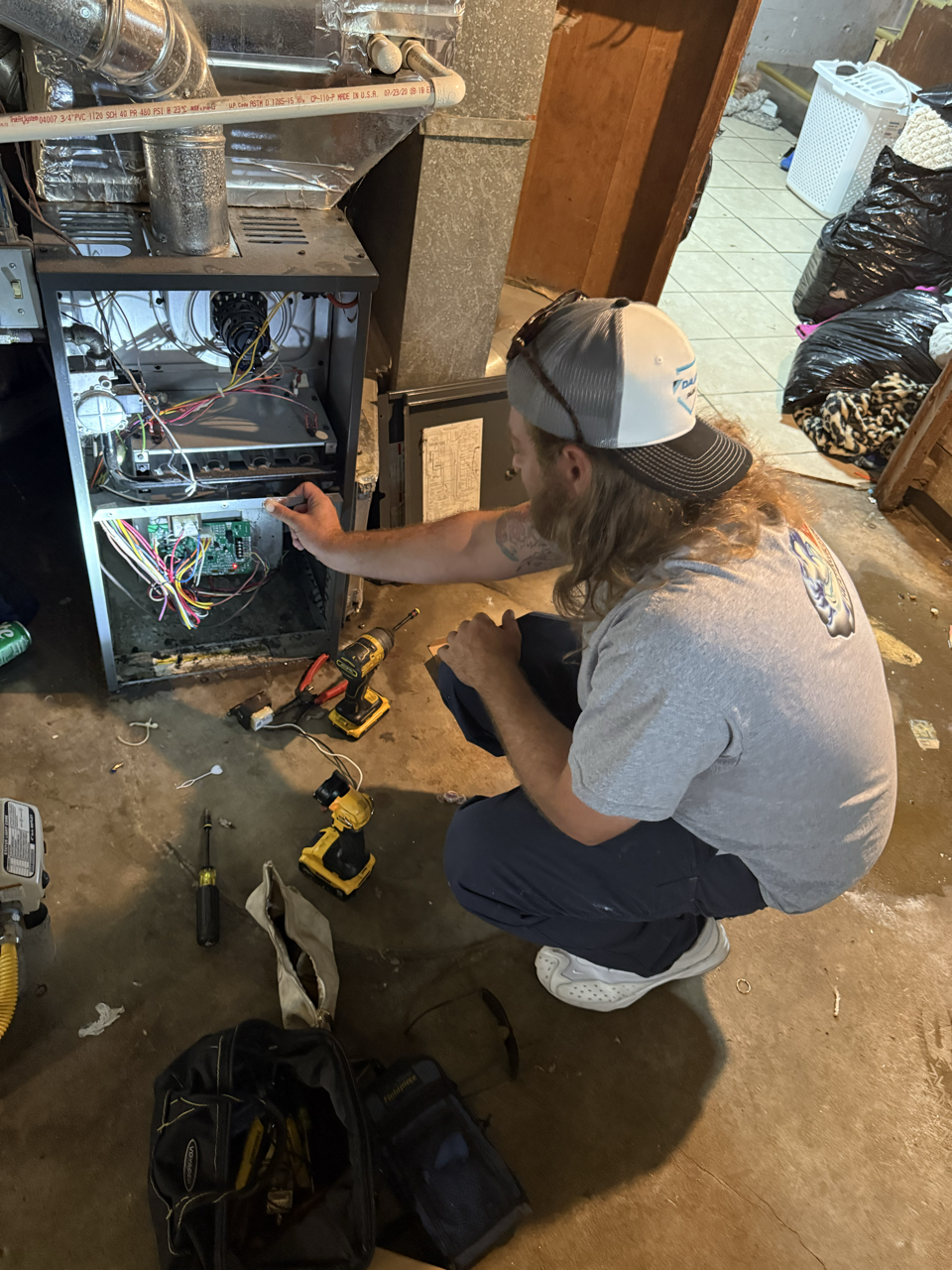
A critical warning: Installing a UV-C light is strictly a job for a licensed HVAC professional. The process requires cutting into your sheet metal ductwork, tapping into the furnace's high-voltage electrical control board, and properly calibrating the placement so the light does not degrade internal plastic components. Furthermore, direct exposure to UV-C light can cause severe damage to human eyes and skin. A professional ensures the system is safely enclosed and interlocked to shut off if the access panel is opened.
Once installed, maintaining the system is incredibly simple. The UV bulb typically needs to be replaced once a year, which aligns perfectly with your routine HVAC maintenance schedule.
Frequently Asked Questions About HVAC UV Lights
How do UV lights kill viruses in ductwork?
UV lights do not "kill" viruses in the traditional sense; they neutralize them by targeting their genetic material. When airborne viruses pass through the 254 nm UV-C light field inside your ductwork, the high-energy light penetrates their cellular walls. This exposure instantly disrupts their DNA and RNA, rendering the virus inert and completely unable to replicate or cause illness in your home. This process happens continuously during the November pre-winter flu season as your furnace circulates air.
Do HVAC UV lights prevent winter colds?
While no device can guarantee you will never get sick, HVAC UV lights significantly reduce the concentration of active cold and flu viruses circulating in your indoor air. When an infected person coughs or sneezes, those microscopic droplets are pulled into your return vents. The UV light neutralizes those specific pathogens before they can be pushed back out into other rooms, greatly lowering the chances of cross-contamination among family members.
Why does indoor air quality drop in the winter?
Indoor air quality drops in the winter because homes are tightly sealed to conserve heat and block out freezing drafts. This necessary weatherization stops natural fresh air ventilation, trapping dust, allergens, pet dander, and exhaled viruses inside. Because the furnace continuously recirculates this same trapped air, biological contaminants build up rapidly, making the air much more polluted than it is during the summer months.
Should I run my HVAC UV light all the time?
Yes, most in-duct UV lights are designed to remain on 24/7, even when your heating or cooling cycle is temporarily off. Continuous operation ensures that any mold spores or bacteria attempting to grow on your dark, damp evaporator coil are constantly suppressed. Some advanced air-sterilization models are wired to activate only when the blower motor runs, but your HVAC technician will configure the best setup for your specific equipment.
Do HVAC UV lights really work?
Yes, the mechanical effectiveness of UV-C light is a proven scientific reality backed by organizations like ASHRAE and the EPA. It has been used for decades in hospitals, laboratories, and water treatment facilities to sterilize environments. When properly sized and installed in a residential HVAC system, UV-C light effectively neutralizes the biological contaminants that standard fiberglass filters are too porous to catch.
Can UV-C lights damage my HVAC system?
If installed incorrectly, prolonged exposure to UV-C light can degrade certain non-metal components inside your air handler, such as plastic drain pans or flexible ducting. This is exactly why professional installation is required. A licensed technician knows exactly where to mount the light and how to shield sensitive internal components, ensuring you get the purifying benefits without risking damage to your heating and cooling equipment.
Take Control of Your Indoor Air Quality Before Flu Season Peaks
As you prepare your Taylorsville KY home for the freezing temperatures ahead, do not let your indoor air quality become an afterthought. Sealing your house against drafts is a smart energy move, but it demands a proactive approach to the stagnant air left behind. An in-duct UV-C purifier provides a mechanical, science-backed defense against the microscopic viruses and bacteria that thrive in closed-loop winter environments.
By upgrading your system now, you are doing more than just filtering dust—you are actively neutralizing biological threats before they can spread through your living spaces. Objective, expert-installed solutions like UV purification provide the most reliable defense against airborne pathogens. Do not wait until the height of flu season to address your home's respiratory health. Reach out to a licensed professional today to schedule an inspection and find out which UV-C purification system is the perfect fit for your existing HVAC equipment.
Financing

Now Offering Financing Options with Affordable Monthly Payments
where we operate
Service Areas
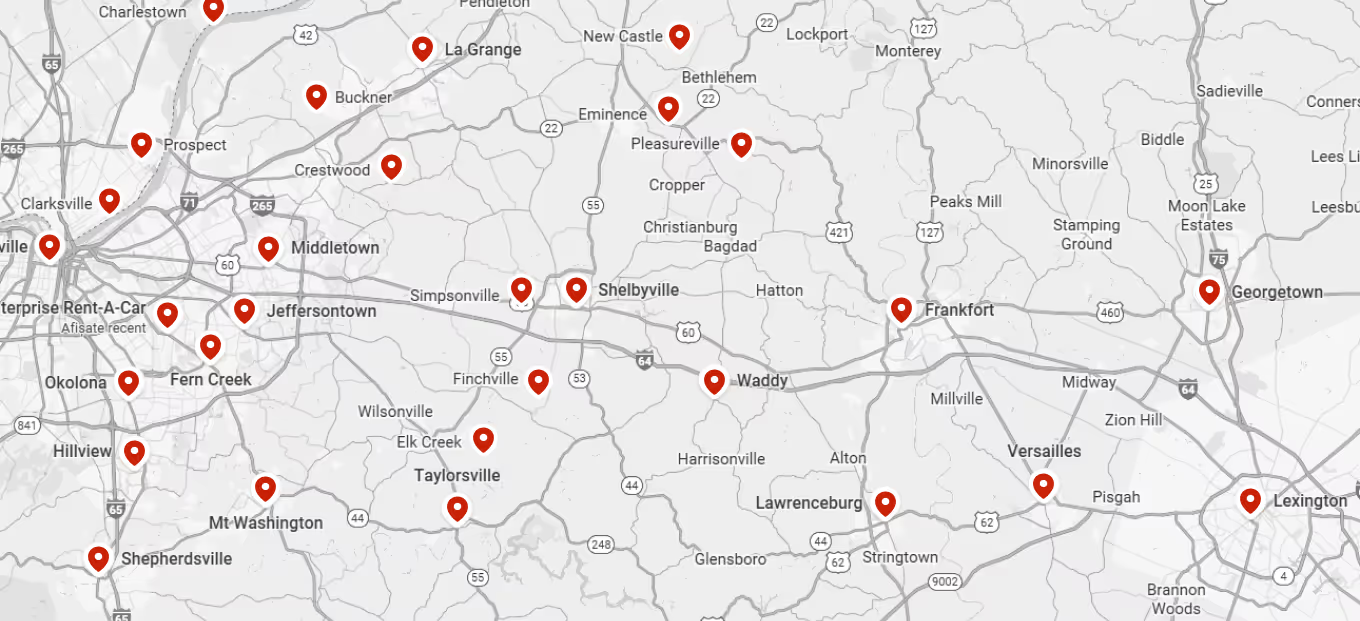
Proudly serving Spencer county, Jefferson county, Bullitt county, and the surrounding areas
Short Heading Goes Here
Sed iaculis aenean sit sed risus arcu vitae integer elit.

