

.svg)


.avif)



5 min read
Why You Should Never Cover Your Outdoor AC Unit Tightly for Winter
The Common Fall Prep Mistake That Secretly Damages Air Conditioners
Wrapping your condenser in a heavy plastic tarp seems like the ultimate way to protect it from the elements, which is exactly why you should never cover your outdoor AC unit tightly for winter. It feels like common sense to shield your expensive equipment from snow and ice as the temperatures drop. However, sealing that metal box under a waterproof barrier actually creates a destructive microclimate. Instead of keeping the weather out, a tight cover traps ground moisture inside and provides a wind-proof shelter for destructive pests.
If you want to ensure your air conditioning equipment is properly prepared for the off-season, or you are ready to enroll in a routine maintenance plan, our team is ready to help.
The psychology of over-protection: When you are tackling your September and early fall prep, it is natural to want to pack everything away safely. You cover your patio furniture, drain your hoses, and wrap your delicate plants. Applying that same logic to your cooling system is a mistake our 3D Heating and Cooling technicians see year after year in the Taylorsville area. Homeowners wake up on the first hot day of spring, remove the tarp they carefully tied down in November, and discover a rusted, chewed-up system that refuses to turn on. Understanding how your system is designed to interact with the outdoors is the first step in breaking this harmful habit and protecting your investment.
Engineered for the Elements: Why Your Condenser Doesn't Need a Winter Coat
To understand why a tarp is unnecessary, you have to look at how modern cooling equipment is manufactured. Your outdoor condenser is not a delicate appliance; it is a rugged piece of machinery engineered specifically to live outside for two decades. The materials used by manufacturers are chosen precisely for their ability to withstand severe weather conditions without human intervention.
The outer cabinet of your system is typically constructed from heavy-gauge galvanized steel, which is then coated in a baked-on powder paint finish. This process creates a hardened shell that repels water and resists scratching. Inside the cabinet, the sensitive components like the compressor are hermetically sealed, meaning they are completely airtight and waterproof. The fan motor is also designed to operate safely even if it is actively raining. When you compare this robust, factory-tested engineering to a thin plastic tarp, it becomes clear that the unit is already wearing its winter coat.
The Role of Factory Weatherproofing
Before a new model of air conditioner ever reaches a home in Taylorsville, KY, it undergoes rigorous environmental testing. Manufacturers subject these units to artificial rainstorms, freezing temperatures, and intense UV exposure to ensure they will not degrade.
• Rain and snow resistance: The top grille and fan blade design naturally direct heavy precipitation away from critical electrical components.
• Drainage design: The base pan of your condenser features stamped drainage holes that allow rainwater and melting snow to exit the unit immediately.
• Airflow requirements: Even when the system is turned off for the winter, it relies on ambient breezes passing through the side louvers to keep the internal coils dry.
By wrapping the unit in plastic, you are actively defeating the manufacturer's drainage and evaporation designs. The system needs to breathe to stay dry, and a tight cover suffocates it.
Trapped Moisture and the Threat of Galvanic Corrosion
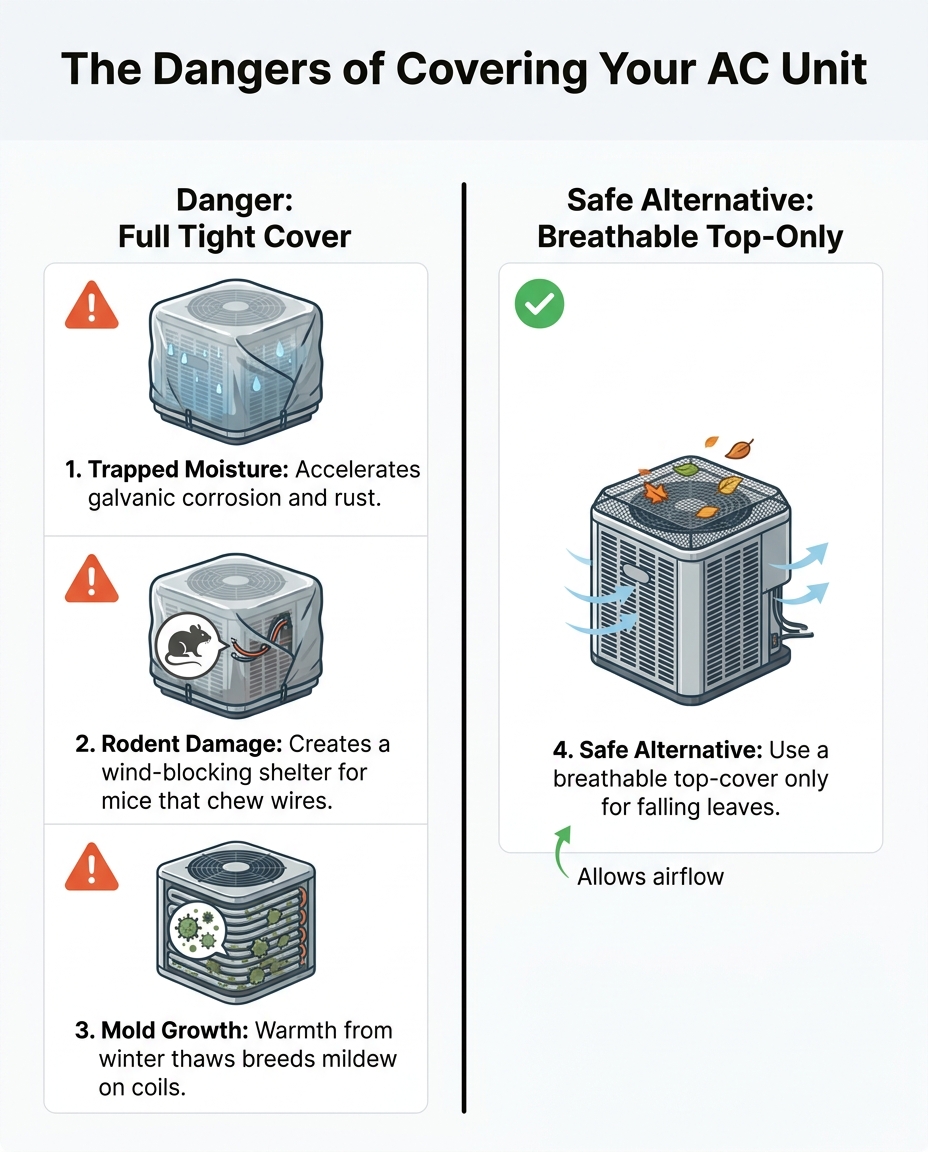
The most significant danger of wrapping your condenser is a chemical process known as galvanic corrosion. When you place a waterproof tarp over the unit, you are not just blocking snow from falling in; you are blocking ground moisture from evaporating out. As the sun beats down on the tarp during a clear winter afternoon, the air underneath heats up, drawing moisture out of the soil and concrete pad. Because the tarp is sealed, this humidity has nowhere to go. It condenses directly onto your system's internal components.
The science of silent damage: Your air conditioner's coil is made of two dissimilar metals—usually copper tubing surrounded by aluminum fins. When these two metals are constantly exposed to an electrolyte (in this case, trapped, mineral-rich condensation), an electrical exchange occurs. This process literally eats away at the metal over time.
In our years of repairing and maintaining HVAC systems across Kentucky, our team has seen exactly what our average 40 inches of annual precipitation can do to a suffocated system. Our winters are defined by a continuous cycle of cold rain, freezing ice, and rapid thaws. If your unit is tightly covered, every ounce of moisture that finds its way under the tarp (or evaporates from the ground) becomes locked against your sensitive refrigerant coils. Over a single winter, this trapped greenhouse effect can accelerate rust and galvanic corrosion to the point where the copper tubing develops microscopic holes. The damage happens silently under the cover, and you will only discover the resulting refrigerant leak when you try to turn the system on in the spring.

How Tight Tarps Create a Cozy Winter Haven for Destructive Rodents
Beyond the threat of rust, wrapping your condenser creates a highly attractive environment for local wildlife. As part of your September and early fall prep, it is important to remember that field mice, chipmunks, and squirrels are actively looking for winter nesting grounds as the nighttime temperatures begin to drop. They seek out locations that offer protection from freezing winds and predators. A condenser unit wrapped tightly in a plastic tarp provides the perfect, wind-blocking cave.
Once a family of mice moves into your covered air conditioner, they will immediately begin building a nest using whatever materials they can find. Unfortunately, modern HVAC electrical wires are often manufactured with soy-based insulation. To a hungry rodent trapped in a cold environment, this insulation is an attractive food source.
The cost of pest damage: Mice will spend the entire winter chewing through the high-voltage and low-voltage wiring inside your system. Because the unit is covered and out of sight, this destruction goes completely unnoticed. Our team frequently fields spring emergency calls where homeowners flip the thermostat to cooling mode, and those chewed, exposed wires instantly short circuit. This often results in blown fuses, damaged control boards, and expensive electrical repairs that could have been entirely avoided simply by leaving the tarp in the garage. If you are working through your seasonal home prep checklist, pest deterrence should be a priority, and leaving your unit open to the wind is one of the best ways to keep rodents away.
Heat Pumps vs. AC Only: A Critical Winter Distinction
While covering a standard air conditioner is a bad idea, covering a heat pump is an immediate recipe for disaster. Many homeowners in Taylorsville, KY, do not realize that their outdoor unit is actually a heat pump, which looks virtually identical to an air conditioner but operates very differently during the winter months.
A standard air conditioner sits completely dormant from October to April. A heat pump, however, runs year-round. In the winter, it uses a reversing valve to extract ambient heat from the cold outdoor air and pump it inside to warm your home. To do this, the system must pull massive amounts of air through its side louvers and exhaust it out the top.
• Standard Air Conditioner — Winter Operation: Dormant (turned off at thermostat) — Airflow Needs in Winter: Passive airflow needed for evaporation — Result of Covering: Rust, corrosion, and rodent infestations over time
• Heat Pump System — Winter Operation: Active (heating your home daily) — Airflow Needs in Winter: Massive active airflow required constantly — Result of Covering: Immediate suffocation, compressor failure, freezing
If you mistakenly wrap a heat pump in a tarp, the system will suffocate the moment it turns on. It will be completely unable to draw in air, causing the compressor to overheat and the entire system to fail catastrophically. Before doing any winter yard work, you must verify what type of equipment you own. If you rely on heat pump systems for your winter warmth, the unit must remain completely unobstructed by tarps, snowdrifts, or dense landscaping 365 days a year.
The Safe Alternative: Breathable Top Covers for Debris
It is completely understandable why homeowners want to protect their equipment during September and early fall prep. If your condenser sits directly beneath a large oak or pine tree, falling leaves, twigs, and pine needles can easily drop through the top fan grille. Once inside, this organic debris traps moisture against the bottom of the unit and blocks the drainage holes, creating the exact same rusting problems we want to avoid.
The solution is not to wrap the entire unit, but to protect only the vulnerable top opening while leaving the sides completely exposed. This allows the system to breathe while keeping debris out of the fan motor.
Here is how to protect your unit safely:
1. Use a breathable top cover: Purchase a heavy-duty mesh or canvas cover designed specifically to cap only the top of the unit. These covers usually attach with small bungee cords to the top grille.
2. Leave the side louvers open: Ensure that all four sides of the condenser are completely exposed to the wind. This guarantees that cross-breezes can evaporate any moisture inside.
3. The plywood method: For a budget-friendly, temporary fix during peak leaf-fall season, place a piece of plywood over the top grille and weigh it down with a brick. Remove it as soon as the trees are bare.
4. Clear the perimeter: Keep mulch, tall grass, and snowdrifts at least two feet away from the base of the unit to promote excellent airflow.
In our experience, many Louisville homeowners find that simply maintaining a clear perimeter and using a mesh top cover is all the protection their system will ever need to survive the harshest winters safely.
Maximizing the Lifespan of Your HVAC Investment
Avoiding the tarp myth is one of the easiest and most effective ways to protect the lifespan of your cooling system. A well-maintained outdoor condenser in Taylorsville, KY, can easily last well over fifteen to twenty years if it is allowed to operate and rest in the conditions it was designed for. Proper care is about understanding what the machinery actually needs, rather than relying on outdated neighborhood myths.
As local HVAC professionals at 3D Heating and Cooling, our commitment is to educate homeowners so you can make the best decisions for your property. We believe that understanding the "why" behind equipment care is the single best way to maximize your HVAC investment. When a system is neglected or improperly winterized, the results are highly predictable. One local homeowner reached out to us in the middle of Thanksgiving evening when their heating system finally gave out after years of wear and tear. Our team came out, explained the available options, and ultimately replaced their 27-year-old system with quality work. While we are always there for emergency replacements, our goal is to help you push those replacement dates as far into the future as possible.
The best way to ensure your system is ready for its winter hibernation is through a professional pre-winter checkup. A technician can clean out any summer debris, wash the coils, and ensure the drainage holes are clear before the freezing weather arrives. Relying on professional guidance and a routine maintenance plan will always yield better results than DIY wrapping methods.
Set Your System Up for Spring Success
Proper winterization is ultimately about peace of mind. When you handle your September and early fall prep correctly, you can spend the winter knowing your equipment is safe, dry, and ready to perform when the weather warms up again.
Leave the heavy plastic tarps in the garage this year. Let your condenser breathe, allow the wind to keep it dry, and trust the rugged engineering that went into its design. By keeping the sides open and only using a breathable top cover for falling leaves, you will prevent rust, deter destructive rodents, and ensure your system fires up flawlessly on the first hot day of spring. If you are unsure about the condition of your system, reach out to explore comprehensive maintenance options that will keep your home comfortable year-round.
Frequently Asked Questions
Should I cover my outside AC unit in the winter?
No, you generally should not cover your outside AC unit tightly during the winter. Manufacturers design these systems to withstand rain, snow, and freezing temperatures without needing a protective layer. Covering the unit tightly prevents natural airflow, which is necessary to evaporate ground moisture and keep the internal components dry.
What happens if you cover your AC unit tightly with a tarp?
Covering your unit with a tight tarp traps moisture inside the cabinet, creating a greenhouse effect that accelerates rust and galvanic corrosion on your sensitive refrigerant coils. Additionally, a tight cover provides a wind-blocking shelter that attracts mice and other rodents looking for a warm place to nest. These pests frequently chew through the system's electrical wiring, leading to expensive springtime repairs.
Can I put a tarp over my AC unit just for the snow?
No, even temporary tarps used specifically for snowstorms can cause problems by blocking airflow and trapping condensation. Snow will naturally melt and drain out of the bottom of the unit through factory-designed drainage holes. If you are concerned about heavy icicles falling from your roof into the unit, you can place a piece of plywood over the top grille temporarily, but the sides must remain open.
How do you properly winterize an outside AC unit?
Proper winterization starts with turning off the power to the AC unit at the outdoor disconnect box so it does not accidentally turn on during an unseasonably warm winter day. Next, gently wash away any dirt from the side louvers and remove any leaves or twigs that have accumulated inside the base pan. Finally, ensure all surrounding vegetation is trimmed back at least two feet to allow the wind to keep the unit dry throughout the season.
Will mice chew the wires in my air conditioner?
Yes, mice are notorious for chewing the wires inside air conditioners, especially when the unit is covered. Many modern electrical wires use a soy-based insulation that rodents find highly attractive as a food source. By leaving the unit uncovered and exposed to the wind, you make the environment far less inviting for mice seeking a cozy winter shelter.
What is the difference between a full AC cover and a top cover?
A full AC cover drapes over the entire unit down to the ground, which traps moisture and blocks the cross-breezes necessary for evaporation. A top cover, on the other hand, is a breathable mesh or canvas cap that only covers the top fan grille. Top covers are perfectly safe to use because they prevent autumn leaves from falling into the unit while leaving the sides completely open for essential airflow.
Financing

Now Offering Financing Options with Affordable Monthly Payments
where we operate
Service Areas
Proudly serving Spencer county, Jefferson county, Bullitt county, and the surrounding areas

Short Heading Goes Here
Sed iaculis aenean sit sed risus arcu vitae integer elit.

