
.svg)


.avif)



5 min read
HVAC Near Me: Taylorsville's Guide to Mid-Fall Heating Startup Troubleshooting
The First Chill: Evaluating Your Mid-Fall Heating Startup
The thermostat drops, you turn on the furnace for the first time in months, and suddenly the house fills with a strange burning odor. When you are looking for home maintenance tips and troubleshooting, the sudden transition from Kentucky's hot, humid summers to the crisp October chill puts immediate stress on dormant heating systems. You are left wondering if that faint clicking sound or unusual smell is a harmless seasonal quirk or a sign of an impending mechanical failure. Navigating this mid-fall heating startup in October can be stressful, but in our experience at 3D Heating and Cooling, understanding what to expect can help you make informed decisions about your home's safety.
For professional HVAC services and expert heating installation and repair, our local Taylorsville team is here to help.
The Stress of the Seasonal Shift
Throughout the sweltering summer months, your heating equipment sits completely idle in dark, often dusty environments like basements, attics, or utility closets. While the air conditioner handles the heavy lifting, the furnace gathers dust, pet dander, and airborne particles. When the sharp transition into autumn arrives, homeowners often flip the thermostat to "heat" without a second thought. This sudden demand forces mechanical components that have been stationary for half a year to spring into action instantly.
This rapid shift from inactivity to high-capacity operation is exactly why our technicians see so many hidden issues revealed during the first mid-fall heating startup in October. Bearings that have lost their lubrication over the summer may grind, while electrical connections that expanded and contracted during seasonal temperature swings might struggle to maintain a solid circuit. Identifying whether these startup symptoms are standard operational quirks or signs of a serious problem is the fundamental decision point every homeowner faces before the real winter weather sets in.
Why Early Detection Matters
Ignoring a strange smell or an unusual noise during that initial October startup is a risky gamble. A minor issue, such as a struggling blower motor or a dirty flame sensor, is usually a straightforward fix when caught early. However, if that same system is forced to run continuously as temperatures plummet toward freezing, that minor strain can cascade into a catastrophic failure. By evaluating your system proactively, you ensure safety and reliability well before the freezing winter weather arrives, avoiding the panic of an emergency breakdown on a cold night.
Normal vs. Emergency: The 15-Minute Dust Burn-Off Rule
Here at 3D Heating and Cooling, we find that one of the most common reasons homeowners search for choosing an HVAC company in Taylorsville is the alarming smell that accompanies the first heating cycle of the year. However, not all odors indicate an emergency. Establishing clear boundaries between harmless seasonal dust burn-off and dangerous electrical or gas issues is critical for peace of mind.
Understanding the First Cycle
As mentioned, your furnace's heat exchanger acts as a magnet for household dust during the summer. When the burners ignite for the first time in autumn, the metal heat exchanger rapidly reaches extreme temperatures. The accumulated dust essentially incinerates, sending a distinct, smoky, or dusty odor through your home's ductwork. This is a completely normal part of the mid-fall heating startup.
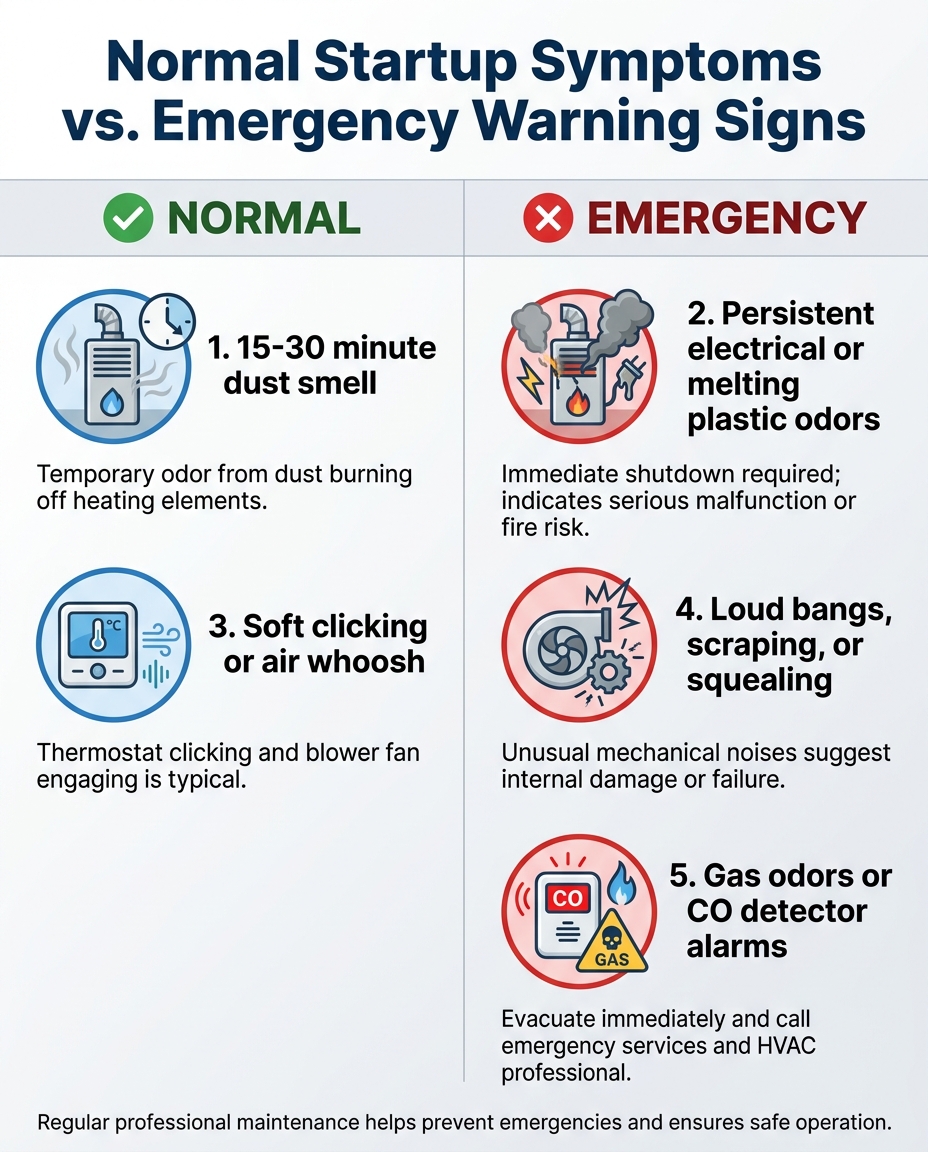
The 15-Minute Rule: A normal dust burn-off smell should begin to dissipate within 15 to 30 minutes of continuous operation. You can often clear the air by opening a few windows while the system runs its initial cycle. If the odor fades and does not return on subsequent cycles, your system is likely operating normally.
When to Take Immediate Action
While dust burn-off is harmless, other odors are massive red flags that require immediate intervention. If you detect sharp, acrid smells, you must shut the system down at the thermostat immediately.
• Dusty, slightly smoky smell — Likely Cause: Summer dust burning off the heat exchanger — Required Action: Monitor for 15-30 minutes; open windows.
• Sharp electrical burning — Likely Cause: Failing blower motor, frayed wiring, or overheated circuit board — Required Action: Shut off system immediately; call a professional.
• Melting plastic or rubber — Likely Cause: Overheating components or foreign objects in the ductwork — Required Action: Shut off system immediately; call a professional.
• Rotten egg odor (Mercaptan) — Likely Cause: Natural gas leak — Required Action: Evacuate home, leave doors open, call emergency services.
By applying the 15-minute rule, homeowners in Taylorsville KY can easily distinguish between a harmless seasonal quirk and a situation that demands professional mechanical intervention.
Decoding Furnace Noises During Autumn Startups
Just as odors can be deceiving, the sounds your heating system makes during a mid-fall heating startup in October can range from completely benign to highly dangerous. Categorizing these furnace noises helps homeowners prevent unnecessary panic while identifying genuine mechanical risks that require expert attention.
Normal Operating Sounds
Modern heating systems are designed to operate quietly, but they are never entirely silent. When the thermostat signals a call for heat, you will typically hear a few standard operational noises. A slight clicking sound from the thermostat or the control board is perfectly normal as relays close to initiate the heating sequence. Shortly after, you may hear a low hum from the draft inducer motor, followed by a brief whoosh of air as the main blower engages and pushes warm air through the vents. These rhythmic, predictable sounds indicate a healthy sequence of operations.
Red Alert Noises
Conversely, harsh, jarring noises are a clear sign that mechanical components are struggling or failing. Loud banging or booming sounds when the system kicks on are particularly dangerous; this usually points to delayed ignition. Gas builds up in the combustion chamber before finally igniting with a small explosion, which can severely damage the heat exchanger over time. Metal-on-metal scraping typically indicates a failing blower motor bearing or a loose blower wheel grinding against its housing. High-pitched squealing often points to a worn-out fan belt or a motor that is seizing due to lack of lubrication.
Aging systems are especially prone to these severe noises. Our technicians at 3D Heating and Cooling saw exactly this during a mid-fall heating startup when an aging, 27-year-old heating system finally broke down with loud noises right in the middle of a cold autumn evening. Our team was dispatched to explain the options, and the old system was successfully replaced with high-quality work before the real winter freeze set in. Remember, diagnosing and repairing internal mechanical noises is never a DIY job—opening the cabinet exposes you to high voltage and combustion hazards.
Why Is My Heating System Short Cycling?
When taking service calls across the area, a frequent troubleshooting question our team receives involves a system that turns on, runs for just a few minutes, and then abruptly shuts off before the home reaches the desired temperature. This frustrating phenomenon is known as short-cycling.
The Problem: Incomplete Heating Cycles
Short-cycling prevents your home from reaching the target temperature set on the thermostat. Because the system never runs long enough to distribute heat evenly, certain rooms remain freezing cold while others might feel slightly warm. Beyond the discomfort, short-cycling places immense wear and tear on the system's starting components. The most energy-intensive part of a heating cycle is the initial startup; a system that starts and stops continuously will drive up utility bills and drastically shorten the lifespan of the blower motor and compressor.
The Cause: Airflow Restrictions and Sensor Failures
The most common and easily correctable cause of short-cycling is a severely clogged air filter. When a filter is completely blocked by dust and debris, the blower motor cannot pull enough air over the heat exchanger. The internal temperature of the furnace spikes, triggering a high-limit safety switch that shuts the burners down to prevent a fire. Once the unit cools, it tries to start again, repeating the cycle.
More complex causes involve internal component failures. A malfunctioning thermostat might send erratic signals to the control board. Alternatively, a dirty or failing flame sensor might fail to detect that the burners have ignited, prompting the system to shut off the gas valve as a safety precaution within seconds of startup.
The Solution: Professional Diagnosis
If checking and replacing your air filter does not resolve the short-cycling issue, professional intervention is required. These issues can affect various types of equipment, requiring specialized heat pump services or detailed furnace repairs. A licensed technician can test the flame sensor micro-amps, calibrate the thermostat, and ensure the high-limit switches are functioning correctly in Taylorsville KY.
Hidden Hazards: When to Evacuate and Call an Expert
While many mid-fall heating startup symptoms in October are minor inconveniences, some present immediate, life-threatening dangers. Explicitly understanding when to stop troubleshooting and evacuate is paramount for your family's safety.
The Silent Danger of Carbon Monoxide
Carbon monoxide (CO) is an odorless, colorless, and tasteless gas produced by the incomplete combustion of fossil fuels. In a healthy furnace, these exhaust gases are safely vented out of your home through the flue pipe. However, if the heat exchanger—the metal shield that separates the combustion process from your breathing air—develops a crack, carbon monoxide can leak directly into the ductwork and be circulated into every room.
During a recent mid-fall heating startup, our crew responded to a home where the customer's carbon monoxide detectors kept sounding due to a cracked heat exchanger. Recognizing the absolute emergency, our technician arrived within an hour to safely remove the compromised machine, installing a new furnace and AC unit efficiently to restore safe heating. Triggering a carbon monoxide detector is never a false alarm that you should ignore or attempt to reset.
Gas Leaks and Evacuation Protocols
Similarly, the distinct odor of rotten eggs indicates a natural gas leak. Natural gas is naturally odorless, but utility companies add a chemical called mercaptan to give it that recognizable smell specifically so leaks can be detected early. If you smell gas near your furnace or vents, do not attempt to find the source. Do not flip light switches, use a phone in the house, or attempt to shut off the gas valve yourself. Immediately evacuate the home, leave the doors open to ventilate, and call emergency services or your utility provider from a safe distance.
Strictly avoid attempting to patch, open, or repair gas-linked components without a license. The risks of explosion, fire, or carbon monoxide poisoning are far too high to justify dangerous DIY troubleshooting.
Choosing a Reliable Local Partner for HVAC Emergencies
When a startup symptom turns out to be a verified breakdown rather than a harmless quirk, knowing who to call makes all the difference. Guiding your home through a mechanical failure requires a contractor you can trust.
The Value of Geographic Knowledge
Localized searches for contractors should prioritize response time and deep local geographic knowledge. Because our team at 3D Heating and Cooling is intimately familiar with the local service areas, we understand the specific regional housing types, the age of the neighborhoods, and the common architectural quirks that affect ductwork and system sizing. This localized expertise allows our technicians to diagnose problems faster, as they are already familiar with the typical wear-and-tear patterns seen in Taylorsville KY homes.
Why 24/7 Availability Matters
System failures rarely happen on a convenient schedule. In fact, most breakdowns become apparent during cold evening startups, right after you arrive home from work and turn up the thermostat. Highlighting the necessity of 24/7 emergency HVAC services and deep local expertise ensures that you are never left freezing through the night. Working with a dedicated team that prioritizes 24/7 emergency availability means that a prompt, professional diagnosis is always just a phone call away, providing immense peace of mind when you need it most.
Locking in Reliability Before the Kentucky Freeze
Transitioning from reactive troubleshooting to proactive maintenance is the smartest move a homeowner can make. Catching symptoms during a mid-fall heating startup in October prevents catastrophic, freezing failures in January.
The Anatomy of a Proactive Tune-Up
Taylorsville's freezing winter temperatures leave no room for error; proactive October maintenance is essential for winter survival. A comprehensive inspection goes far beyond just changing a filter. A licensed technician will test all safety limits to ensure the system will shut down appropriately in an emergency. They will tighten electrical connections that may have vibrated loose, measure gas pressures to ensure optimal combustion, and visually inspect the heat exchanger for microscopic cracks using specialized cameras.
Long-Term Efficiency and Savings
Enrolling in a preventative maintenance plan keeps your systems running efficiently year-round, reducing monthly energy bills and extending the lifespan of the equipment. If an inspection reveals that an aging system is no longer safe to operate, proactive planning gives you time to make an informed replacement decision rather than a panicked emergency purchase. Furthermore, we always recommend homeowners consult their utility providers for any generally applicable energy rebates or tax incentives when upgrading failing equipment, as these programs can make high-efficiency replacements much more accessible.
Frequently Asked Questions About Heating Troubleshooting
Why does my furnace smell when I first turn it on?
It is usually dust burning off the heat exchanger after sitting idle during the summer months. As the metal heats up for the first time, this settled debris incinerates, causing a dusty odor. Normal smells dissipate quickly, but persistent electrical or melting smells require a professional technician in Taylorsville KY.
How long should a heater smell like burning?
Typically, a normal dust burn-off smell will last 15 to 30 minutes. The odor should fade steadily as the system runs its initial cycle. If the smell lasts longer than an hour or grows stronger, shut the system down immediately to prevent potential damage.
What furnace noises are dangerous?
Loud booms, scraping metal, and high-pitched squeals indicate severe mechanical or ignition failure. Banging suggests delayed gas ignition, while scraping points to blower motor issues. These threatening sounds require immediate professional attention to prevent total system failure.
Why is my furnace turning on and off quickly?
This rapid cycling is known as short-cycling, and it is often caused by restricted airflow or sensor issues. The system overheats due to a lack of air, triggering a safety shutdown. Check and replace your air filter first, then call a pro if the rapid cycling continues.
Can a cracked heat exchanger be repaired?
No, a cracked heat exchanger must be replaced by a licensed professional due to severe carbon monoxide risks. Patching or welding the metal is unsafe and against building codes. Often, this failure requires a full system replacement if the existing unit is old or out of warranty.
Secure Your Comfort This Winter
You do not have to guess whether your system is safe to run after a questionable mid-fall heating startup in October. Taking the guesswork out of your home's comfort ensures that you and your family can sleep soundly through the coldest nights of the year. If you notice persistent odors, strange noises, or frequent short-cycling, we encourage reaching out for a professional diagnosis to address any lingering startup concerns. Take the clear next step for reliable heating installation and repair by contacting our expert team today, and enjoy clear, expert guidelines on what is normal versus what requires professional attention.
Financing

Now Offering Financing Options with Affordable Monthly Payments
where we operate
Service Areas
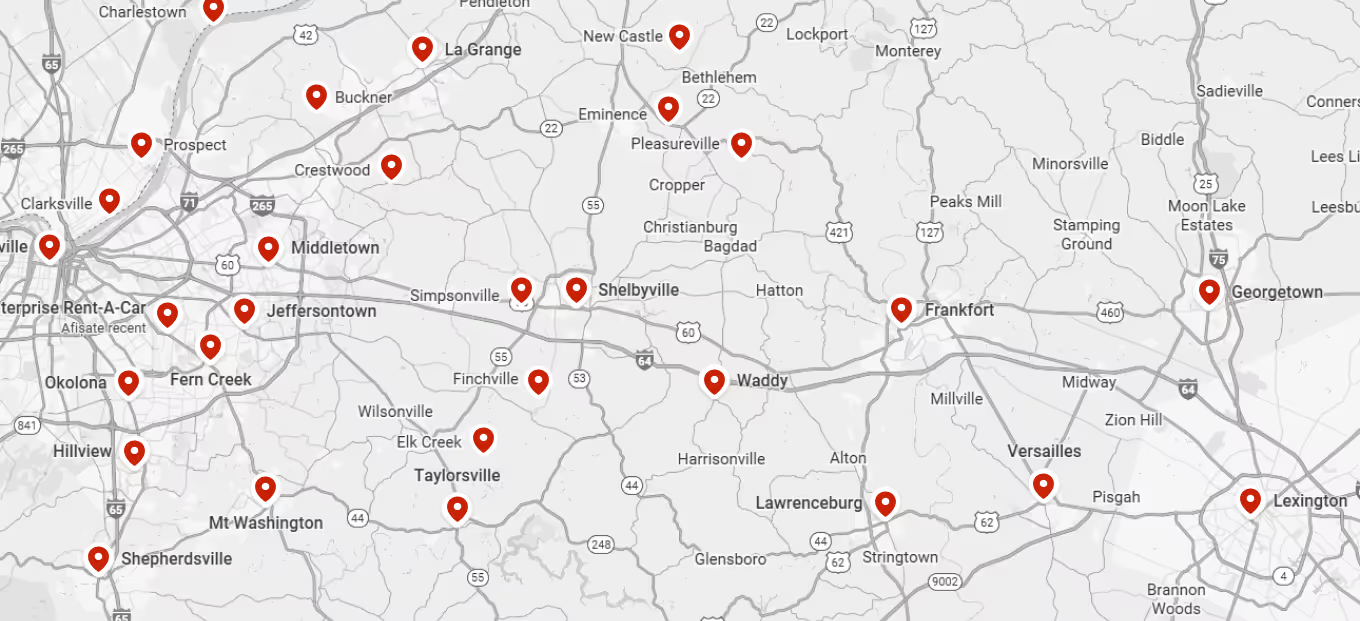
Proudly serving Spencer county, Jefferson county, Bullitt county, and the surrounding areas
Short Heading Goes Here
Sed iaculis aenean sit sed risus arcu vitae integer elit.