
.svg)


.avif)


5 min read
Fall HVAC Troubleshooting: When to Call AC Companies for Heating Startup Issues
Is Your First Fall Heating Cycle Supposed to Smell Like That?
Are you staring at your thermostat, wondering if that sudden burning smell means your furnace is actually doing its job—or if it is about to break down entirely? At 3D Heating and Cooling, we know firsthand that navigating home maintenance tips and troubleshooting can feel overwhelming when the temperature suddenly drops and your heating system roars to life for the first time in months. When you need reliable air conditioning services or expert AC repair and installation, knowing what is normal versus what requires our team's immediate attention is the first step to a stress-free winter.
For most homeowners we serve, that initial mid-fall October heating startup brings a wave of anxiety. You turn the dial to "heat" on the first cold autumn night, and almost immediately, a distinct dusty, burning odor fills the hallways. Sometimes, this smell is accompanied by strange clicking or popping noises coming from the vents. It is incredibly common to stand near the return register, debating whether you should wait it out or immediately start evaluating local AC companies for an emergency repair.
The transition from summer cooling to winter heating is one of the most demanding periods for your home's climate control system. Your equipment has sat dormant for half the year, collecting dust and settling into disuse. Based on our years of field experience, understanding the foundational concepts of how your system wakes up from this hibernation is critical. The short answer is that while some sensory symptoms are perfectly harmless, others are clear warning signs of a failing component. By learning how to distinguish between a dusty heat exchanger and a genuine electrical hazard, you can protect your home and keep your family comfortable all season long.
The Kentucky Climate Transition: Stress on Your HVAC System
The shift from summer to autumn in our region is rarely a smooth, gradual cooldown. With intense summer heat transitioning into unpredictable October temperature swings, we often see Taylorsville KY homeowners running the cooling system during a warm afternoon and switching over to the furnace late at night. This rapid fluctuation places an immense amount of mechanical stress on aging HVAC components.
Your climate control system is built to handle heavy usage, but seamlessly switching between heating and cooling modes requires different parts of the machinery to engage and disengage rapidly. Blower motors must adjust to different static pressures, reversing valves in heat pumps are forced to shift back and forth, and heat exchangers undergo rapid thermal expansion and contraction. This volatility is exactly why our technicians respond to so many breakdowns during the autumn transition rather than the dead of winter.
The Hidden Toll of Rapid Mode Switching
Beyond the mechanical strain, these temperature swings also impact your indoor air quality and overall system efficiency. When the humidity levels bounce up and down alongside the temperature, condensation can form inside the ductwork and the unit itself. If your system is constantly starting and stopping to keep up with the unpredictable Kentucky weather, it never runs long enough to properly dehumidify the air or reach its peak operating efficiency.
This constant on-and-off cycling forces the electrical relays and capacitors to work overtime. Over the course of a few weeks, we frequently see this heavy transitional workload push an older, unmaintained system past its breaking point. Recognizing the strain that the October climate puts on your equipment is the first step in understanding why proactive care is so essential during the fall.
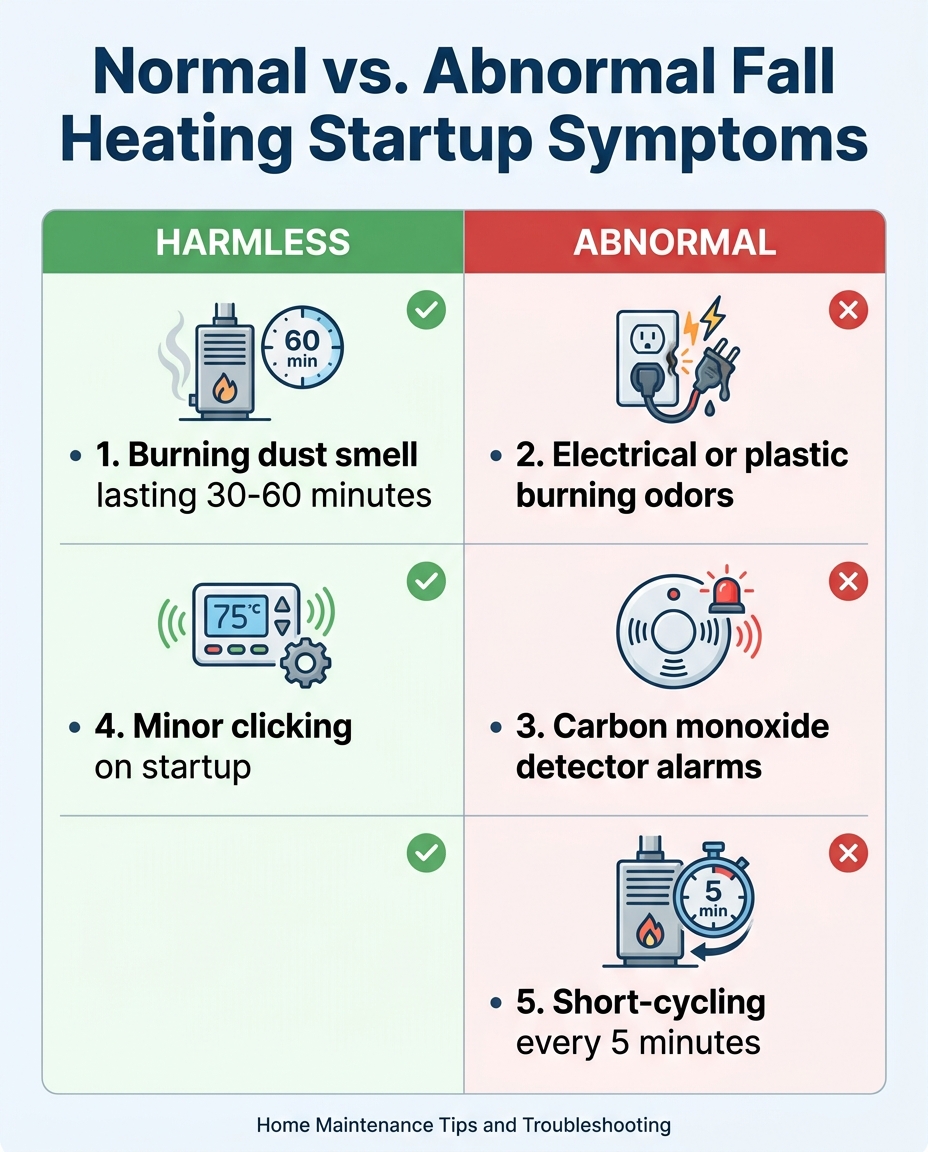
Normal vs. Abnormal Heating Startup Symptoms
When you initiate your mid-fall October heating startup, your senses are your best diagnostic tool. However, it is crucial to have a clear, safety-focused framework to help you distinguish between harmless seasonal behavior and dangerous hazards. Ignoring a genuine safety alarm during the first major heating cycle can lead to catastrophic damage, while panicking over a little dust can result in an unnecessary emergency service call.
For instance, one local homeowner reached out to our team last fall when their carbon monoxide detectors kept going off during a cold evening. It turned out to be a cracked heat exchanger—an urgent, severe safety issue. Our technician inspected the system immediately and dispatched a crew within an hour to safely replace the old equipment with a new furnace and AC system. This highlights exactly why we always tell our customers to never ignore safety alarms.
To help you confidently evaluate your system's behavior, use this breakdown of common startup symptoms we share with our clients:
• Odors and Smells — Normal Seasonal Behavior: A faint burning dust smell that dissipates entirely within 30 to 60 minutes of the first cycle. — Abnormal Hazard (Call a Pro): Persistent electrical, burning plastic, or rotten egg (gas) smells that do not go away.
• System Noises — Normal Seasonal Behavior: Minor popping or clicking as metal ductwork expands with the sudden rush of hot air. — Abnormal Hazard (Call a Pro): Loud grinding, screeching, or violent rattling coming directly from the blower motor cabinet.
• Cycle Length — Normal Seasonal Behavior: A slightly longer initial cycle as the system works to raise the ambient temperature of a cold house. — Abnormal Hazard (Call a Pro): The system shutting down completely after just three to five minutes of operation.
• Safety Alarms — Normal Seasonal Behavior: Smoke detectors remaining quiet and carbon monoxide detectors showing zero parts per million. — Abnormal Hazard (Call a Pro): Any carbon monoxide detector triggering an alarm or showing elevated levels in the home.
If you experience any of the abnormal symptoms listed above, shut your system down immediately at the thermostat. Safety must always come first, and diagnosing electrical odors or gas-related issues requires the specialized tools and professional training our technicians carry.
Why Your Heater Might Be Short-Cycling This Fall
One of the most frustrating issues our customers face during the autumn transition is short-cycling. This occurs when the heating system turns on, runs for a brief period, and then shuts off rapidly before the house has actually reached the target temperature set on the thermostat. Not only does this leave your home feeling chilly and uncomfortable, but it also drives up your energy usage and puts massive wear and tear on the ignition components.
In many cases we diagnose, the root cause of early-season short-cycling traces back to dirty air filters. After a long, hot summer of heavy air conditioning usage in Taylorsville KY, your filter is likely packed with dust, pollen, and pet dander. When you switch over to heating, that clogged filter severely restricts the airflow entering the furnace. Without enough cold air moving over the heat exchanger to absorb the heat, the internal temperature of the furnace spikes. The system's high-limit safety switch then trips, shutting the burner down prematurely to prevent a fire hazard.
When a Filter Change Isn't Enough
While we always recommend checking and replacing a dirty air filter as a straightforward homeowner task, short-cycling can also stem from more complex issues like improper thermostat calibration. If the thermostat is located in a drafty hallway or receiving direct afternoon sunlight, it may misread the actual temperature of the room, sending confused signals to the control board.
Additionally, a dirty flame sensor can cause the system to shut down just seconds after ignition. The sensor fails to detect the burner flame through the layer of soot, assuming the gas is not igniting, and safely cuts the fuel supply. Because cleaning flame sensors and testing limit switches involves interacting with live electrical voltages and combustible gas, these tasks strictly require a professional diagnosis rather than a simple DIY fix.
How to Compare Local AC Companies for Emergency Support
When a startup issue turns out to be a genuine hazard—like a cracked heat exchanger or a failing blower motor—you need reliable help fast. Knowing how to evaluate contractors before an emergency strikes ensures you are not left making panicked decisions in a freezing house. The primary goal is to find a team that prioritizes your safety and offers transparent, long-term solutions.
Here is a checklist we recommend when comparing local service providers:
• True 24/7 emergency availability: Breakdowns rarely happen during standard business hours. Look for contractors who explicitly offer around-the-clock support for sudden nighttime failures. Our team's reliable 24/7 emergency service at 3D Heating and Cooling stands as the gold standard when evaluating who to call during a cold-weather breakdown.
• Transparency in pricing and diagnosis: A trustworthy technician will explain exactly what failed and why, providing clear options rather than immediately pushing for an unnecessary, high-pressure system replacement.
• Comprehensive safety inspections: The best companies go beyond basic filter checks. We use specialized tools, like combustion analyzers and digital cameras, to thoroughly inspect heat exchangers and test safety limits.
• Strong local reputation: Look for a proven track record of responsiveness and professionalism during the busy seasonal transition. Reading local reviews can give you confidence in their ability to handle high-stress situations.
Taking the time to research your options ensures that when you do need help, you are calling a trusted partner. For more detailed guidance on evaluating local experts, read our guide on Choosing an HVAC Company Near Me: What Taylorsville Residents Should Look For.
The Role of Preventative Maintenance in Avoiding Breakdowns
The absolute best way to bypass the anxiety of a mid-fall October heating startup is to take a proactive approach to your home's climate control. Scheduling a pre-winter inspection before the first major freeze hits allows our professionals to evaluate, clean, and calibrate the system while the weather is still mild. Preventative maintenance is not just about changing filters; it is a comprehensive health check for your most expensive home appliance.
What a Professional Tune-Up Actually Covers
During a routine seasonal visit, our certified technicians perform a deep dive into the internal mechanics of your furnace or heat pump. We clean the burner assembly, test the ignition sequence, and measure the electrical draw on the blower motor to ensure it is not overworking. Most importantly, we perform a rigorous inspection of the heat exchanger to catch microscopic cracks before they can leak carbon monoxide into your living space.
The long-term benefits of routine professional care are undeniable. Systems that receive annual tune-ups operate more efficiently, use less energy, and suffer far fewer unexpected breakdowns. Offering comprehensive maintenance plans is a key differentiator that sets top-tier contractors apart, providing homeowners with priority scheduling and consistent peace of mind. By enrolling in our ongoing preventative maintenance plans, you ensure that your equipment is always ready for whatever the changing seasons bring.
Trusted Heating and Cooling Support Across the Region
Reliable HVAC service is not limited to just one municipality. As weather patterns shift across the state, homeowners in neighboring communities face the exact same transitional challenges. The criteria for choosing a dependable contractor—transparency, emergency availability, and safety-first diagnostics—apply universally, whether you live right in the center of town or in the surrounding counties.
Choosing a team with deep regional expertise means working with professionals who understand the specific demands of the Kentucky climate. We know exactly how the intense humidity and sudden cold snaps affect different makes and models of equipment. Prompt response times across county lines ensure that a sudden weekend cold front does not leave your family shivering in the dark. For residents needing support just down the road, you can rely on our dedicated AC services in Bardstown to deliver the same high standard of care and technical excellence you expect in Taylorsville KY.
Frequently Asked Questions About Fall HVAC Troubleshooting
Why does my heater smell like burning dust when I turn it on?
Dust naturally settles on the heat exchanger and burner components over the summer months when the furnace is sitting idle. When you initiate your mid-fall October heating startup, the sudden high temperatures cause this accumulated dust to burn off. This process creates a distinct, dusty odor that travels through your ductwork, but as we often assure our customers, it is a completely normal part of the seasonal transition.
How long should a furnace smell when first turned on?
Typically, the burning dust smell should dissipate entirely within 30 to 60 minutes of continuous operation. Once the initial layer of debris has burned away, the air coming from your vents should smell clean and neutral. If the odor lasts longer than an hour, or if it changes in character, our team recommends a professional inspection to ensure there isn't a deeper issue.
Is it safe if my furnace smells the first time I use it?
A brief, dusty smell is generally safe and expected during the first cycle of the year. However, if you detect the scent of burning plastic, electrical ozone, or the rotten egg smell of natural gas, you must shut the system down immediately. These specific odors indicate serious electrical or fuel-related hazards that require our emergency professional intervention.
Why is my heating system short-cycling in the fall?
Short-cycling is often caused by dirty air filters restricting airflow, which causes the internal temperature of the furnace to spike and trip the safety limit switch. It can also be triggered by a miscalibrated thermostat that is misreading the room's temperature, or a dirty flame sensor that fails to register the burner ignition. While you can change the filter yourself, the other causes require a trained technician to diagnose and resolve safely.
What maintenance does a furnace need in the fall?
A comprehensive fall tune-up from our team includes a fresh filter replacement, a thorough cleaning of the burner assembly, and a test of all electrical relays. Most importantly, it includes a professional safety inspection of the heat exchanger to check for cracks or wear. This proactive maintenance ensures the system runs efficiently and safely throughout the freezing winter months.
How do I choose between different AC companies for heating repair?
Look for contractors who prioritize transparency and explicitly offer 24/7 emergency availability for sudden breakdowns. You should evaluate their reputation for clear communication and check if they perform comprehensive safety inspections rather than just pushing for quick sales. Choosing a company like 3D Heating and Cooling that offers detailed maintenance agreements also shows they are invested in the long-term health of your equipment.
Secure Your Peace of Mind for the Winter Ahead
Navigating the transition into colder weather doesn't have to be a source of stress. By keeping a clear, safety-focused checklist of normal versus abnormal symptoms on hand, you can confidently evaluate your system during that crucial mid-fall October heating startup. Remember that a brief dusty smell is nothing to fear, but persistent electrical odors, strange grinding noises, or short-cycling demand immediate attention.
Our team at 3D Heating and Cooling encourages you to prioritize your family's safety and comfort by scheduling a pre-winter inspection before the freezing temperatures settle in for good. Mastering these home maintenance tips and troubleshooting strategies empowers you to take control of your indoor climate. Rest assured that when you do need help, our local experts are standing by around the clock to evaluate, repair, and optimize your system, delivering the lasting peace of mind you deserve all winter long.
Financing

Now Offering Financing Options with Affordable Monthly Payments
where we operate
Service Areas
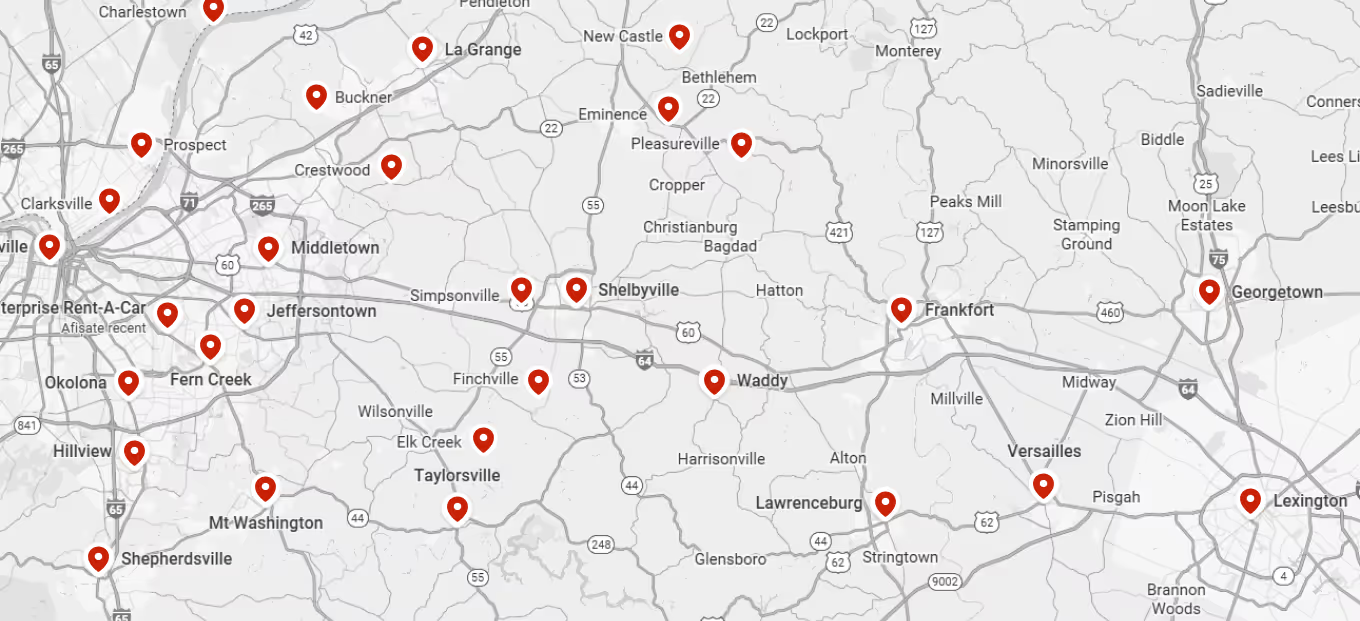
Proudly serving Spencer county, Jefferson county, Bullitt county, and the surrounding areas
Short Heading Goes Here
Sed iaculis aenean sit sed risus arcu vitae integer elit.

