



5 min read
Thermostat False Reading Causes: Why Your Hallway Sensor Lies During November Cold Snaps
Why Does the Thermostat Say It's Warm When the House Feels Freezing?
Have you ever checked your wall control because the house felt chilly, only to find the screen claiming everything is perfectly fine? At 3D Heating and Cooling, we hear this exact complaint every November as Taylorsville residents prep their homes for the holidays. Understanding thermostat false reading causes is the first step to solving this frustrating problem. It is a common scenario: you walk out of a chilly bedroom, look at the display, and see 72°F on the screen but it feels like 65°F in the bedrooms. This discrepancy leaves you wondering if your furnace is simply failing to produce enough heat, or if the thermostat itself is being tricked by its immediate environment.
Before you assume your heating equipment is broken, you have to determine if you are dealing with a mechanical failure or an environmental illusion. A "false reading" happens when the internal sensor accurately measures the air immediately touching it, but that specific pocket of air does not represent the temperature of the whole home. When this happens, the system shuts off too early, leaving peripheral rooms uncomfortably cold.
This foundational guide will explore the physics of indoor heat loss, the impact of sensor placement, and how to diagnose the root cause of your uneven heating. When you need reliable heating services or expert residential furnace repair, our team is ready to help you restore even, consistent comfort throughout your entire home.
The Physics of Ghost Drafts in Central Hallways
To understand why your system struggles during sudden November cold snaps, we have to look at the layout of your house. In our experience working on local homes, many feature a central hallway where the thermostat is traditionally mounted. While this seems like a logical, centralized location, these corridors often act as internal wind tunnels for "ghost drafts."
Ghost drafts are invisible currents of cold air that cascade down from unsealed areas above or funnel through open spaces. Because cold air is denser and heavier than warm air, it naturally sinks. When a sudden late-fall temperature drop hits Taylorsville KY, our technicians frequently find that these drafts become highly pronounced. The hallway fills with sinking cold air, creating a localized micro-climate that is significantly colder than the insulated, carpeted bedrooms nearby. The thermostat reads this artificially cold air, assumes the whole house is freezing, and forces the furnace to overwork.
Conversely, if the hallway traps rising warm air, the sensor reads an artificially high temperature and shuts the heating cycle down prematurely. In both cases, the thermostat is actually doing its job perfectly—it is just measuring a compromised environment.
How Attic Drop-Downs Impact Hallway Sensors
A pattern we see often during our pre-winter inspections is ghost drafts caused by the attic access panel. If your home has a pull-down stairwell or a simple push-up hatch located in the hallway ceiling, it is likely leaking cold air.
• The gravity effect: Uninsulated attic hatches allow freezing attic air to sink directly down into the hallway space.
• The direct hit: If the thermostat is mounted on the wall directly beneath or adjacent to this drop-down, it is constantly bathed in a stream of 50-degree air.
• The resulting imbalance: The furnace runs continuously to combat this localized cold spot, turning the well-insulated bedrooms into saunas while the hallway remains chilly.
Environmental Factors That Trick Thermostat Sensors
Beyond structural drafts, our team frequently discovers that the everyday items and external forces inside your home play a massive role in how your HVAC system perceives temperature. The sensor inside your wall unit is highly sensitive, designed to detect changes of a fraction of a degree. When external heat or cold sources interact with the casing, they easily override the actual ambient room temperature.
If you are noticing 72°F on the screen but it feels like 65°F in bedrooms, one of these environmental factors is likely forcing the system to short-cycle. In our years of diagnosing winter HVAC issues across all our service areas, we see these specific culprits time and time again as homeowners begin testing their heating systems for the winter season.
The Impact of Exterior Doors and Windows
Sensors located too close to entryways read the draft, not the ambient room temperature. Every time the front door opens, a blast of freezing November air hits the wall unit. Even when the door is closed, poor weatherstripping allows a constant trickle of cold air to seep in. This leads to the system running constantly to combat a localized cold spot, wasting energy and wearing out the furnace components prematurely.
Hidden Heat Sources
It does not take a roaring fireplace to trick a sensitive thermistor. Even small, everyday items generate enough ambient heat to alter the reading by several degrees if they are located too close to the wall unit.
• Direct sunlight: A sunbeam hitting the plastic casing for just thirty minutes can heat the internal sensor by five to ten degrees, shutting off the furnace on a freezing day.
• Electronics and appliances: Wi-Fi routers, smart home hubs, televisions, and even incandescent lamps emit steady, localized heat.
• Wall cavities: Sometimes the heat source is behind the wall. Our technicians have actually found uninsulated hot water pipes running directly behind the thermostat, radiating heat through the drywall and creating a permanent false reading.

How Poor Thermostat Placement Creates Uneven Heating Zones
Sometimes the issue is not a new draft or a new lamp, but a fundamental flaw in where the unit was installed when the house was built. We often recommend relocating the thermostat because poor placement essentially creates permanent uneven heating zones.
The U.S. Department of Energy provides strict guidelines on thermostat placement to ensure accurate readings. When these guidelines are ignored, the system cannot properly assess the thermal dynamics of the living spaces.
1. Avoid exterior walls: Thermostats located on uninsulated exterior walls can read 3 to 5 degrees colder than the actual room temperature. The cold from outside transfers through the building materials (a process called thermal bridging) directly into the back of the device.
2. Keep away from supply registers: If the unit is mounted directly above or across from a heating vent, it will read the hot air blasting out of the ductwork rather than the mixed air in the room, causing the system to shut off in minutes.
3. Stay clear of dead air zones: Corners, spaces behind open doors, and alcoves suffer from poor air circulation. A sensor in a dead air zone will not register the rapid temperature drops occurring in the rest of the house during November cold snaps.
4. Mount on interior walls: The ideal location is a central, interior wall that represents the average temperature of the most frequently used living spaces, positioned about five feet off the floor.
Internal Issues: Dust, Dirt, and Outdated Equipment
If the environment around the unit is perfectly fine, the problem might be hiding inside the casing itself. Just like the rest of your home, the internal components of your HVAC controls gather dust over time. This is especially true in homes that have not yet invested in comprehensive indoor air quality solutions.
The insulation effect of dust: Modern digital thermostats use a component called a thermistor to measure temperature. When our maintenance team opens up these units, we often find a thick layer of household dust, pet dander, or cooking grease coating this tiny sensor, acting like a microscopic sweater. The dust insulates the sensor from the actual room air, causing it to respond sluggishly to temperature changes. It will hold onto heat longer, telling the furnace to stay off even as the room grows cold.
The problem with older mercury units: If you still have an older, dial-style thermostat, it relies on a small glass vial of mercury to complete the electrical circuit. These units must be perfectly level to operate accurately. Over time, vibrations from slamming doors or settling walls can knock the unit slightly out of level, drastically skewing the temperature control.
Failing digital sensors: Even the best technology degrades over time. If a digital unit is more than ten to fifteen years old, the internal sensor may simply be failing, losing its calibration and requiring a full replacement to restore accurate climate control in your Taylorsville KY home.
Is It a Tricked Thermostat or a Failing Furnace?
When you are shivering in your living room, the immediate priority is figuring out where the failure lies. Is the furnace struggling to produce heat, or is the wall unit simply refusing to ask for it? Diagnosing the root cause prevents you from wasting time on the wrong solution.
As local experts, 3D Heating and Cooling leverages deep experience in diagnosing tricky winter heating issues. We emphasize trusted, transparent troubleshooting that looks at the whole-home environment rather than just swapping out parts and hoping for the best. Before you assume the worst, check the symptoms below.
• System doesn't turn on, but room is clearly cold. — Likely Culprit: Tricked Thermostat — What It Means: The sensor is reading a localized heat source (sunlight, lamp) or the internal thermistor has failed.
• System runs constantly, but air from vents is lukewarm. — Likely Culprit: Failing Furnace — What It Means: The thermostat is correctly asking for heat, but the furnace is struggling with ignition, airflow, or gas supply.
• System turns on and off rapidly (short-cycling). — Likely Culprit: Thermostat / Airflow — What It Means: The unit is mounted too close to a heat register, or a severely clogged air filter is causing the furnace to overheat and shut down.
• Hallway is freezing, but bedrooms are sweltering. — Likely Culprit: Ghost Drafts / Placement — What It Means: Cold air from an attic or door is hitting the sensor, forcing the system to over-heat the insulated rooms.
Always check your air filters and ensure all room vents are open before assuming equipment failure. A heavily clogged filter restricts airflow so severely that the heat cannot reach the rooms, making the thermostat's reading entirely unrepresentative of the whole home. For more tips on managing seasonal transitions, you can read our guide on switching your thermostat from cool to heat.
When to Call a Professional for Thermostat Diagnostics
While gently dusting the outside of your wall unit or closing a drafty door are safe troubleshooting steps, more complex issues require professional intervention. Any work involving low-voltage wiring, electrical components, or relocating the unit entirely requires a licensed professional.
What a professional diagnostic visit entails:
• Precision calibration: Technicians use highly accurate digital thermometers to measure the ambient air and compare it to the unit's reading, recalibrating the internal software if it has drifted.
• Thermal envelope assessment: A pro will assess the wall behind the unit, sealing the hole where the wires come through to prevent behind-the-wall drafts from skewing the data.
• Relocation recommendations: If the unit is permanently compromised by its location (such as being mounted on an exterior wall or next to a fireplace), a technician can safely reroute the wiring and patch the drywall to move it to an optimal interior wall.
Having this professional calibration done as part of a routine maintenance plan ensures your system runs efficiently, drastically reducing wear and tear on the furnace before the deepest part of winter arrives. If your thermostat issues stem from an aging, inefficient furnace, upgrading your system might be the best route—and keep in mind that generic federal tax credits or local utility incentive programs may apply to qualifying high-efficiency heat pump or furnace installations (always verify current programs with your utility provider or a tax professional).
Frequently Asked Questions About Thermostat Winter Accuracy
Why does my thermostat say 72 but it feels cold?
The thermostat is likely located in a warmer micro-climate than the rest of the house. This happens when the unit is exposed to a sunlit hallway, a nearby lamp, or warm air rising from a lower floor. It can also indicate that your home suffers from poor insulation, causing rapid heat loss in peripheral rooms like bedrooms while the central hallway retains heat.
Can a thermostat give a false reading?
Yes, thermostats only measure the exact air immediately touching their internal sensor. They do not measure the average temperature of the whole house. Drafts, internal dust buildup, direct sunlight, or nearby heat sources can easily cause a false reading, tricking the system into turning off too early or running too long.
How do drafts affect thermostat readings?
Cold drafts hitting the sensor cause the thermostat to read a significantly lower temperature than the room average. This artificial cold spot forces the heating system to run longer than necessary. As a result, the furnace over-heats the rest of the house, wasting energy and making well-insulated rooms uncomfortably hot.
How do you fix a thermostat that reads the wrong temperature?
Start by gently dusting the unit to remove insulating dust from the vents. Check for nearby heat sources like lamps or electronics and move them away. If the issue persists, the unit may need professional recalibration or relocation away from exterior walls and drafts.
Why is my thermostat reading higher than the house temperature?
It is likely exposed to a localized heat source that the rest of the house does not feel. Common culprits include direct sunlight hitting the casing during the afternoon, heat radiating from a nearby television or router, or warm air drafting up from a poorly sealed wall cavity directly behind the unit.
Does a dirty air filter affect thermostat accuracy?
While a dirty filter does not directly trick the sensor inside the wall unit, it severely restricts airflow throughout the house. This restricted airflow causes uneven heating, meaning the air around the thermostat may reach the target temperature, but the heated air never successfully reaches the distant bedrooms.
Restore Your Home's Comfort Before the Deep Winter Freeze
You do not have to spend the entire winter living with freezing bedrooms and a lying thermostat. In our years of keeping Taylorsville homes warm, we've found that addressing these sensor issues now, during the early November cold snaps, protects your furnace from unnecessary wear and tear and keeps your family comfortable. Understanding thermostat false reading causes empowers you to act before the weather worsens.
If you are tired of playing guessing games with your indoor temperature, it is time to speak with a local expert. For transparent diagnostics, sensor relocation, and trusted residential furnace repair, reach out to our team today to restore true comfort to your home.
Financing

Now Offering Financing Options with Affordable Monthly Payments
where we operate
Service Areas
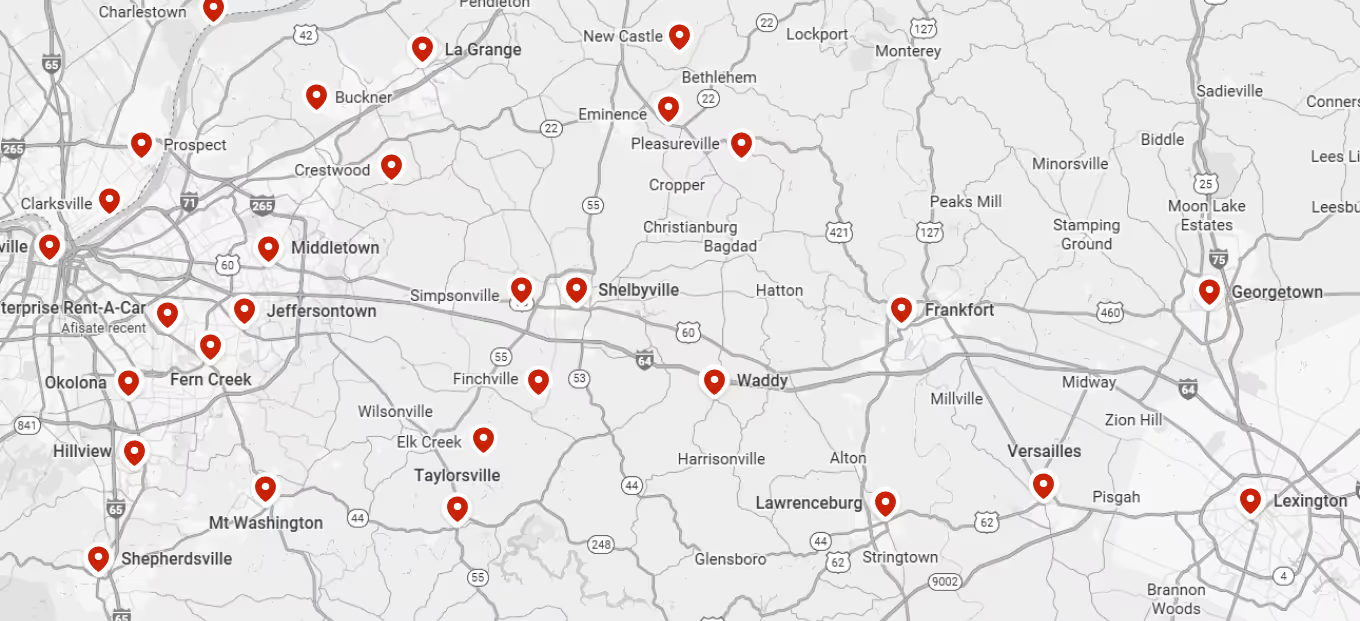
Proudly serving Spencer county, Jefferson county, Bullitt county, and the surrounding areas
Short Heading Goes Here
Sed iaculis aenean sit sed risus arcu vitae integer elit.

